











A large portion of clothing and footwear stores, both brick-and-mortar and online, offer their customers the option to return purchased goods. Thanks to this convenience, designed to increase shopping satisfaction, the customer can try on clothes at home and return them to the store. Unfortunately, some buyers exploit this retailer policy by practicing wardrobing (from the English word wardrobe). It involves purchasing clothes, wearing them without removing the tag, and then returning them to the store as unused merchandise to obtain a full refund. In the light of consumer law, wardrobing is not considered a crime. Why, then, is this phenomenon detrimental to the retail industry, and what can its consequences be?
Wardrobing is a practice that generates increasing losses for stores. Retailers are often unable to resell clothes that have already been worn; it also happens that consumers intentionally damage the product to make it eligible for return. Because of wardrobing, stores lose sales opportunities as the availability of their assortment decreases. Merchandise that will eventually return to the store cannot be purchased by other customers.
The phenomenon of wardrobing is quite common. According to the latest study conducted by the National Retail Federation, the problem affects 31.8 percent of stores in the United States. Meanwhile, in the UK, 13 percent of consumers admit to having purchased clothing with the intention of wearing it and then returning it for a refund. We are also dealing with wardrobing in Poland. According to the latest “Fashion Market in Poland 2018” study by the research firm KPMG, the Polish clothing market is one of the most attractive and largest in Central and Eastern Europe. Its value is estimated at as much as 29.1 billion PLN – stores are selling more and more clothes. Along with growing sales, the number of people who buy clothes, wear them, and then return them is growing proportionally. Stores of all sizes suffer from this – the problem also affects all online stores, whose customers only have the opportunity to try on the goods after purchase. For this reason, retailers do not want to and cannot give up the option of offering buyers the chance to try out a product – they fear that their customers will choose the competition.
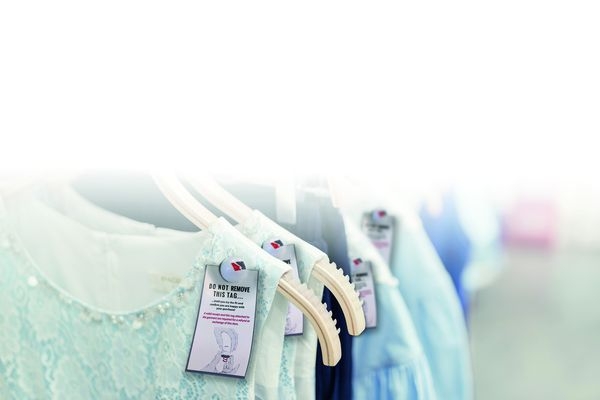
In the fight against returns of used clothing, stores need an easy-to-implement, economical solution. The company Checkpoint, which has been dealing with the problem of wardrobing for many years, offers innovative technologies such as the R-Turn Tag. This is a unique and effective solution that can help retailers minimize the effects associated with planned returns of used clothing and reduce stock shortages, which prevent products from being available to potential buyers. The R-Turn Tag is a proven way to fight wardrobing while maintaining an attractive return policy. These are aesthetic and small tags on which stores can place their logo and other markings. They are attached to clothes in a visible place and can only be removed by the customer by manually breaking the locking mechanisms. Because the tag is in a prominent place, it makes wearing the item and then returning it to the store impossible. This solution minimizes losses associated with wardrobing without negatively affecting the quality of customer service or the aesthetics of the products.
The increasing prevalence of the wardrobing phenomenon clearly confirms that retail fraud affects an increasing number of retailers. To minimize cases of abuse, retailers should consider implementing integrated security systems and RFID solutions to improve profitability.