








The greatest advantage of small and medium-sized enterprises (SMEs) compared to their larger competitors is flexibility. It often happens that before a corporation makes a specific decision, a small company has already managed to reorganize its entire business model. However, to operate flexibly, SMEs need flexible solutions, including in the area of transport.
For private individuals, an expression of transport flexibility can be, for example, car-sharing (renting a car by the minute) or rent-a-car (daily rentals). A resident of a large city can use a car when they need it, but today they no longer have to pay for a car when they are not using it.
Leasing and long-term rental
In the business world, it is increasingly similar, and various possibilities are growing, both in relation to passenger cars and commercial vehicles. The most common choice for entrepreneurs is leasing, because it resembles owning a car, while at the same time allowing for relatively low monthly installments. Most often, a car in a company provides opportunities to increase the entrepreneur’s revenue, so it can be said that a leased vehicle pays for its own installments.
But is it only leasing? It is similar with long-term rental, although the benefit in this case can also be service care included in the package. The monthly installment is then higher, but it can also include service (inspections and repairs), tires (purchase, replacement, and storage), and insurance, so the entrepreneur has many problems off their mind.
Leasing and long-term rental have many advantages, but also one fundamental disadvantage – they constitute a long-term commitment, which in turn is the opposite of flexibility. So, if an entrepreneur “misses the mark” in their expectations regarding the demand for their products or services, they will be left with a long-term contract and a car that needs to be paid for, even though it is not earning its keep.
Such forms of using a car will also not work when we are talking about seasonal demand. What is the point of signing a leasing contract for 2 years or longer if we need an additional “delivery van” or a passenger car for a salesperson in the company for the 2 or 3 most intense months of the year?
Rent-a-car for business
In such situations, medium-term rental (for a period from 1 to 23 months) or even short-term rental (from 1 to 30 days) can prove to be an excellent alternative. Then we can talk about the actual outsourcing of company cars. We entrust their service and maintenance to an external company, while we use the car in the company when we have a need for it.
A classic situation where medium or short-term rental can work is a periodic increase in orders (or the number of customer visits), as well as the need to service a larger network of retail outlets. When a sudden increased demand for transport appears in a small company, it is very often unclear whether this is just a temporary trend or growth that will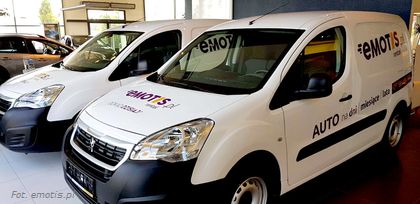 continue. In such a situation, it is difficult to decide immediately on leasing new cars. Such spontaneity can later cost a lot, and yet one must somehow meet the piling up deadlines.
Then, renting a car for a month or two can instantly satisfy transport needs without the need to make long-term commitments. Later, if the increased demand passes with the season, the contract can be easily terminated. And if the growth turns out to be a lasting trend and a sign of the company’s long-term success – only then can one decide, for example, on long-term rental.
In small and medium-sized companies, there are also many other situations where an additional car may be needed. It is enough for even one vehicle (in a fleet consisting of several cars) to have an accident or breakdown, and timely transport may already be threatened.
Often, a company also orders a new car at a dealership, but from placing the order to picking up the vehicle, up to 6 months can pass. How to satisfy transport needs until then?
Short- and medium-term rental, also in such situations, can be a good solution. Of course, for every entrepreneur, the profitability of such a rental will be important, so before signing a contract with a rent-a-car company, it is worth finding out about the prices. We asked about them at one of the nationwide rental companies.
– A Peugeot Partner Van with a load capacity of 650 kg, allowing for the transport of even two Euro-pallets, costs 152 PLN gross for a one-day rental. With a medium-term rental, the price per day drops to about 70 PLN. We also have larger vehicles in our offer, e.g., Peugeot Boxer L4H2 – explains Ireneusz Tymiński, president of the Emotis rental company. – The contract can be concluded for a fixed period, but flexible rental is also available, with the possibility of terminating the contract after the third month without financial consequences – he informs.
Whether just under 2,180 PLN gross (about 1,770 PLN net) for monthly access to a small delivery van is a little or a lot, every entrepreneur must judge for themselves. In return, however, they receive flexibility that they cannot count on in the case of classic leasing. It is also important that service and basic insurance are already included in the price.
On the same terms, an entrepreneur can also rent a passenger car of any class – from a city car to a premium limousine. A serviced, ready-to-drive car, with which costs are associated only when it is needed. Regardless of what kind of car is needed in a small or medium-sized company, it is worth checking out the offers prepared by high-quality rental companies.