











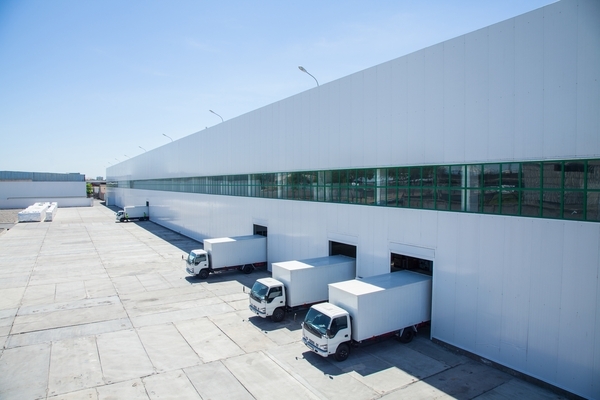
One of the fundamental elements of a well-functioning enterprise is an efficiently operating warehouse that carries out tasks without delays or downtime. In small warehouses with a low volume of daily orders, satisfactory work efficiency can be achieved without major process changes, for example, through proper organization of the warehouse structure. In the case of larger enterprises, process optimization is crucial for fast, efficient, and trouble-free warehouse operations.
One of the concepts related to warehouse work optimization, particularly concerning trading and logistics companies, is cross-docking. This issue is related to the efficient and smooth execution of work regarding the flow of goods between receiving and shipping from the warehouse. In the cross-docking process, goods brought into the warehouse are released for transport, bypassing the storage and warehousing stage. Such action significantly speeds up the execution of warehouse processes. A relatively simple situation is the cross-docking of full orders. In this type of operation, incoming deliveries to the warehouse are entirely redirected to the shipping zone for release to the recipient. This type of cross-docking process does not require repacking or separating goods. A more advanced process is the cross-docking of full pallets, where a delivery of goods already prepared on pallets or other transport units is separated for end recipients. In this type of process, the warehouse’s work consists only of unloading pallets from a large delivery and separating them into shipments for smaller transport. The process can be further expanded to include picking in the shipping zone for goods arriving at the warehouse via several independent deliveries. In such a case, the warehouse temporarily becomes a transshipment point where goods are received on an ongoing basis and, after a very short time, released for transport. Advanced cross-docking processes require adequate space for storing goods in warehouses, which is why these types of processes are most often used by Comarch clients as an additional element, complementing processes related to handling goods storage in a high-bay warehouse.
Regardless of the complexity of the cross-docking processes, a warehouse employee should receive simple, clear information: what action to perform, where to take a pallet, or whether to unpack goods and take them to a location in the storage zone. It is necessary to ensure a full flow of information at least between the receiving and shipping of goods, and sometimes between the sales department and the purchasing department. Such a full flow of information is provided in the Comarch WMS application, an integral part of the Comarch ERP Altum and Comarch ERP XL systems.
Learn more about the WMS system from Comarch
