












Civilizational progress is the expected result of human activity. It is thanks to human creative abilities that innovative products and solutions are created in various areas of life. Development is understood as a qualitative change aimed at improving business operations and the products associated with them. In (primary) processes, along with the expected products, unwanted emissions are “created,” which, if managed improperly, can cause adverse environmental changes. In search of solutions to this problem, various concepts are implemented that prevent excessive pollution or environmental degradation.
Attention is focused not only on the efficiency of the actions taken but also on social responsibility for the product and the business activity conducted – e.g., on the possibility of using emission-free manufacturing technologies and ergonomic solutions. When developing production systems, so-called reference documents (BREF) are used, which contain information on the best available techniques (BAT). Prevention at the source is one of the key postulates of the EU environmental management standard known as EMAS. It is a perspective on emissions not from the side of production process effects, but from the initial stage of manufacturing.
The purpose of this paper is to present the Eco-Management and Audit Scheme (EMAS), the implementation of which should help, in particular, manufacturing enterprises, among other things, in controlling their environmental impact, minimizing/eliminating harmful emissions, reducing operating costs, and eliminating waste. The article describes EMAS as a tool for implementing the principles of sustainable production, taking into account the production concepts used.
Manufacturing of goods
Production systems
“A production system is a deliberately designed and organized arrangement in which matter, energy, and information are inputs, used to manufacture specific products to satisfy the needs of consumers (product recipients)”. These elements are interconnected and transformed into added value for the recipient, alongside unwanted emissions, e.g., waste that cannot be reprocessed or reused (Fig. 1).
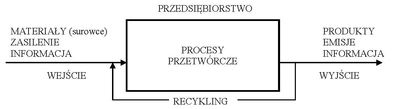
Fig. 1. Enterprise as a system. Source: own elaboration.
The American-European and Japanese models are approaches to production that set the direction for solutions in manufacturing activities. Synthetically speaking, these solutions take into account production time, elimination of resource waste, production costs, overproduction associated with the use of raw materials and utilities, and unwanted emissions as a side effect of production. This is how environmental management systems (EMS) are created. Such concepts include Lean Production, Agile Production, or Quick Response. These concepts focus on producing a specific batch of products (needed/expected by customers at a given time).
The term Lean Production appeared as a result of the reorganization carried out in the 1950s at the Toyota Motor Group. The focus was on line production, teamwork, efficient machines, process division, and the use of external services (outsourcing). The implementation of lean management, which is a consequence of Lean Production, is based on:
(1) a long-term philosophy of thrift – management decisions;
(2) the process – generating value for the customer, work standardization;
(3) people and partners – leaders supporting the philosophy, proven development teams, reliable suppliers;
(4) problem solving – understanding the situation, continuous improvement of results, learning.
A modification of the Japanese production system (Toyota) called “zero inventory” is the Just-in-Time method. In turn, Agile Production is characterized by unit production, individual work of competent employees, customer participation in product design, and flexible (universal) automation. Quick Response Manufacturing (QRM) is associated with a rapid response to demand. The goal of QRM is to shorten the time of performing tasks at every stage of production and administrative activities.
The article contains 21,240 characters.
Source: Logistyka Magazine
L3-49_Wyrwicka_Jazwinska_EMAS_jako_narzedzie_implementacji.pdf