











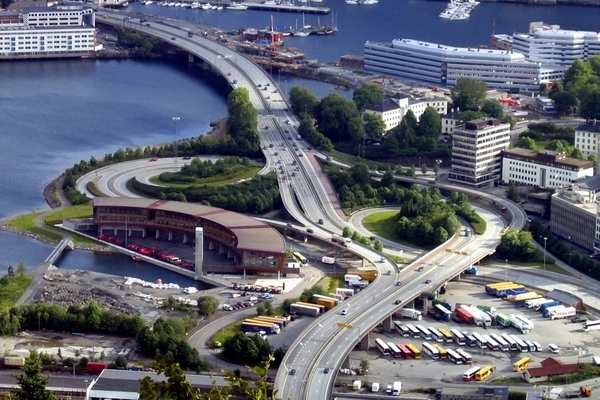
The 21st century has seen the continued growth of cities and the deepening process of urbanization. On all continents, the process of migration to urban centers is progressing, which, by the end of the century, will lead to a situation where nearly three-quarters of the world’s population will live in cities. Europe is one of the most urbanized continents. […] It is predicted that by 2020, 80% of the population will live in European cities. Furthermore, research shows that cities are the driving force and are essential for the proper functioning of the European economy. Suffice it to say that just under 85% of the EU’s gross domestic product is generated in urban areas. It should therefore be assumed that urban development will determine the future economic, social, and territorial development of the EU.
Most jobs, as well as businesses and higher education institutions, are located in cities, and their operation is decisive for achieving social cohesion. Cities are centers of change based on innovation, entrepreneurship, and economic growth. Economic growth is defined as sustainable when it is accompanied by measures aimed at reducing poverty, social exclusion, and environmental problems. The issue of the sustainable nature of growth is of particular importance in cities, which are more exposed to social exclusion, environmental degradation, the existence of brownfields, and uncontrolled urban sprawl.
Cities are characterized by significant differences in terms of economic and social prospects. These include, for example, spatial inequalities (between districts) or social inequalities (between individual groups), or often differences combining both these dimensions. The quality of the natural environment is also a key factor in the attractiveness of a place. In most European cities, common challenges can be identified. Throughout Europe, increased traffic on city center streets causes constant congestion with undesirable effects, such as delays and air pollution. As a result of this phenomenon, the European economy loses nearly 100 billion euros each year, i.e., about 1% of the European Union’s GDP. Year after year, air pollution increases and the acoustic climate deteriorates, which manifests itself in worsening living conditions for residents. Urban traffic accounts for 40% of CO2 emissions and 70% of other pollutants caused by road transport.
Furthermore, the number of road accidents in cities increases every year. In 2012, there were a total of about 28,000. It should be noted that one in three fatal accidents occurs in an urban area, and the victims are most often pedestrians and cyclists. Progress in reducing the number of road accident fatalities recorded in urban areas remains below average.
The threats occurring in urbanized areas also have a broader dimension in the form of: climate change / global warming, an increase in lifestyle diseases, or bottlenecks in logistics chains.
Smart cities are a concept involving the cooperation of residents, local authorities, entrepreneurs, and other institutions at all stages of their functioning. The main goal of this idea is to strive to use available space and resources as efficiently as possible, with the support of technology and the direct activity of residents.
The article contains 45,030 characters.
Source: Logistyka Magazine