








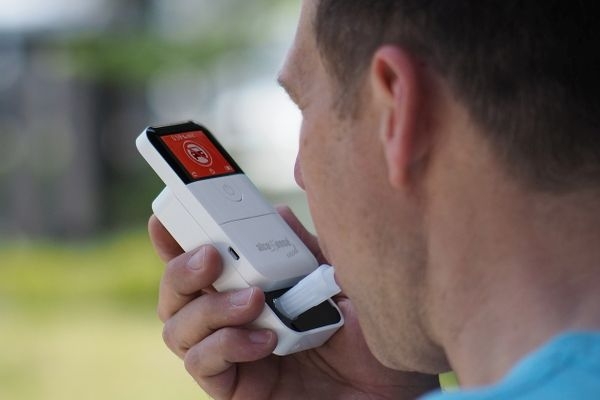
According to a study commissioned by AlcoSense Laboratories, nearly half of drivers do not know the blood alcohol concentration limit above which driving on Polish roads is prohibited.
According to current regulations, a driver caught operating a vehicle with more than 0.2 per mille of alcohol in their blood must face the consequences. 42% of drivers are unaware of these regulations and cannot correctly indicate when it is legal and safe to get behind the wheel in Poland after consuming alcohol. One in five drivers mistakenly believes that the Polish limit is higher than 0.2 per mille or admits they do not know it. Such a person might, for example, drive a car knowing they have 0.3 per mille, thinking they are acting in accordance with the law.
Last year, traffic police officers stopped over 67,000 intoxicated drivers on Polish roads. More than 16,000 of those stopped had between 0.2 and 0.5 per mille of alcohol in their blood. Some of them may have been affected by the phenomenon of so-called “unconscious intoxication.” This occurs in drivers who get behind the wheel in the morning after consuming alcohol the previous day. Even though they feel fine, they are often unaware that there are still residues of alcohol in their system at a prohibited concentration.
– Driving under the influence of alcohol is not just a risk of receiving a fine or losing your driver’s license. The perpetrator of a collision or accident who, at the time of the incident, exceeds 0.2 per mille even slightly, may be forced to cover the damages out of their own pocket. In such a situation, insurers have the right to demand reimbursement of the paid compensation. Therefore, when setting off on the road, it is best to be absolutely certain that you are fully sober – says Hunter Abbott, a road safety expert from AlcoSense Laboratories.
In Poland, penalties related to driving under the influence of alcohol have been tightened twice in recent years – in 2015 and 2017. The SW Research study for AlcoSense Laboratories was conducted on a representative group of 1,280 drivers.