











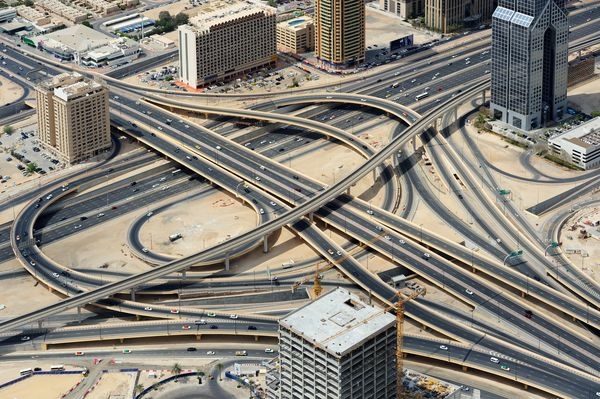
Economic development directly affects the load on existing road infrastructure. This is caused by an increase in the flow of goods and passengers. It creates problems and limitations in the flexible scheduling of deliveries and reduces the efficiency of their implementation by logistics operators.
Congestion in the transport system affects not only large cities or metropolises, but also smaller urban centers. Roads, stations, and transport hubs built years ago are unable to handle the current load. Transport progress brings consequences in the form of an increasing number of motor vehicles, the formation of traffic jams in the road network, and disruptions that reduce traffic flow. The result of these phenomena is traffic congestion in urban road systems. It means overloading and crowding on transport routes.
High traffic intensity reduces the attractiveness of cities, and above all, their centers. This prompts a change in the organization of motorized vehicle traffic. A significant part of traffic is carried out by individual vehicles. However, the movement of trucks and delivery vehicles supplying recipients located within cities is becoming an increasing problem.
Pipeline transport is one of the five transport systems alongside road, rail, air, and water transport. Pipelines offer the opportunity for safe and economical transmission, which can already be observed in the case of moving liquid or gaseous materials. In congested urban agglomerations, it is an alternative for the transport of solid materials. A fast and ecological alternative. The time has come to direct the streams of goods that lead to the congestion of our roads along an alternative path. It is time to develop a network of pipelines through which refrigerators, washing machines, car parts, grain, food products, and many everyday items can be sent.
The purpose of this publication is to indicate the possibilities of using pipeline transport for moving solid or bulk materials as an alternative to currently used modes of transport to reduce traffic congestion.
Transport problems of modern cities
An analysis of economic processes occurring since roughly 2000 clearly indicates that Poland still lacks a coherent and efficiently functioning transport system. A system that would be coherent in terms of system architecture with the European and global system. Undoubtedly, actions aimed at achieving such a state would contribute to accelerating the economic growth of the country, the region, and cities. From the point of view of Poland’s development goals and the aspirations of its citizens, it is necessary that transport not only ceases to be a barrier hindering the country’s economic growth but also becomes an important element contributing to its comprehensive development by creating a functionally integrated infrastructure, implementing new transport technologies, and providing citizens, including entrepreneurs, with high-quality services in a competitive transport market.
Getting involved in the design of underground pipeline transport for solid materials is not only an interesting idea in terms of introducing innovation and improving transport, but it also represents an opportunity to bridge the gap between Poland’s transport system and the transport systems of more developed European countries.
The article contains 31,810 characters.
Source: Logistyka Magazine