











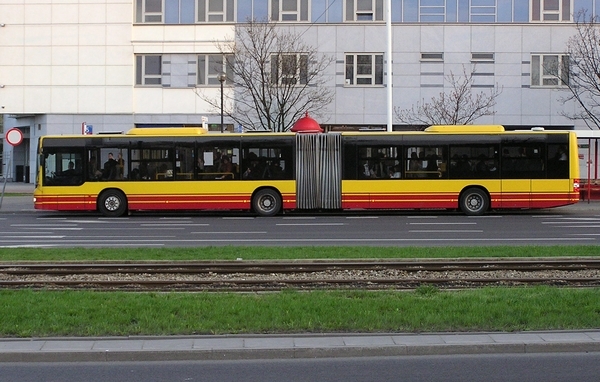
Public passenger transport constitutes the primary transport system in large urban agglomerations. The proper functioning of mass passenger transport influences the image of the region, the satisfaction of residents and visitors, and the efficient operation of the entire agglomeration.
The functioning of passenger transport depends on many factors, including the state of transport infrastructure, the technical condition of the rolling stock, and, fundamentally, on transport management and planning. The transport process in cities is so complex that it requires planning using modern operations research methodology and mathematical optimization. The passenger transport planning process can be divided into so-called strategic planning and operational planning. Strategic planning is related to the global organization of transport in the region and is usually subject to the decision of the local government or its body in the form of a transport authority.
Strategic planning includes three stages:
– Network Design
– Line Planning
– Timetabling
The next three stages constitute so-called operational planning:
– Vehicle Scheduling
– Duty Scheduling
– Crew Rostering
Operational planning remains within the scope of transport operators, i.e., local public transport companies. The paper aims to present selected strategic planning problems, mainly from the perspective of computer-aided support using optimization methods. Mathematical models are briefly presented: graph elements, objective functions, and optimization constraints. Possibilities for solutions using modern computational algorithms are indicated, without detailed analysis of the problems. In the summary, conclusions are formulated regarding the use of solutions in practical engineering implementations.
The article contains 14,560 characters.
Source: Logistyka Magazine