








Effective January 1, 2017, Solaris Bus & Coach S.A. and Stadler are establishing a joint venture named Solaris Tram Sp. z o.o., which will operate a shared facility in Środa Wielkopolska. Tram bodies will be manufactured and painted there. Solaris Tram and Stadler Polska will participate together in tenders on the Polish and European markets as a consortium, led by Stadler. This strengthens the market position of both companies.
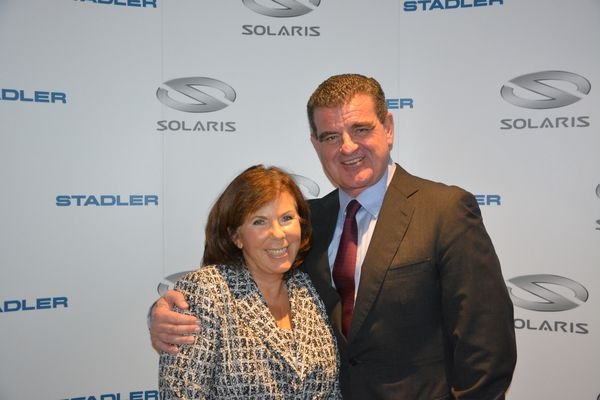
In September 2016, Solaris and Stadler announced the establishment of close cooperation and joint bidding in tenders as a consortium. During today’s press conference in Warsaw, the company owners, Solange Olszewska and Peter Spuhler, announced the next stage of cooperation: Solaris Bus & Coach S.A. and Stadler will establish a joint venture as equal partners under the name Solaris Tram Sp. z o.o.
Solaris Tram will build and paint tram bodies at the facility in Środa Wielkopolska. Pre-assembly and final assembly will take place at Solaris plants in the Greater Poland region and at the Stadler Polska factory in Siedlce. The Solaris Tram company plans to increase efficiency. The current production area in Środa Wielkopolska will be doubled. This means not only maintaining existing jobs but also creating new ones. The production facility holds ISO 9001:2015, ISO 14001:2015, DIN 15085-2, ISO DIN 3834-2, and IRIS certifications. These were awarded for high-quality welding and confirm that the plant meets the highest requirements for the rail industry. Solaris brings all its knowledge, experience, and competence in the field of rail vehicles to the joint venture – management, an engineering team, sales, procurement, and after-sales service. Solaris and Stadler have already appeared as a consortium in tenders for the supply of trams for Kraków and Poznań. Both parties of the new joint venture will jointly submit bids in future tenders. Customers will benefit from the many years of experience and extensive technical knowledge of both companies.
The creation of the joint venture will strengthen the position of both companies on the market – both in Poland and in Europe. In the future, Solaris trams will be seen in many more European cities. For Stadler, this step represents an opportunity to expand its successful operations in Poland to date and further strengthen its position. The companies will also benefit from mutual sharing of technological knowledge.
During the press conference, the owners of both companies did not hide their satisfaction with the closer cooperation and the creation of the new company: – Together we can do more. In this type of cooperation, there is no better partner for us than Stadler, which is a world-renowned manufacturer of rail vehicles – said Solange Olszewska, owner and CEO of Solaris Bus & Coach S.A.
– We are very pleased that we have managed to find such a renowned partner as Solaris for cooperation in Poland. The investment in the plant in Środa Wielkopolska is a kind of declaration by Stadler confirming that we are serious about the Polish market, where we have been operating for ten years. By working with Solaris, we will be able to offer customers and passengers even better, more comfortable solutions tailored to their needs – emphasized Peter Spuhler, CEO and owner of Stadler.
Solaris is a leading European manufacturer of buses, trolleybuses, and trams. Since 2009, the company has been present on the rail vehicle market. It has delivered trams to Poznań and Olsztyn, as well as to Jena and Braunschweig in Germany. Solaris is currently executing a contract for the delivery of 41 trams to Leipzig, Germany.
Stadler Polska has been one of the leading rail vehicle manufacturers in Poland for 10 years. The plant in Siedlce employs 800 people, and the company cooperates with over 2,000 Polish enterprises. It is also the largest exporter of rail vehicles in Poland. By the end of November this year, the plant had produced 320 trains, which are in operation in many European countries.