











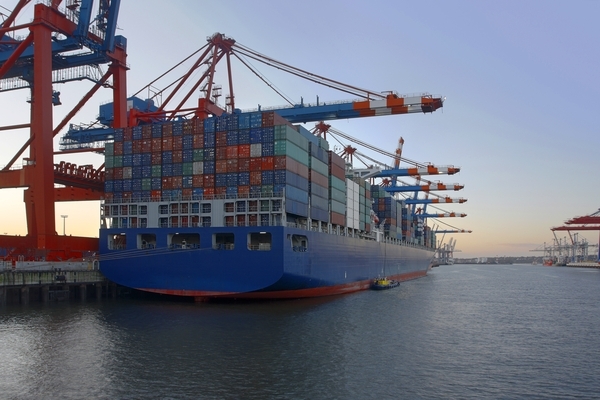
The economic activity of seaports has always been associated with the use of port areas. Both the implementation of the basic port function – the transport function, and other economic functions of seaports (e.g., commercial, distribution-logistics, industrial) could not take place without the existence of a port territory. In the case of the transport function, one can even observe a phenomenon of increased demand for the area of the immediate land hinterland of quays, while the demand for the length of the berthing line itself decreases.
CHANGES IN THE SPATIAL DEVELOPMENT OF MODERN SEAPORTS – THEORETICAL ASPECTS
In the existing theoretical body of work devoted to the subject of developing land territories for the needs of growing seaports, as well as in the economic practice of individual ports and port complexes, two main directions can be noted, namely:
– development of new (previously unused) port areas
– revitalization of port areas already used for economic purposes.
In the case of the first of the mentioned directions of spatial development, areas located within the administrative boundaries of individual seaports as well as territories constituting the so-called port reserve (most often areas adjacent to ports, having only temporary development) can be used for these purposes.
Not all seaports have free land for development within their administrative boundaries, which forces actions aimed at acquiring new areas for the development of port functions. This can be done both by including areas previously outside these boundaries within the seaports, and by “wresting” new port areas from the sea. As K. Misztal wrote, a characteristic feature of the modern development of seaports is its high spatial intensity (land-intensiveness), meaning that new technical and technological undertakings in ports (with the exception of modernization) require large areas, which is a necessary condition for ensuring their economic efficiency. In general, adaptive measures within the existing port spatial development are considered insufficient, which forces the entities managing these ports to undertake investments in new areas.
The second direction of transformation is the restructuring of port areas. It is associated with the search for new ways to revitalize economically declining port regions that meet current needs. In the practice of Western European seaports, two main directions of port area revitalization can be observed:
– revitalization based on the development of other port functions
– revitalization based on the development of urban-port functions.
The article contains 18,600 characters.
Source: Logistyka Magazine