











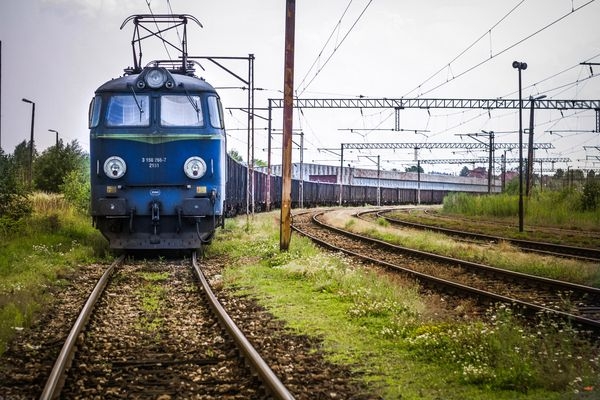
PKP CARGO has announced a tender for the purchase of 20 multisystem locomotives for cross-border connections, with an option for five more. The total value of the order could reach PLN 400 million. The first new locomotives will appear at Poland’s largest carrier in the second half of 2016. They will haul trains to Germany, the Czech Republic, Slovakia, Austria, Hungary, and the Netherlands. Following the acquisition of the Czech carrier AWT for over PLN 400 million, this is another step toward strengthening the international position of the second-largest freight carrier in the European Union.
Initially, PKP CARGO assumed the purchase of ten multisystem locomotives with the option to purchase an additional five; however, due to the electrification of the border crossing with Germany in Węgliniec, a decision was made to purchase 15 locomotives with an option to extend by another five.
– The purchase of multisystem locomotives is an important moment in the history of PKP CARGO, especially in the context of the recently announced acquisition of the Czech carrier AWT. We are developing our foreign operations, which is why we are investing in new rolling stock. Not long ago we were thinking about ten units, and today we are announcing a tender for 15 multisystem locomotives with the option to purchase another five. This will strengthen PKP CARGO’s potential in terms of servicing connections abroad – says Wojciech Derda, Member of the Management Board of PKP CARGO for Operations.
The first two of the new machines – with approval for the territory of Poland, the Czech Republic, Slovakia, Hungary, Germany, and Austria – will appear in the PKP CARGO rolling stock fleet in August 2016, and the last one in March of the following year. The tender includes full maintenance of the locomotives until the first major overhaul (P4 level) and its execution. A major overhaul is performed after 8 years or after the locomotive has traveled 1.2 million km. A potential decision to purchase further locomotives may be made based on an analysis of the demand for this type of rolling stock.
PKP CARGO will require the supplier to have experience in the production of electric locomotives and homologation in at least one of the countries where the new locomotives are to be operated. This will ensure the highest quality of contract execution. The contract will include mechanisms protecting PKP CARGO against potential locomotive downtime, including technical readiness and reliability indicators. Failure to meet them will result in contractual penalties payable to PKP CARGO, which will cover the costs of replacement rolling stock.
Until now, PKP CARGO had only one multisystem locomotive of its own, and the rest were used on a lease basis (operating lease). Such a solution allowed for quick and flexible responses to changing transport conditions and enabled the acquisition of safety certificates abroad. Thanks to the obtained certificates, PKP CARGO can independently conduct transport in nine European Union countries. Currently, PKP CARGO has a stabilized level of multisystem locomotive utilization. Under such conditions, purchasing is the most favorable option.
Multisystem locomotives at PKP CARGO
The first multisystem locomotives used by PKP CARGO since 2008 were the EU43 series (Traxx) machines manufactured by Bombardier. The carrier owned six of these locomotives and used them to service connections between Poland and Germany. In 2012, the Bombardier locomotives were replaced by Siemens EU45 series (EuroSprinter) machines. Currently, PKP CARGO uses ten such locomotives. They haul trains carrying, among other things, containers, cars, steel, coal, coke, iron ore, wood chips, and automotive parts. They serve three main corridors: Poland-Czech Republic-Austria, Poland-Germany-Netherlands, and Germany-Poland-Czech Republic-Slovakia-Hungary.
PKP CARGO in 13 European countries
After finalizing the purchase of Advanced World Transport (AWT), PKP CARGO will gain access to 13 European markets. In addition to the countries served so far: Germany, the Czech Republic, Slovakia, Austria, the Netherlands, Hungary, and Lithuania, the following will be added: Slovenia, Croatia, Bulgaria, and Romania. In addition to multisystem locomotives, PKP CARGO uses other types of locomotives to service connections abroad. Diesel locomotives are used in Germany, the Czech Republic, Slovakia, and Lithuania, and PKP CARGO enters the territory of the Czech Republic and Slovakia with single-system electric locomotives.
The carrier’s entry into the foreign market requires obtaining a safety certificate from the national regulator. The procedure associated with this is similar in all European Union countries, but each case is treated individually. One of the conditions for receiving the certificate is having locomotives approved for operation in a given country. PKP CARGO has obtained such approval, among others, in the Czech Republic and Slovakia for the ET22 and ET41 series electric locomotives and the ST44 and SM42 diesel locomotives.
In three countries: the Czech Republic, Slovakia, and Germany, PKP CARGO trains are operated by Polish train drivers. To be able to drive a train abroad, drivers must pass language exams and obtain a train driver’s license for the given country. In other countries, PKP CARGO uses the services of drivers from external companies.
About the multisystem locomotive
An electric multisystem locomotive is adapted to travel between different power systems without the need to stop the train. This allows for efficient handling of cross-border connections in countries where different types of voltage exist on the railway network. Thanks to this, a journey, for example, between Germany and Hungary via Poland, the Czech Republic, and Slovakia can be carried out using a single locomotive. Multisystem locomotives are about a dozen percent more expensive than single-system machines.