








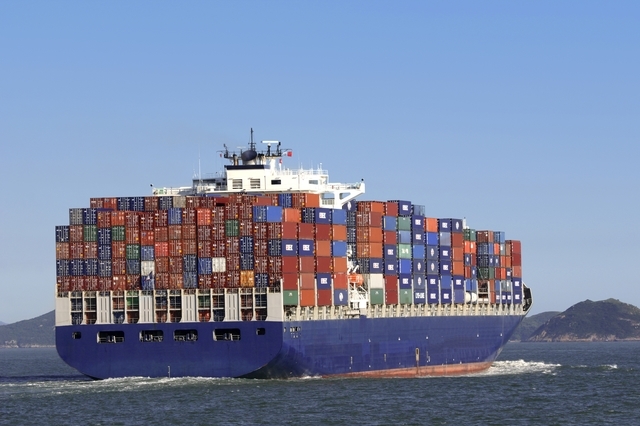
Operating with large containerized cargo units, which streamline cost-intensive and time-consuming handling activities in transshipment and storage processes within increasingly complex supply chains, is already commonplace. The global nature of economic relations necessitates the dynamic development of this form of cargo handling on a mass scale. This naturally favors the degression of transport and storage costs as a function of distance covered and the volume of cargo moved, which benefits both operators and recipients.
Intermodal transport in Poland involving containerized cargo units – in domestic, transit, and international relations – has developed quite dynamically over the last decade, albeit more slowly than in other countries of the developed part of Western Europe, considering the level of rail involvement or the transshipment results of seaports. Statistics indicate that in Poland, combined transport with a major share of rail transport is used for the carriage of a dozen or so percent of containers, while in Germany or the Netherlands, this figure is as high as 30–40%. There have been and still are many reasons for this state of affairs.
The development of container transport globally has significantly outpaced its development in Poland. While in the 1980s, container bases competed in terms of TEU volumes counted in the hundreds of thousands (some ports achieved results in the millions), the first container terminal in our country was only just beginning its operations. The currently functioning model of maritime container transport has a direct impact on the development dynamics and functional character of these terminals. Hence, Polish Baltic terminals will likely not develop towards achieving the status of megaports. Nevertheless, the Baltic Container Terminal and Gdynia Container Terminal are currently on the path to securing a good position among ports in the secondary category, while the Deepwater Container Terminal Gdańsk can slowly aspire to the role of one of the largest transshipment bases on the Baltic Sea. DCT Gdańsk SA has the capacity to handle 1 million TEU annually, and most importantly, a quay with a depth of 15.5 m (unattainable in other Polish ports). Thus, it is not only the youngest but also the largest container terminal in Poland. Due to its favorable location, it has great development potential, which may be increased up to fourfold in the next few years. Since container transport is global in nature, the level of transport or transshipment turnover in seaports, including those in Poland, depends on trends and dynamics in global economic relations. The conclusion here is logical: economic growth in a given region results in an increase in the quantity of goods transported in containers.
The article contains 21,100 characters.
Source: Logistyka Magazine 5/2013