








Traceability, or the tracking of products in specific industries, mainly concerns food products, and recently especially fish, medicinal products, medical devices, and cosmetics, as well as – for specific reasons – wood and explosives.
Traceability requires tracking throughout the entire supply chain, starting from the delivery of raw materials and packaging for the aforementioned products, and ending with their consumption and even waste disposal. In most cases, all these products appear in some form of packaging, the labeling of which is to be the primary source of obtaining the required information. In this way, Traceability also applies to packaging manufacturers.
Traceability in the packaging industry – how to meet new requirements
Requirements resulting from EU directives and national legislation regarding the tracking system for the aforementioned products, including their packaging, therefore apply to packaging companies. To this end, international and national GS1 Poland Working Groups are developing recommendations so that compliance with these additional requirements is implemented by companies in the simplest and cheapest way, using barcodes and standard electronic documents. The Institute of Logistics and Warehousing (ILiM) – a national organization managing global standards in the field of e-economy – while starting the implementation of the Traceability project for the aforementioned industries, also kept the packaging industry in mind. In cooperation with, among others, the Polish Chamber of Packaging (PIO), packaging manufacturers were invited to develop good practices in the field of tracking.
The role of packaging in Traceability
The role of packaging in Traceability is twofold. First: tracking is not to be limited only to starting from the manufacturer of finished goods and ending with their distribution or consumption. It is to go back to the origin: raw materials for production, semi-finished products, and to packaging manufacturers, and of course to the suppliers of raw materials for their production, meaning it must also be conducted in the so-called supply phase – “upstream”.
Therefore, not only are the packages themselves to be tracked, but after products from the above industries are packed in them, the labeling on these packages is to facilitate control through: identification of the product and its manufacturer. But that is not all: in the case of medicines and food products, and recently also cosmetics and medical devices, it is also with accuracy to the production batch / series. Moreover, decision-makers at various levels are wondering how to identify even more specifically, i.e., down to a single item or the smallest package. What has come of these intentions is not yet widely known. Although the creators of global standards in this area have had several ready-made proposals for years, they have not yet found widespread application.
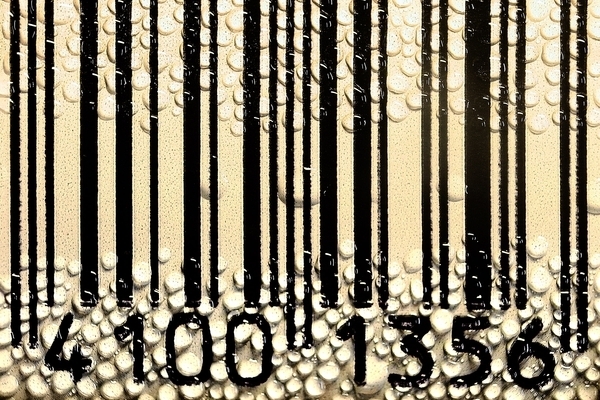
These standards are GS1-128 linear barcodes or the GS1 DataBar family of codes and the GS1 Data Matrix family of two-dimensional codes. Another technology is GS1 radio tags, which were so loud as early as 2005, representing, for example, the SGTIN serial number. In practice, GS1-128 linear barcodes are the most widely used, although they cannot be used on retail packaging, but they are the best solution for marking all other packaging: unit and non-retail collective, commercial, and logistical.
The article contains 5920 characters.
Source: Logistyka Magazine 4/2013