











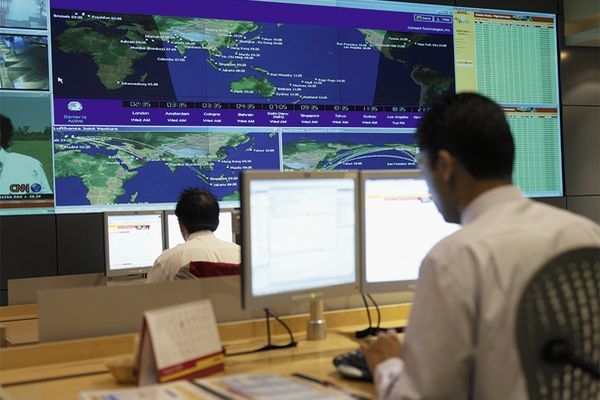
Logistics company DHL is implementing the initial findings of its recently published “Big Data in Logistics” report and is using a comprehensive data pool to detect potential risks in supply chains at an early stage. By implementing “Resilience360”, a supply chain risk management tool created through Big Data analysis, DHL can offer customers information about potential disruptions to their individual supply chains. Further applications resulting from the trend report, such as the “DHL Parcel Volume Prediction” model or “DHL Geovista”, are currently in the pilot phase.
– Resilience360 is an excellent example of the economic benefits that Big Data analytics can bring to logistics. Aggregating and evaluating data allows for securing and increasing the efficiency of supply chains. Thus, operational activities are not interrupted and customer satisfaction is optimized in a sustainable way – explains Dr. Markus Kückelhaus, Director of Trend Research, DHL Customer Solutions & Innovation. – Our report also points to two other potential applications for Big Data analytics: increasing operational efficiency and the possibility of exploring new business models.
DHL Resilience360 includes two elements: risk assessment analysis and supply chain monitoring tools that operate in near real-time. Supply chains should be more resilient and less prone to failures, which will help prevent production interruptions and revenue losses.
The next part of the trend report, dedicated to increasing operational efficiency, includes an analysis of the correlation between weather conditions, flu epidemics, and the online shopping behavior of private individuals. The “DHL Parcel Volume Prediction” model, for example, allows for simplifying the planning of parcel volumes for transport by taking into account correlated data factors. In this case, Big Data models allow for optimizing processes and improving customer service.
Finally, Big Data provides logistics service providers with a promising starting point for developing new business models, including providing geomarketing tools for small and medium-sized enterprises (SMEs). Using the “DHL Geovista” model allows for obtaining detailed analyses and evaluations of complex geographical data, which enables logistics service providers to predict sales volumes generated by SMEs.