











The brewing industry experiences its peak season during the summer months. However, before we can enjoy the taste of a cold beer, the beverage must go through a long production and distribution process. Let’s take a look at what its transport looks like behind the scenes.
In terms of beer consumption, Poland ranks fourth in Europe. According to “Brewers of Europe 2012”, the average Czech drinks about 154 liters per year, an Austrian – 108, a German – 107, and a Pole – 95. Such a figure could mean that every other day we enjoy one 0.5-liter bottle of this golden beverage. In practice, however, most beer consumption occurs during the summer months. It is then that both large corporations and small breweries must face a greater need for stocking by retail outlets, and thus an intensification of logistics operations.
Straight from the brewery
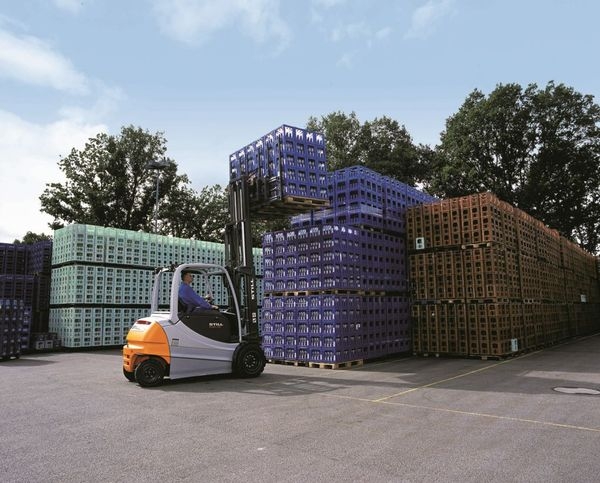
Beer consumption is not only closely related to the time of year, but it is also dependent on the weather. This year, mainly due to unfavorable weather at the beginning of the season, declines are forecast. Greater consumer restraint may also be dictated by the economic situation. Tastes are also changing – more and more connoisseurs are choosing products from small, local breweries offering niche beverages: unpasteurized, wheat, and flavored beers. Therefore, the brewing industry particularly values flexible solutions that allow production capacities to be adjusted to the current market situation. Thus, fleet leasing and periodic increases in employment are becoming increasingly popular. It is not only consumers who are looking for savings. The emphasis on reducing operating costs is clearly visible in the industry. Companies are therefore deciding to replace internal combustion forklifts with their electric counterparts. An example is the Namysłów Brewery, which last year commissioned another finished goods warehouse and invested in new STILL RX60 forklift models. Currently, 19 forklifts are operating at the brewery, and the oldest active vehicle dates back to 2006. The purchase of two modern electric forklifts is the next step in consistently rejuvenating the fleet and replacing models with more energy-efficient and environmentally friendly ones. – That was a very good decision on our part. From the perspective of several years, we see significant savings in operating costs – emphasizes Aleksander Wróbel, Director of the Namysłów Brewery.