











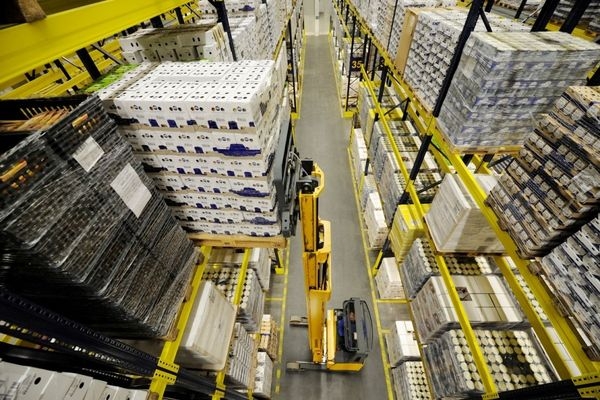
The logistics of ventilation, heating, and air conditioning products are characterized by specific requirements. These are often high-value items, dedicated to specific investment projects and sensitive to damage. Furthermore, they are seasonal, which presents a challenge for manufacturers and distributors. Specialists from Dachser, a globally operating logistics provider, advise on how to organize logistics processes so that they are safe, efficient, and cost-optimal.
Valuable goods
Items from the ventilation, heating, and air conditioning industry can have a high value.
– Large, technically advanced products such as a heat pump manufactured to special order for a specific investment can be worth even several hundred thousand zlotys – says Wojciech Cipiur, Contract Logistics Manager at Dachser in Poland. The high value of these products and their exceptional sensitivity to mechanical damage mean that their transport must be particularly secured.
– Through our own insurance company, we offer simple and easy insurance for our customers’ goods, including cargo insurance. Exceptionally valuable shipments are handled by specially dedicated, properly trained personnel – he explains.
At Dachser, specially designed pallets with dimensions matched to the load are used for transporting unique shipments. These shipments can be additionally protected against damage with wooden corner guards and strapping. Valuable products should be stored in warehouses with special security measures. In Dachser warehouses, special storage zones are fenced off, accessible only to designated employees. They are located in the least visited part of the warehouse, away from traffic paths and the main picking area. Such zones are covered by camera monitoring.
IT systems
– We apply a number of procedures and high quality standards, and thanks to the use of a single IT system, we are able to provide up-to-date information on the shipment’s route – explains Wojciech Cipiur.
IT systems also help ensure the safety of shipments.
– At Dachser, we use our proprietary WMS Mikado system, thanks to which we can conduct constant inventory of specific warehouse locations after each goods retrieval. This allows for catching errors before the ordered goods leave the distribution center – says Wojciech Cipiur. – Thanks to such system solutions and clearly defined procedures, all goods that we store and transport are properly secured.
Seasonality
A significant problem for the industry is seasonality. Logistics operators working for this market segment must also meet this challenge.
– Having served companies from the construction industry for years, we know the specifics of the products and the entire sector perfectly – says Juliusz Pakuński, Project Manager for the Dachser DIY Logistics service, aimed at suppliers of DIY stores. – We know both the traditional distribution market, i.e., cooperation with wholesalers and specialized stores, and the modern one, i.e., executing deliveries for chain stores. We have developed a number of solutions that optimize costs and streamline product distribution, including their returns to warehouses.
As part of Dachser DIY Logistics, the operator also offers merchandising within stores, i.e., stocking shelves, organizing promotions, and controlling returns.
Warehousing outsourcing
A large logistics service provider that owns many warehouses and cooperates with clients from various industries can balance resource utilization, thereby mitigating problems related to seasonality. By outsourcing warehousing to a logistics operator, a manufacturer or distributor does not have to worry about what to do with warehouse staff during periods of low orders.
– In Dachser warehouses where we store seasonal products, we use flexible employment. We maintain a core warehouse staff at all times, and during periods of higher work intensity, we hire additional people from temporary employment agencies – explains Wojciech Cipiur. – This is one of many problems that we take off the entrepreneurs’ shoulders. They can move their existing warehouse employees to support production or sales. On our side, this allows not only for cost optimization but also improves the flow of warehouse processes.
Cost efficiency of transport
A noticeable trend in the logistics services market, concerning virtually every industry, is the emphasis on transport cost efficiency. Thanks to appropriate systems for managing operations, Dachser optimizes transport processes already at the stage of preparing orders in the warehouse.
– If we manage both the warehouse and distribution, we are able to plan transport in such a way that its costs are as low as possible – says Juliusz Pakuński.
The IT system must have information about the weight of products, their exact dimensions, or their potential classification as dangerous goods. Thanks to this information, it is possible to accurately calculate the optimal load or, for example, exclude products that cannot be transported in a given shipment due to weight, length, or dangerous goods classification. Thanks to the use of such a system, warehouse operations are also planned in accordance with transport priorities. Order picking is planned first according to order importance, collection date, or loading date at the distribution center.
A clear trend in the logistics services market is the fragmentation of orders – they are smaller and more frequent. Entrepreneurs do not want to maintain large stocks due to high costs and an uncertain future. This tendency and the emphasis on transport cost efficiency mean that the logistics operator has an exceptionally difficult task.
– Thanks to our IT systems, experience, and excellent organization, we efficiently organize even the most complex transport, optimizing it in terms of costs and delivery time – explains Juliusz Pakuński.