








In March 2011, the European Commission published a White Paper on transport. This document, known as the “Roadmap to a Single European Transport Area – Towards a competitive and resource efficient transport system,” is strategic in nature.
The White Paper presents an assessment of transport policy from recent years and the results of research into long-term challenges, identifies the goals we must strive for over the next 40 years until 2050, and defines specific framework conditions for transport policy actions over the next 10 years.
The future development of transport and rail infrastructure plays a prominent role in this strategy, while giving transport policy a broader perspective that boils down to attempting to answer the following questions:
-
how can growth and labor market development be supported while using resources more efficiently,
-
how should the transport system continue to develop while simultaneously reducing dependence on oil,
-
how is it possible to meet both requirements, namely the issue of securing fuel demand and climate change.
The international community agreed in Cancun to limit the temperature increase caused by climate change to 2°C. Industrialized countries must reduce their greenhouse gas emissions by 80 to 95% by 2050 compared to the base year of 1990. The Council of Europe has since confirmed this set goal – a reduction of emissions by the European transport sector by at least 60% is necessary.
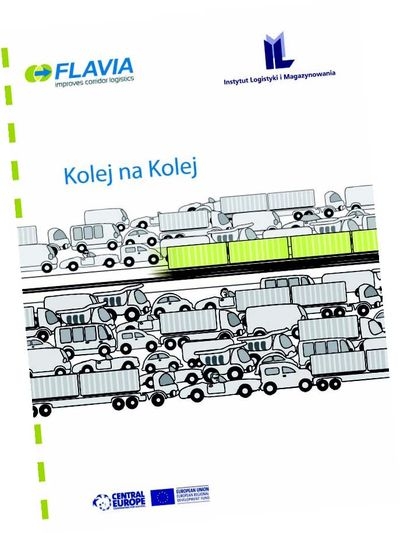
To achieve a 60% reduction in transport-related emissions in the face of growing demand for mobility, the White Paper defines criteria – both in relation to transport policy and the assessment of progress. According to these, by 2030, about 30% of long-distance road freight transport (over distances of more than 300 km) should be shifted to rail. By 2050, the White Paper recommends shifting even more than 50% of all long-distance road transport to other modes of transport, especially rail. Compared to 2005, this means nearly doubling the volume of rail transport (+87%). This represents a great opportunity for the railways, but also a challenge. The rail sector must prepare to handle about 360 billion tonne-kilometers more than it currently does. This requires supporting solutions in the field of multimodal and unitized transport, integrating inland waterways into the transport system, and creating a system for promoting innovative eco-friendly solutions in freight transport.
One of the ways to achieve the ambitious goals described above regarding increasing the share of rail transport is the presentation of selected best practices characterizing successful implementations of eco-friendly transport projects. This is handled, among others, by the European Commission-supported project FLAVIA (Freight and Logistics Advancement in Central/South-East Europe – Validation of trade and transport processes, Implementation of improvement actions, Application of coordinated structures), which aims to optimize intermodal freight transport logistics between Central and South-East Europe and strengthen the role of environmentally friendly modes of transport, such as rail and inland waterway transport. This will allow for the reduction of congestion and the improvement of regional and international transport.
The article comes from the magazine “Logistyka” 2/2012.
Check all transport solutions of the Institute of Logistics and Warehousing.