








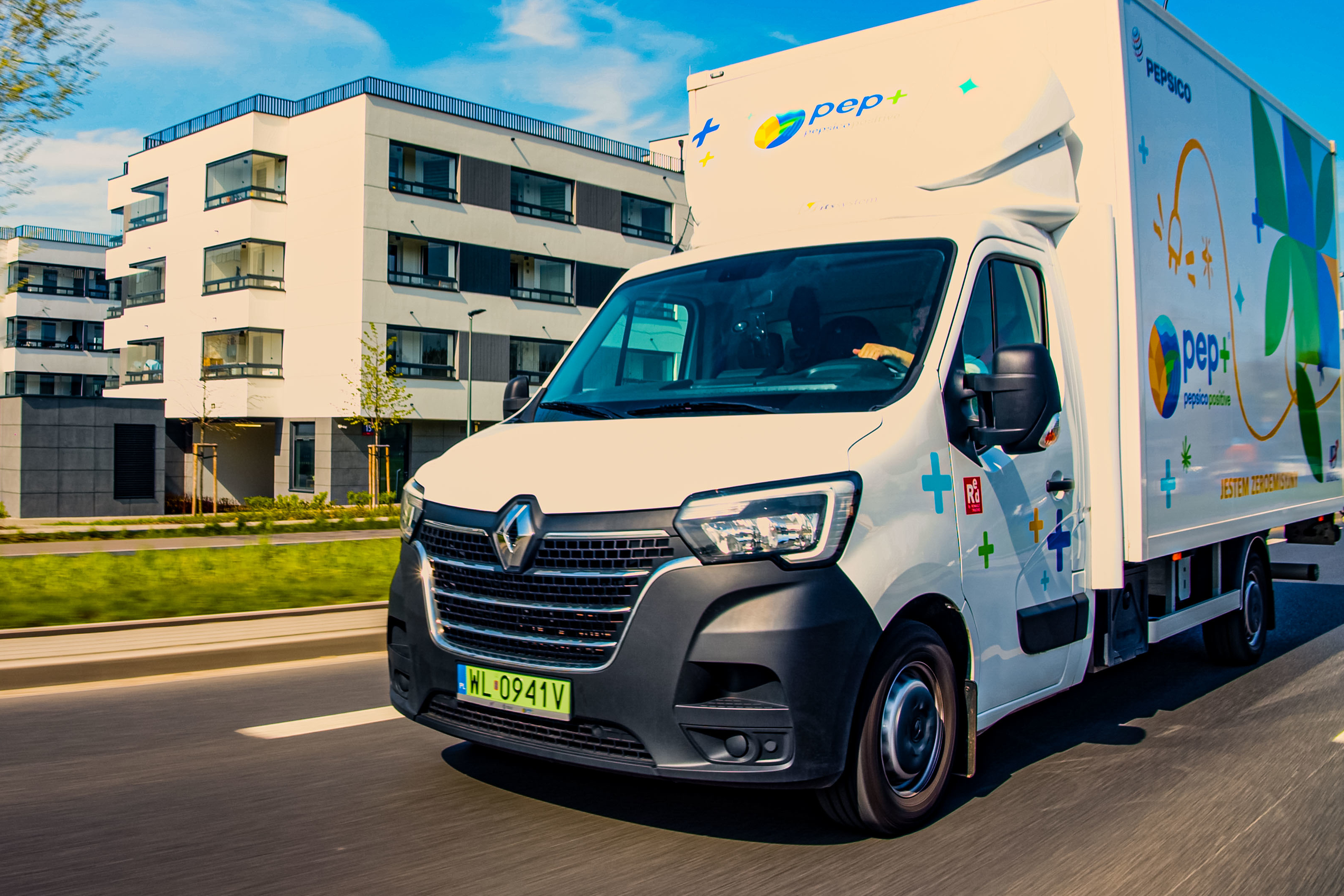
PepsiCo is supplying retail outlets in the heart of Warsaw by delivering beverages and snacks in zero-emission trucks. This initiative is part of the company’s strategic transformation towards the pep+ sustainability agenda. The new delivery vehicles, branded with the pep+ logo, are operated by ID Logistics Polska. The new vehicles generate neither exhaust fumes nor noise, which improves the quality of life for the capital’s residents. This is one of many investments that PepsiCo is implementing in 2024 as part of developing its corporate eco-fleet.
The zero-emission trucks are designed to transport PepsiCo brand products to stores, restaurants, shopping malls, refrigerators, and discount stores located in the part of Warsaw that will be covered by the Clean Transport Zone (SCT) starting in July of this year. The new vehicles also deliver products to the PepsiCo head office at Plac Konesera.
The Renault Trucks Master E-Tech electric trucks, which hold 8 product pallets, are equipped with new-generation 52 kWh batteries that allow for a range of over 160 km on a single charge. This specific model was chosen based on optimization and delivery efficiency in urban distribution. In addition to reducing CO2 emissions, the benefit of using new technology in the supply chain is the reduction of daily vehicle operating costs.
As part of the pep+ strategic transformation, PepsiCo is constantly investing in environmentally sustainable solutions, including projects that reduce CO2 emissions. PepsiCo Poland aims to electrify its entire vehicle fleet.
‒ In 2024, every area of our fleet will be electrified to some extent. Electric minivans will be made available to sales department employees. A fleet of electric passenger cars will appear at each of our production plants, and head office employees will be able to use electric company cars. This year in our company will be marked by investments in zero-emission vehicles, and consequently, further reductions in CO2 emissions. ‒ said Wojciech Osiadacz, Fleet and Transport Planning Manager at PepsiCo.
In the FMCG industry, modernizing logistics towards electromobility is crucial. PepsiCo strives to minimize the impact of its operations on the environment and the quality of life of city residents. The common goal of PepsiCo and its partners is to optimize the efficiency of delivery vehicles to achieve the set decarbonization target. By 2040, PepsiCo intends to achieve net-zero emissions across all aspects of its operations.