









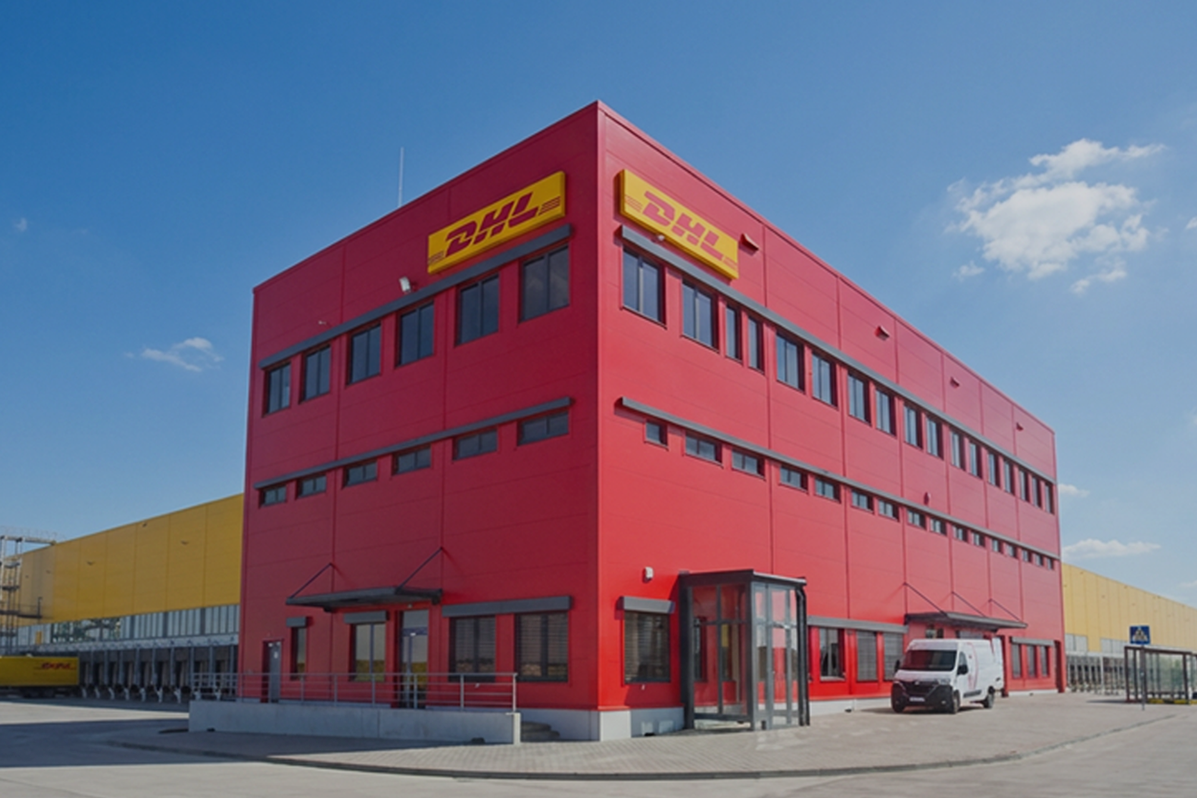
The importance of the courier industry for the Polish economy is growing significantly, extending far beyond the role of a service support sector. According to the latest report by the ZDG TOR Economic Advisors Team, this sector contributed as much as PLN 27.2 billion in value added to the economy in 2025, accounting for nearly 0.75% of Poland’s GDP, and DHL eCommerce is on the podium of companies generating this value. The report’s findings also indicate that increasing competition and investment benefit both consumers and entrepreneurs by increasing the availability of logistics services, stimulating trade, and positively influencing service prices.
ZDG TOR emphasizes that when assessing the courier industry’s contribution to the national economy, many factors must be taken into account: taxes paid (CIT, VAT), social security contributions (ZUS), wages, operating costs, services commissioned to couriers, as well as investments. A financial and economic analysis of leading companies in the courier industry showed that DHL eCommerce was among the top companies having the greatest positive impact on the development of the Polish economy.
The courier industry is effectively strengthening the Polish economy
The value added by the courier industry’s activities amounted to PLN 24.7 billion in 2024 and an estimated PLN 27.2 billion in 2025, which corresponds to approx. 0.75 percent of GDP. In direct terms, this result is influenced by the growing revenues of companies – from approx. PLN 17 billion in 2022 to over PLN 23 billion in 2025 – and the associated budget revenues. In 2024, courier companies paid approx. PLN 4.8 billion in VAT, and in 2025 this amount may exceed PLN 5.3 billion. The sector also fuels public finances through ZUS contributions and PIT tax, which will reach approx. PLN 1.8 billion in 2025.
The indirect impact is also significant – related to expenditures on services, energy, fuel, or infrastructure – which drives other sectors of the economy. In turn, the induced impact results from employee wages – in 2025, almost PLN 2.3 billion went to employees of courier companies. The report also points to the catalytic impact, visible in the sector’s long-term influence on the development of e-commerce and trade. An example is the growing scale of international shipments – in 2024 their number reached 56.4 million compared to 39 million in 2022 – which shows the industry’s role in the development of exports and the expansion of Polish companies into foreign markets.
Reducing the impact of the courier industry solely to corporate income tax (CIT) is a simplification, because in a phase of intensive development, it is primarily investments and the VAT stream that provide the strongest impulses for economic growth. This is a classic multiplier effect: every zloty invested by courier companies in modern sorting centers or parcel lockers works much more strongly in the economic circulation than a static transfer, e.g., from income tax. It can be safely said that every ordered package actually supports the Polish economy. – comments Adrian Furgalski, Chairman of the Board of the ZDG TOR Economic Advisors Team.
The fact that investments remain a strong impulse for the economy is evidenced by the capital expenditures of courier companies in Poland in 2025, which amounted to approx. PLN 1.7 billion, and in the years 2022–2024 exceeded a total of PLN 4.7 billion. These funds go, among others, to the construction, industrial, and technological sectors, driving the development of logistics infrastructure and the entire e-commerce background. One of the most active investors in the Polish logistics market is DHL eCommerce Polska, which has intensified its investment processes in recent years and is now on the podium among courier companies that invest the most in the country.
– For many years, we have been consistently investing in Poland. In 2024, we allocated 17% of our revenues to investments – the most in the industry. In 2025 alone, our capital expenditures in Poland amounted to PLN 329 million, focusing on modern logistics centers and the expansion of the OOH (Out-of-Home) network. We currently manage a network of over 8,000 DHL BOX 24/7 parcel lockers, and our development plans remain ambitious – by the end of 2026, we want this number to grow to 10,000 devices, responding to the growing needs of the market. In the perspective of the coming years, we will maintain a high pace of investment – comments Agnieszka Świerszcz, CEO at DHL eCommerce Polska.
However, our investment activities are much more than just infrastructure expansion. We cooperate with thousands of small and medium-sized enterprises, building ecosystems that support local businesses together with our partners. We are proud that for many years we have been an accelerator of economic development, enabling e-commerce trade in the country and opening new foreign markets for our Polish entrepreneurs. – she adds.
The greater the competition, the better for the consumer
The report notes that the image of the courier industry is gradually changing. New players are growing in the market, developing their own infrastructure: parcel locker networks, collection points, and logistics facilities. This translates into increased competition and greater availability of services.
One of the most important conclusions of the report is the clear correlation between the level of competition in the courier market and the delivery costs incurred by customers of online stores. The authors analyzed the offer of over 1,700 e-commerce stores and compared the prices of delivery services depending on the number of operators available in a given store.
In a situation where a store cooperates with only one operator, the average delivery cost is about PLN 17. As the number of available providers increases, this price systematically falls, and in stores offering the services of seven operators, the average delivery cost is less than PLN 11.
Competition affects not only prices but also the availability and range of services, a greater choice of delivery forms, shorter lead times, and greater flexibility in picking up shipments. In 2024, there were 51,714 parcel lockers in Poland, and in 2025 their number exceeded 66,000 devices. DHL eCommerce makes a significant contribution to the development of infrastructure – at the end of 2025, the company already had 8,220 DHL BOX 24/7 parcel lockers and 16,000 POP collection points.
The results of the analysis show very clearly that competition in the courier services market translates into real benefits for consumers and entrepreneurs. The greater the choice of logistics operators, the greater the pressure on prices and service quality. This is particularly important in the context of the dynamic development of online trade, which is one of the main growth engines for the courier industry today. In practice, we are dealing with an increasingly strong ecosystem connecting e-commerce with retail trade through logistics operators. In such a model, each of these industries drives each other’s development. – summarizes Adrian Furgalski, Chairman of the Board of the ZDG TOR Economic Advisors Team.
The ecosystem of e-commerce, logistics, and trade
The value of the e-commerce market in Poland in 2025 is estimated at approximately PLN 140 billion, and the growing scale of online sales makes logistics one of the key elements of the customer shopping experience. The so-called convenience is becoming increasingly important here, i.e., the ability to choose the form of delivery best suited to the lifestyle and shopping habits of consumers, from home delivery, through collection at partner points, to parcel lockers, as well as an easy and fast return process.
An increasingly strong ecosystem of cooperation between the e-commerce sector, logistics operators, and retail trade is emerging around online trade. Such a model supports both Polish business: online sellers and local collection points, as well as the consumers themselves, who gain more choice and delivery convenience. The development of a network of collection points in stores and service outlets is of particular importance. An example of such a model is the activity of DHL eCommerce, which develops a network of lockers and collection points in cooperation with retail partners, including Biedronka and Kaufland. As the report indicates, picking up a shipment at a local store very often involves additional purchases that would not have taken place if the package had been ordered for home delivery or to a parcel locker. In this way, the development of e-commerce logistics also supports local trade.
Prospects for the development of the courier market
The development of the courier industry in the coming years will be closely linked to the further growth of online trade. The conclusions of the TOR report indicate that maintaining market competitiveness, investments in logistics infrastructure, and the development of new technologies will be crucial for further strengthening the e-commerce ecosystem in Poland. The growing scale of online shopping will also require further investments in last-mile delivery infrastructure. From the consumer’s point of view, this means a greater choice of delivery forms, increasing convenience of online shopping, and further improvement in the availability of logistics services.
The report is available at the link: https://zdgtor.pl/publikacje/polska-jako-marketplace-analiza-wplywu-branzy-kurierskiej-na-krajowa-gospodarke/
The DHL Group has been present on the Polish market for 35 years, actively supporting the development of the economy and accompanying Poland in the transformation process. During this time, it has become a trusted partner for tens of thousands of enterprises, enabling Polish companies to develop and expand into international markets. At the same time, it contributes to building a competitive logistics services market through investments in infrastructure, network development, and modern delivery solutions. There are five divisions of the DHL Group operating in Poland, offering a wide range of logistics services – from express and domestic shipments, through road, air, and sea transport, to comprehensive solutions for e-commerce and supply chain management.
Source: DHL eCommerce Polska