








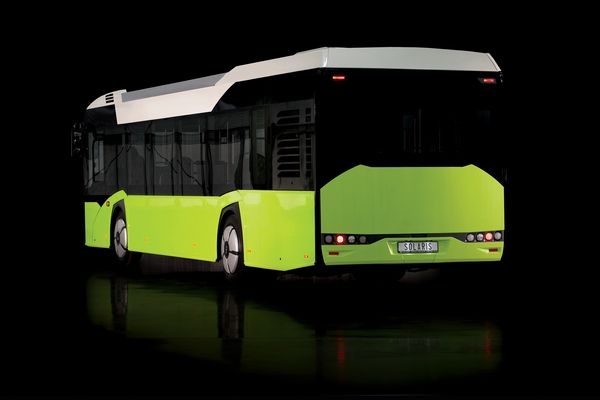
During a grand presentation at the IAA Nutzfahrzeuge 2014 trade fair in Hanover, two versions of the bus were unveiled: 12-meter and 18-meter models. The new Solaris Urbino in standard and articulated versions is available to customers from the day of the premiere. Serial production will begin in 2015. Other models in the new edition will be successively introduced to the market in the coming months.
The new Solaris
In Hanover, the Polish manufacturer presented an innovative bus concept. It features a lighter, even more durable structure combined with a highly attractive design. Many improvements have been introduced, covering almost all areas of the vehicle. At the same time, the characteristic elements of its predecessor, which have proven themselves perfectly over the last dozen or so years of operation, have been preserved.
Lighter and stiffer structure
Compared to the current version of the Urbino, the skeleton structure of the new bus is both lighter and stiffer, while remaining just as durable, as it is made of the same material with high corrosion resistance. The reduction in vehicle weight was also influenced by the way the steel elements are shaped and positioned. During the design process, many innovative solutions were introduced, including the use of joints that reinforce the area where the vertical profiles of the skeleton meet the horizontal ones. An additional reinforcement and stiffening of the skeleton is the sheet metal floor. Only on top of this is the highest quality plywood glued. Thanks to this new solution, the bus floor is not only more durable but also better protected against weather conditions. The structure was designed to allow for the installation of air tanks in the front part of the bus. A factor influencing its strength is also the attachment of the floor sheet and the ceiling sheet to the skeleton in more places. A significant reduction in the vehicle’s curb weight significantly affects fuel consumption reduction, which buyers will surely note with satisfaction.
The new structure and construction method also allowed for a reduction in vibration and noise levels both outside and inside the bus. The vehicle has received an additional insulation layer, which lowers operating costs and increases ride comfort. The new Solaris, in which the noise level does not exceed 74.8 dB, meets the most stringent standards in this regard (European standard 80 dB, German market standard 77 dB).
“Skin on skin” assembly technology
The “skin on skin” vehicle construction technology allows for increased efficiency of production processes and ensures an even higher aesthetic finish. It makes the bus easier to service. The side panels are bolted to each other, which allows for simpler assembly and replacement in case of body part damage. More convenient access to individual vehicle components has also been achieved through the use of rear and side inspection hatches that open at a 170-degree angle, rather than the previous 130 degrees.
The engine compartment has been prepared for the installation of Euro 6 emission standard drives with various capacities. In the new Solaris versions with combustion engines, the innovative DAF (model DAF MX-11 PACCAR) and Cummins (model ISB6.7E6) power units, known from current models, will be installed. The latter manufacturer is also a supplier of ISLG8.9E6 engines powered by compressed natural gas (CNG).
The new Solaris has been developed with all types of vehicles in mind. It is prepared for the installation of both Euro 6 compliant engines and their gas counterparts, hybrid or electric drives. The presented solutions will find application in buses and trolleybuses.
Revamped interior
The introduced structural innovations allow for better distribution of axle loads by relieving the drive axle. This was achieved, among other things, by moving all compressed air tanks to the front of the vehicle. This, in turn, means that we have more passenger space available, and the bus is even more comfortable to drive.
An undoubted advantage of the new Solaris is the significantly higher number of seats accessible from a low floor (up to 16 in the 12-meter version, up to 24 in the articulated version). Additional space was obtained, among other things, by placing fuel tanks on the vehicle’s wheel arches. This change also means that the bus in the MAXI class has a completely low floor between the first and second axles.
A pleasant ride is ensured by larger windows and LED interior lighting. Another novelty is the possibility of turning on so-called indirect lighting, which provides greater comfort after dusk.
More convenient boarding and alighting
Travel comfort in the new Solaris is increasing. Boarding and alighting for passengers is also easier. This is the result of increased passenger space and the use of wider and taller doors. Their standard width is now 1230 mm, and it is also possible to order a version with a width of 1250 mm. In turn, the door height, depending on the model chosen by the customer, will range between 1970 mm and 2000 mm.
A change worth noting in the case of the two-door Urbino 12 model is the shifting of the second pair of doors towards the rear of the vehicle by the distance of one module. Only Solaris offers such a solution on the market. In the eighteen-meter version of the vehicle, the position of the second pair of doors has been additionally changed by an analogous width, which undoubtedly improves passenger “exchange”.
Even higher ride quality
When designing the new Solaris, attention was also paid to the comfort and ergonomics of the driver’s workstation. They receive a cabin positioned 50 mm higher than in the previous model, which ensures improved visibility as well as better contact with passengers. Additionally, visibility has been improved by lowering the position of the windshield belt. The premiere vehicle features a modern, clear, and intuitive touch dashboard, already known from the Polish manufacturer’s electric buses and trams.
The new Solaris buses have LED daytime running lights as standard. External headlights are also available in this energy-saving technology, however, at the customer’s request, it is possible to install xenon or halogen lights.
Safety
The bus handles even more confidently, which results from the use of bellows with progressive characteristics and modern shock absorbers. As an option, Solaris offers adaptive shock absorbers. They make the vehicle flexibly adapt to changing road conditions and speeds. The above solutions protect against tilting during turns, which occurs during faster driving. The buyer can also take advantage of a variant including the installation of an ESC electronic stability control system.
The vehicle also handles more confidently and comfortably thanks to a lower center of gravity, as the roof structure of the new Solaris has been lowered by 50 mm while maintaining the existing interior height.
Distinctive and coherent design
An innovative solution is also the unification of the appearance of low-floor and low-entry buses and the harmonization of their equipment elements with trams. This type of approach means that the user receives vehicles that form a visually coherent whole. This undoubtedly has a practical dimension, as it allows carriers with different types of Solaris vehicles in their fleet to use many identical equipment elements and the same spare parts. The standardization process of spare parts will also contribute to lowering the vehicle’s operating costs.
Last but not least – the new, distinctive Solaris design. The slightly rounded shapes of the previously known Urbino have received a more dynamic and modern look. The covers located on the vehicle’s roof hide the equipment elements placed on the bus, which increases its aesthetic value. The futuristic body line indicates an orientation towards the future, and its task is to attract the attention of passengers.
Introducing a new vehicle to the market means opening another chapter in the company’s history. It gives the Polish manufacturer huge development opportunities and guarantees high competitiveness in the constantly developing market of buses and trolleybuses. The goal behind creating the new Solaris was to design a model that, with its attractive appearance, will encourage passengers to use public transport, and the comfort of travel will make them no longer want to switch back to their cars.