









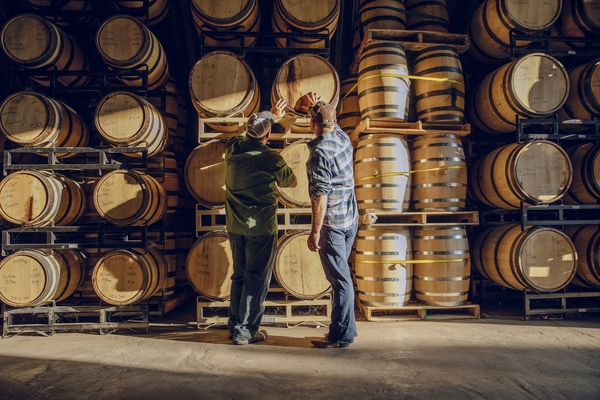
Hillebrand has developed an innovative transport solution to protect oak barrels from TCA.
Logistics operator Hillebrand specializes in serving the beverage market. Alcohol is a demanding commodity, which is why the company introduces various solutions to ensure it does not lose quality during transport. Hillebrand works with manufacturers of oak barrels shipped to wineries around the world, including the USA. In the case of transporting such cargo, safe delivery conditions without the risk of cross-contamination are of significant importance.
The latest and innovative solution from Hillebrand, designed to ensure the safe transport of sensitive cargo, is an integrated insulation liner used for transporting oak barrels and other products requiring protection against volatile contaminants. This proprietary and patented solution was developed in response to new challenges posed to the operator by the coronavirus. A lack of appropriate equipment, insufficient time to meet new hygiene and quality control standards, as well as delays at ports, forced the company to seek new ideas.
What winemakers fear most are haloanisoles – volatile chemical compounds. Wine contaminated with them has a musty or moldy smell, most commonly associated with faulty corks. The most common haloanisole in wine is TCA. It can also be formed during contact with wood products used in the winemaking process, e.g., oak barrels or chips. Wineries take great care to avoid TCA contamination of barrels. Barrels are handcrafted over 2-4 years while maintaining appropriate temperature, humidity, and hygienic conditions, and coopers want them to reach wineries under similar conditions.
For barrels to maintain their properties, it is necessary to keep humidity levels low and prevent them from getting dirty in the container. In the crisis situation of the epidemic, Hillebrand experts developed an optimal solution – an integrated insulation liner that creates a protective barrier against contamination by TCA and other chemical compounds, protects the container from rain, and reduces fluctuations in temperature and air humidity during transport. The Hillebrand insulation liner film has a water vapor transmission rate of no more than 2 g/m²/day, which means a very low level of moisture permeability (ASTM F 1249 test method). The patented technology guarantees a constant level of humidity, ensuring the safe transport of oak barrels and other sensitive cargo.
The Hillebrand insulation liner has already been tested by the Australian Wine Research Institute (AWRI) under the supervision of Scorpex Wine Services. Made of a fully recyclable material, the liner provides an effective protective barrier against halophenols, naphthalenes, and hydrocarbon compounds. Typically, 1 mm polyethylene film is used as protection against such contaminants, which allows for the penetration of polluting substances. Studies have shown that the Hillebrand solution allows for maintaining a migration level below 4.6 percent of the standard norm used for TCA. The Hillebrand solution is therefore significantly more effective in protecting sensitive cargo from contamination.
The integrated insulation liner, developed by Hillebrand specialists, can be used not only for transporting oak barrels but also for other products requiring additional protection against contaminants such as haloanisoles, halophenols, naphthalene, or hydrocarbons. A special version of the integrated insulation liner has also been prepared for the 40′ High Cube container.
Source: Hillebrand