








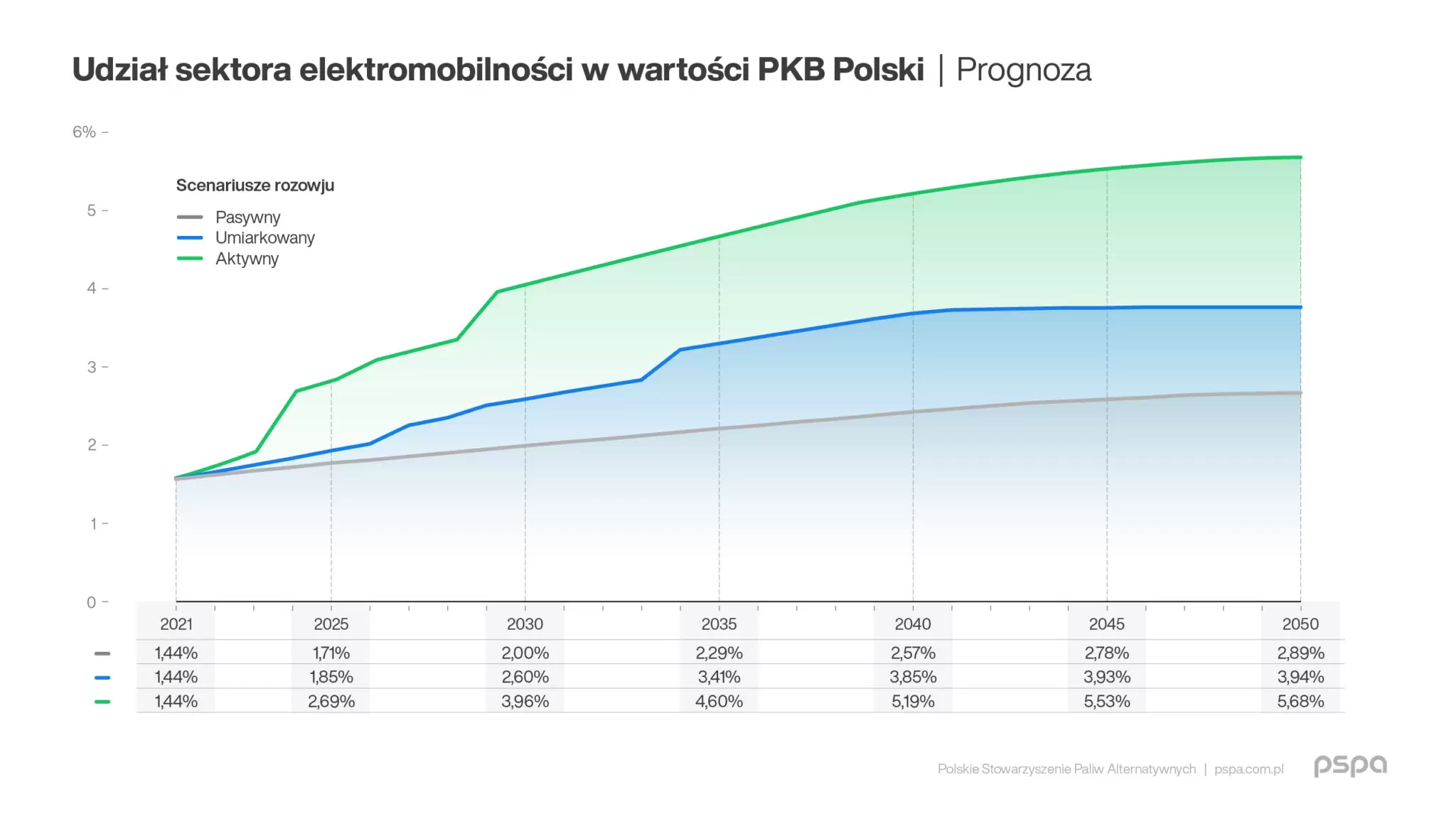
The share of the e-mobility industry in Poland’s GDP could rise to nearly 6% over the next three decades, according to the latest report by the Polish Alternative Fuels Association (PSPA). To fully leverage the opportunities associated with the transformation of the automotive industry, it is necessary to, among other things, support the domestic zero-emission transport market, optimize legislation, increase R&D spending, and ensure investor access to qualified personnel.
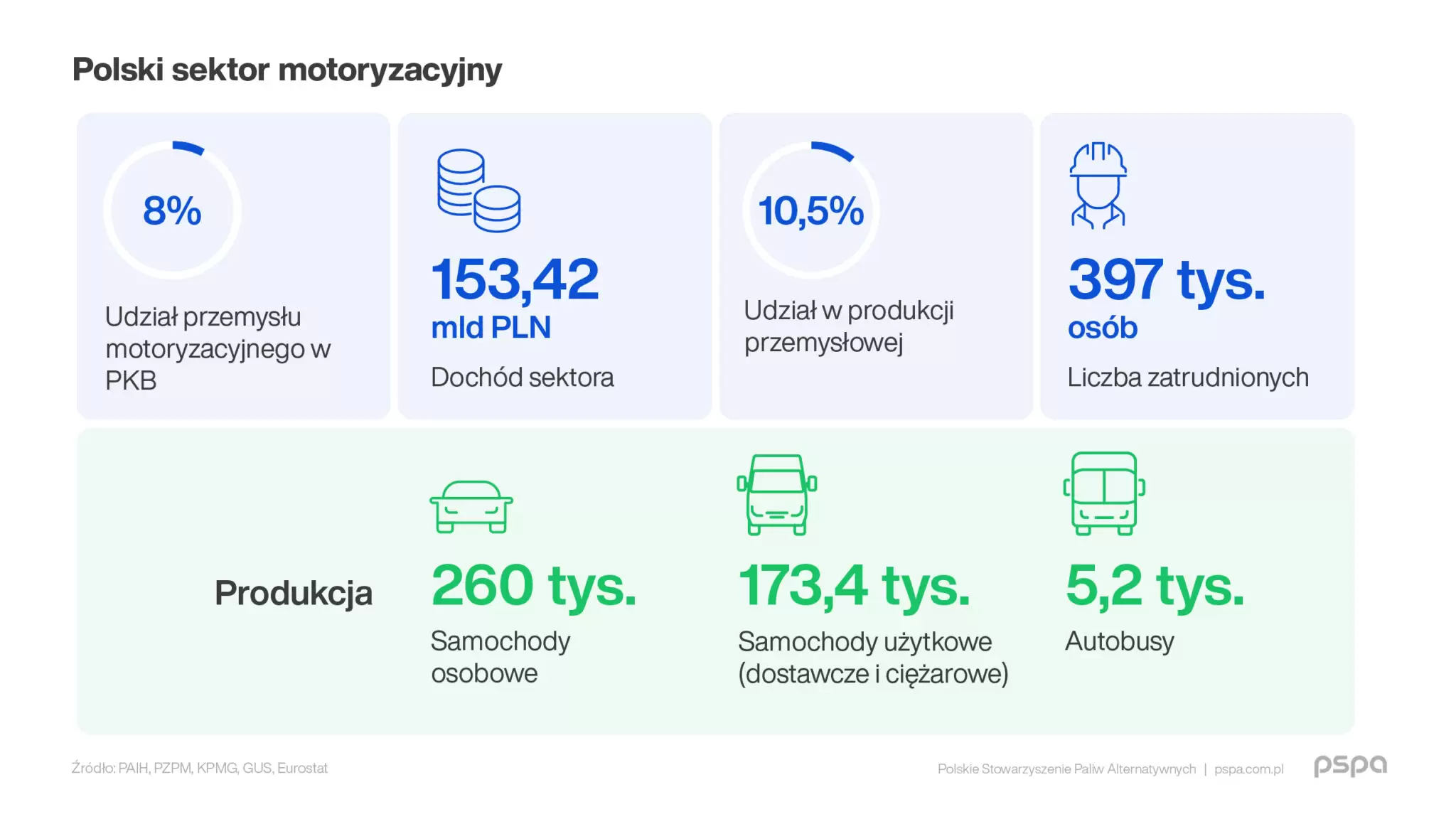
The automotive industry is currently one of the pillars of the Polish economy. It accounts for 8% of GDP and approximately 13.5% of export value. The driving force of the industry is component suppliers. Poland ranks 10th on the list of the world’s largest exporters of components, with an export value of 12.3 billion dollars. Furthermore, in 2021, 439,100 vehicles were produced in Poland. Employment in the Polish automotive industry and related sectors is approximately 400,000 people (which is 7.6% of all people employed in industry), placing our country in third position in the European Union. However, the automotive sector is on the verge of the greatest revolution in its history, related to the transition from internal combustion engines to electrified powertrains. The development of electromobility globally is accelerating, which poses a huge challenge for the entire supply chain and the economy of the entire European Union. In 2021, the number of newly registered electric vehicles was 6.6 million, and their share was nearly 9%. For comparison, in 2015, 351,000 EVs were sold, while in 2010, it was 7,300. Based on forecasts by the International Energy Agency (IEA), in 2030, more than one in three cars sold globally will be equipped with an electric powertrain.
– In connection with the planned amendment to Regulation 2019/631, from 2035, it will no longer be possible to register new passenger cars and vans with internal combustion engines in any EU member state. In the following years, manufacturers of conventional vehicles and their components will gradually lose significance, and supply chains will undergo significant restructuring. The transformation of the industry is a great challenge, which – in the absence of appropriate remedial measures – could result in a significant reduction in production, factory closures, mass layoffs, and consequently, negative effects for the entire national economy. The emerging e-mobility market also creates a number of new opportunities for countries, companies, and institutions that take steps early enough to strengthen their position in this area – comments Maciej Mazur, Managing Director of the Polish Alternative Fuels Association (PSPA).
The latest PSPA report, “The Impact of Electromobility on Economic Development in Poland,” contains a forecast covering three variant scenarios for the share of the e-mobility industry in Poland’s GDP between 2022 and 2050. The economic significance of this sector depends on the degree of involvement of public administration and other stakeholders in implementing instruments that favor the transformation of the Polish automotive industry.
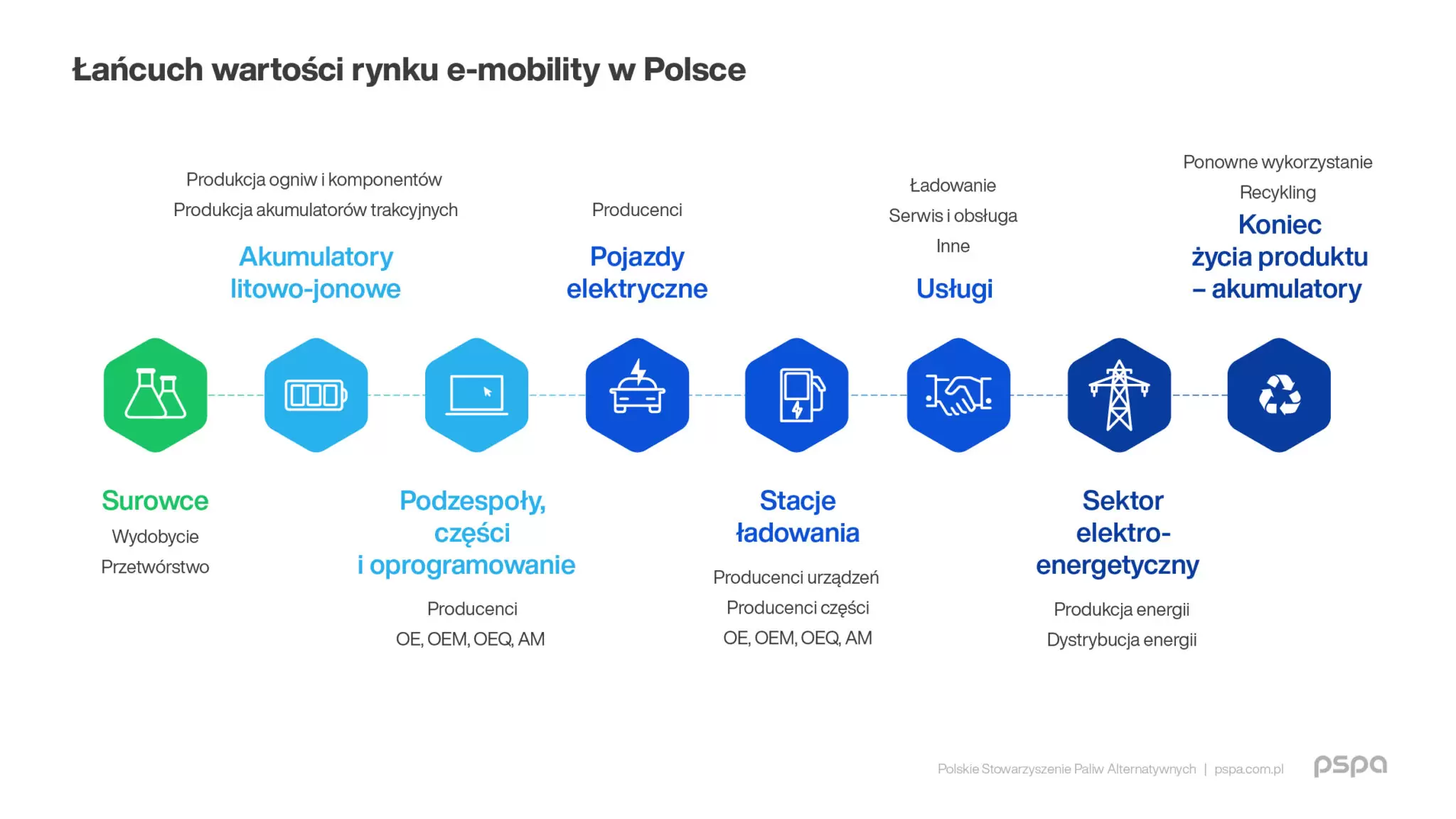
– Already today, companies with factories in Poland are leaders in the European e-mobility supply chain in two areas – batteries and electric buses. Maintaining this leading position in the coming years and developing domestic competencies in sectors such as the production of electric cars, their components, and charging stations, or the recycling of lithium-ion batteries, will not happen without creating conditions conducive to locating new investments in Poland. It is also necessary to raise domestic competencies in the field of research and development, ensure access to a qualified workforce, and limit factors hindering the transformation of the automotive industry. Comprehensive optimization of the law and the expansion of subsidies stimulating the development of the internal zero-emission transport market, which for many companies represent the main sales direction for e-mobility products, are also essential – says Jan Wiśniewski, Director of the PSPA Research and Analysis Center.
PSPA points out that the pace of the transformation of the Polish automotive sector is primarily the responsibility of the long-term strategies of current and potential investors; however, national production potential can be significantly increased, among other things, by better aligning the competencies of secondary and higher education graduates with employer expectations through closer cooperation between education and business, or by co-financing training programs as part of an initiative similar to the “Compétences et métiers d’avenir” program launched in France in December 2021.
– Public administration can support innovation in the automotive industry by providing a dedicated source of funding (e.g., in the form of a special-purpose fund), tax incentives, implementing mechanisms to facilitate obtaining information about available subsidies, or ensuring effective coordination of the R&D program. It is reasonable to establish a modern, highly specialized institution responsible for developing innovative solutions through cooperation between the public and private sectors. A model for such an entity could be the Czech Mobility Innovation Hub (MIH) or the ZalaZone complex operating in Hungary – says Albert Kania, Senior New Mobility Manager at PSPA.
It is also important to support the internal e-mobility market in order to increase demand for products such as charging stations or zero-emission buses supplied by Polish factories. Of key importance in this regard is the continuation of programs such as “My Electrician” or “Green Public Transport,” the introduction of regulations removing the main barriers to the development of a network of publicly accessible chargers, or an increase in expenditure on the expansion and modernization of power infrastructure.
– Depending on the adopted scenario, the forecasted share of electromobility in Poland’s GDP in 2030 may range from 2% to nearly 4%, and in 2050 – from just under 3% to nearly 6%. It largely depends on the implemented support instruments whether Poland will become a production hub for zero-emission vehicles and related components, or whether the importance of the automotive industry in the national economy will systematically decline as factories are relocated and e-mobility sector investments are placed in other European Union member states – concludes Maciej Mazur, Managing Director of the Polish Alternative Fuels Association (PSPA).
The report “The Impact of Electromobility on Economic Development in Poland” is available at the link.