








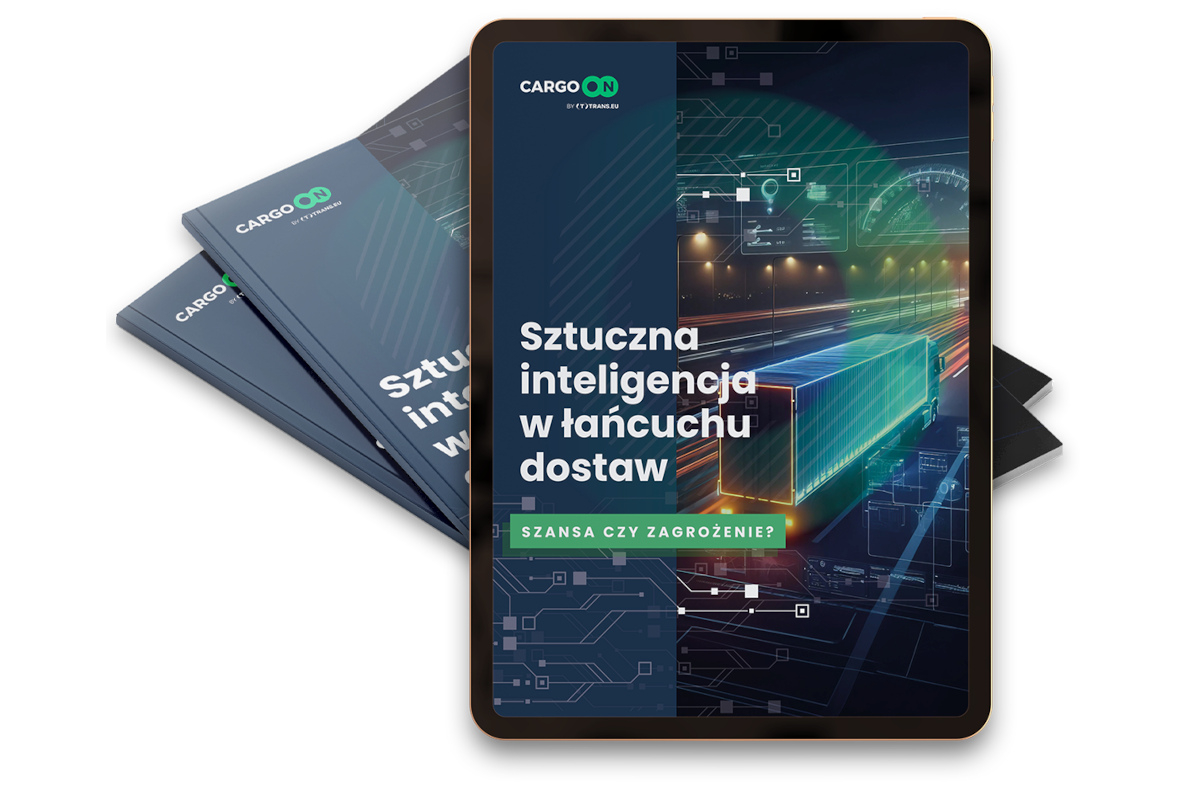
The world of logistics and supply chain management is on the verge of a transformation catalyzed by artificial intelligence (AI). The latest CargoON report, “Artificial Intelligence in the Supply Chain,” analyzes how AI is revolutionizing the industry landscape, offering a range of strategic benefits and unprecedented efficiency.
Transformational trends
AI algorithms are rapidly taking over new areas of logistics. However, to increase efficiency and profitability, companies must share data with their partners. The “Artificial Intelligence in the Supply Chain” report highlights several key trends and factors:
- Predictive analytics and forecasting: AI-based predictive analytics can significantly improve demand forecasting, inventory management, and production planning, leading to reduced waste and increased customer satisfaction.
- Automation and robotics: AI-driven automation is revolutionizing warehouse and logistics operations. From automated sorting systems to AI-based robotic process automation (RPA), the potential for efficiency growth is limitless.
- More effective decision-making: AI algorithms can process large amounts of data in real-time, providing supply chain managers with actionable insights and enabling informed decision-making.
- Supply chain resilience: Artificial intelligence can help create more resilient supply chains by identifying potential risks and disruptions well in advance, allowing for the implementation of proactive measures.
Voices from the sector
To provide a more grounded perspective, the report presents the opinions of industry experts who have had the opportunity to observe and experience the potential of AI in the transformation process. Experts note that artificial intelligence significantly impacts route optimization, fleet management, as well as demand forecasting and data analysis. As a result, AI enables better inventory management and the reduction of overstocking, which contributes to increasing the operational efficiency of companies.
Anna Majowicz, Chief Operating Officer at the Polish Institute of Road Transport (PITD), emphasizes the significant impact of artificial intelligence on various aspects of the industry’s operations. – Artificial intelligence can significantly change the way supply chains function. Primarily by improving the efficiency and precision of demand forecasting, it will allow for better inventory management and the avoidance of overstocking. Automation of warehouse processes, such as sorting, packing, and labeling, will allow for increased productivity and a reduction in errors. Optimization of routes and delivery schedules will minimize transport costs and delivery times. And thanks to real-time data analysis and the use of predictive algorithms, we will improve our ability to respond to changes and crises, which have been plentiful in recent years.
Juan Manuel Sen, IT Project Delivery Manager & Innovation Lead Iberia at DHL Supply Chain, highlights the transformative potential of artificial intelligence in workforce planning and transport management. – We have so-called predictive models to determine the demand for employees, which allows for timely planning of recruitment and training. The idea is for trained personnel to join the rest of the staff exactly when they are needed. We also use machine learning to forecast the number of transport vehicles needed over the next three to four months – explains Sen – These improvements not only increase productivity but also significantly reduce operating costs.
Setting the path forward
As the report shows, the integration of artificial intelligence into the supply chain is not just a passing fad, but is becoming a strategic necessity for companies that want to remain competitive in today’s market. By adopting AI solutions, enterprises can gain a new level of efficiency, resilience, and customer satisfaction.
The report is available at the link.
Source: CargoON