








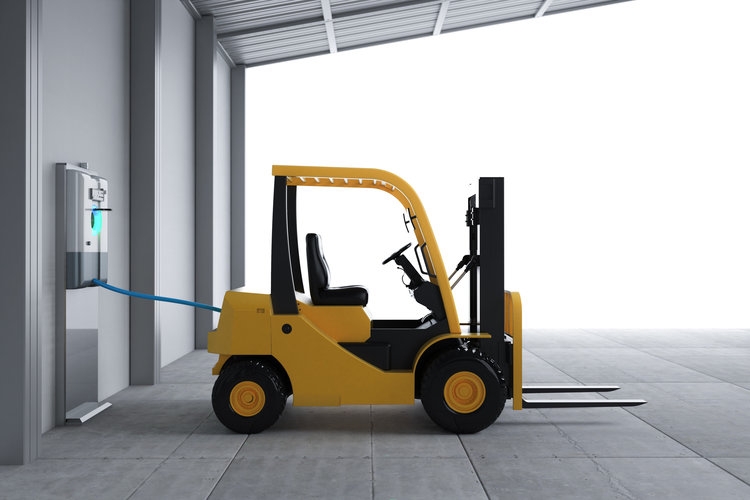
Warehouses, distribution centers, and manufacturing plants have no room for error today. In an era of globalization, time pressure, and rising operating costs, it is essential to use solutions that guarantee precision, predictability, and the minimization of losses. In this context, the electric forklift has gained the status of an essential element of internal transport infrastructure. The decision to implement it does not stem from a trend, but from a cold calculation of profitability and compliance with future environmental requirements.
New standards in logistics and production
Industrial facilities are subject to increasingly strict emission and noise standards. In enclosed spaces where many people are present, exhaust emissions not only reduce comfort but also pose a health risk. Electric forklifts eliminate this problem – they operate silently, do not emit gases, and enable safe work in rooms with limited ventilation.
Electric forklift – a modern solution for the demanding
Technological and ergonomic advantages
Modern electric-powered forklifts not only transport goods but also communicate with fleet management systems. Remote diagnostics and safety systems, such as operator presence detection or overload sensors, are becoming standard for them.
The lithium-ion batteries used in them allow for charging times to be reduced to 1–2 hours. The lack of a memory effect enables so-called opportunity charging during work breaks. As a result, the device can operate almost without downtime during a standard shift.
Savings and operational efficiency
Operational calculations are clear:
- the cost of electricity needed to charge the battery is on average 55–65% lower than fuel for internal combustion engines,
- the number of moving parts in an electric motor is up to 70% lower than in an internal combustion unit, which reduces failure rates,
- thanks to lower wear on components, the service interval is significantly extended.
From the perspective of a logistics manager, an electric forklift is a real saving – not only of money but also of time and the risks associated with sudden breakdowns.
The ecological future of warehouses and production halls
Implementing ESG (Environmental, Social, Governance) policies forces the reduction of the carbon footprint and the transition to renewable sources. An electric forklift, powered by electricity from photovoltaics or other “green” energy sources, allows this goal to be achieved without compromising on efficiency.
From an OHS perspective, electric models are also safer – the absence of exhaust fumes, CO2 emissions, or fuel leaks eliminates several typical hazards. Additionally, the lower noise level positively affects employee concentration and reduces fatigue during a shift.
Forklift service – a guarantee of operational continuity
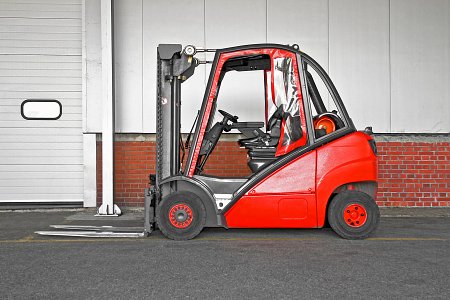
Even the most advanced equipment requires inspections. Forklift service should be fast, predictable, and not disrupt warehouse processes. In electric models, diagnostics are simplified – many faults can be detected remotely, even before physical symptoms appear.
Modern companies use contract services that include periodic inspections, replacement of wear parts, and access to replacement equipment. Thanks to this, even in the event of a breakdown, warehouse operations do not stop. A well-organized service allows downtime to be reduced to a few hours rather than days.
Why is it worth choosing electric solutions from Eddi Complex?
Eddi Complex offers not only the delivery of vehicles but also comprehensive support – from selecting the right model to full service. The company also provides electric forklifts of various load capacities.
Additionally, it offers:
- availability of spare parts in less than 48 hours,
- a service fleet operating throughout Poland,
- options for leasing, rental, and the sale of used vehicles.
Eddi Complex focuses on transparency, fast turnaround times, and solutions that can be adapted to the specific nature of the facility.
The energy transition in the industrial sector requires rational investment decisions. An electric forklift is the answer to the needs of companies that expect reliability, cost reduction, and compliance with environmental regulations. Supplementing a fleet with electric-powered vehicles is no longer an innovation – it is a necessity that brings measurable benefits. Combined with professional forklift service, electric solutions become a key element of the sustainable development of logistics and manufacturing companies.