









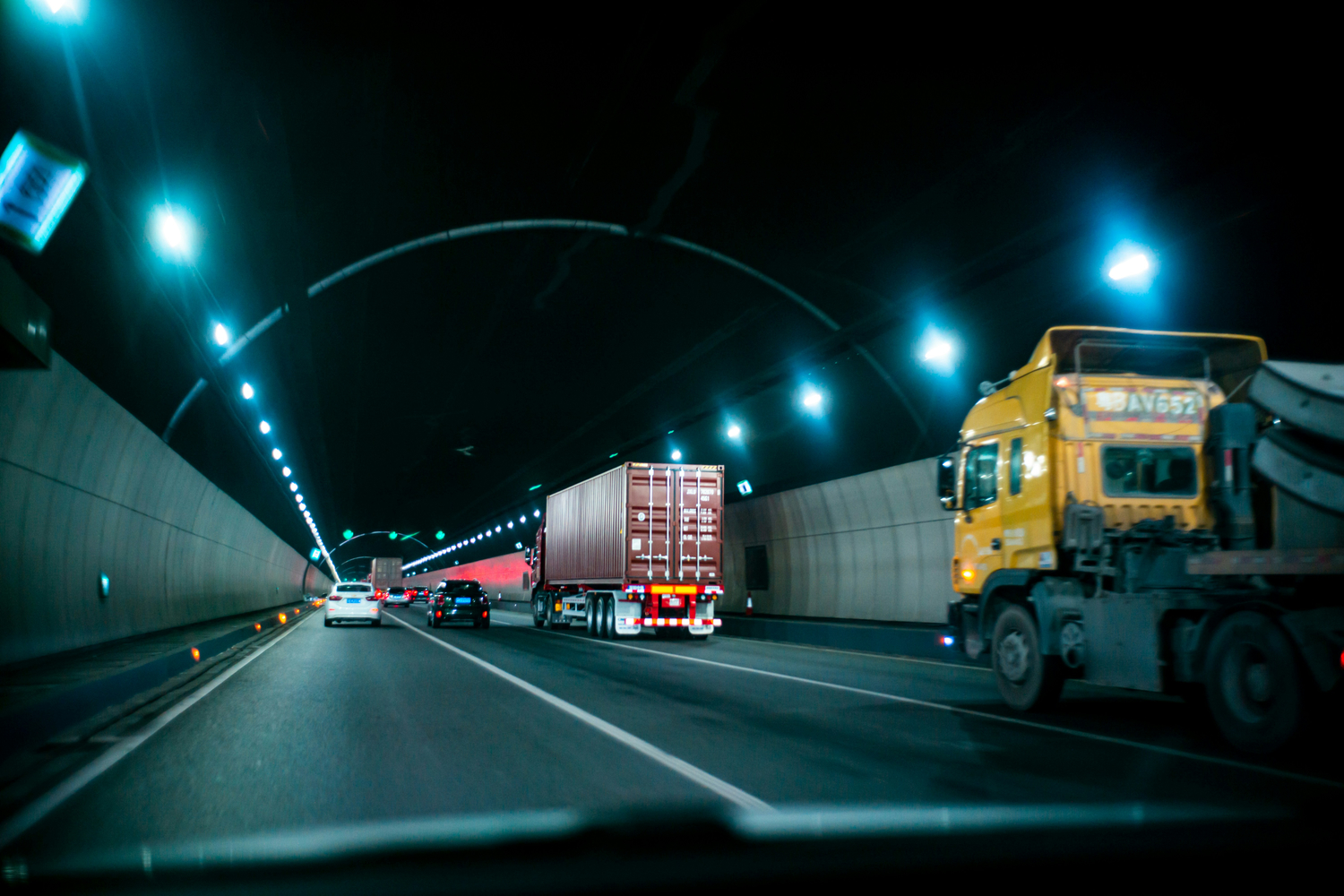
In 2024, over 27.6 million tons of cargo were transported via intermodal rail freight in Poland. This method is considered more environmentally friendly and cost-effective, but it has its limitations related to combining two modes of transport. In today’s article, we discuss the advantages and limitations associated with intermodal transport.
What is intermodal transport and when is it worth using?
Intermodal transport involves moving the same cargo using at least two modes of transport, most commonly road and rail, without reloading the goods themselves along the way. The mode of transport changes, but the loading unit remains the same: it can be a container, an intermodal semi-trailer, or a swap body. A truck usually handles the first and last leg of the route, while the train takes over the longer part of the journey. This allows companies to better plan regular deliveries, reduce dependence on road transport over long distances, and often lower delivery costs in the process.
The decision to use intermodal transport is rarely made for the first delivery; it is most often chosen by companies looking for optimization in repetitive operations: fixed delivery routes and stable volumes.
For a freight forwarder and logistics operator, this means a different way of planning deliveries. It is not enough to just select a vehicle and a driver. You must synchronize the terminal, loading window, intermodal unit, documents, rail route, and final distribution.
Advantages of intermodal transport
As indicated by one of the largest Polish international carriers, Zet Transport, the greatest advantage of intermodal transport is the better distribution of tasks between road and rail. A truck allows for flexible cargo pickup from the sender and delivery to the recipient, while the train takes over the long, repetitive part of the route. Such a model helps reduce risks related to driver availability, fluctuations in road transport costs, and traffic congestion on major transport corridors. For companies, greater predictability in planning is also important, especially for regular deliveries between fixed points. Well-organized intermodal transport can also lower transport costs, facilitate inventory planning, and reduce pressure on last-minute shipments.
What needs to be determined before ordering intermodal transport
Intermodal transport begins with determining whether a specific delivery is suitable for this form of transport. What cargo is to be transported? How is it packed? Can it be placed in an intermodal unit? What is the access to the terminal like on the sender’s and recipient’s side? Is the route fixed? Is the recipient ready to accept the delivery within the time window resulting from terminal and rail operations?
This is where the role of the operator comes in, connecting the logistics of both modes of transport. In intermodal transport, huckepack semi-trailers and BDF swap bodies are most commonly used. Their role is to allow cargo to move from road to rail without unloading and repacking the goods. Huckepack semi-trailers have a design adapted for vertical loading onto a rail wagon, and BDF bodies can be separated from the vehicle and handled as an independent loading unit. Thanks to this, intermodal transport does not disrupt the logistics process but allows for combining the flexibility of road transport with rail transport over longer distances.
A company planning such a model should also determine who is responsible for each stage of transport. Who organizes the road pickup? Who is responsible for the terminal? Who manages the documents? Who coordinates the rail transit and the last mile? The more fragmented the process, the greater the importance of having a single operational information source available to all parties.
Not every cargo is suitable for intermodal transport
Intermodal transport has its limitations. Not every type of goods, deadline, or route will be natural for it. Cargo requiring very fast response times, non-standard handling, frequent changes in delivery locations, or transport outside of terminal working hours can be problematic. An additional barrier is sometimes the availability of infrastructure on both sides of the route.
In many cases, intermodal transport is cheaper and more ecological, but only if the delivery meets specific conditions. If a company ships goods cyclically, has predictable deadlines, and can plan deliveries well in advance, the road-rail model becomes an attractive alternative. If every delivery is an emergency and changes at the last minute, intermodal transport can become a source of tension instead of order.
This distinction is important for the entire TSL industry. Talking about intermodal transport too simply builds expectations that infrastructure and operational practice do not always confirm. A mature approach is less flashy but more effective: first, an analysis of possibilities and conditions, then the selection of the model.