









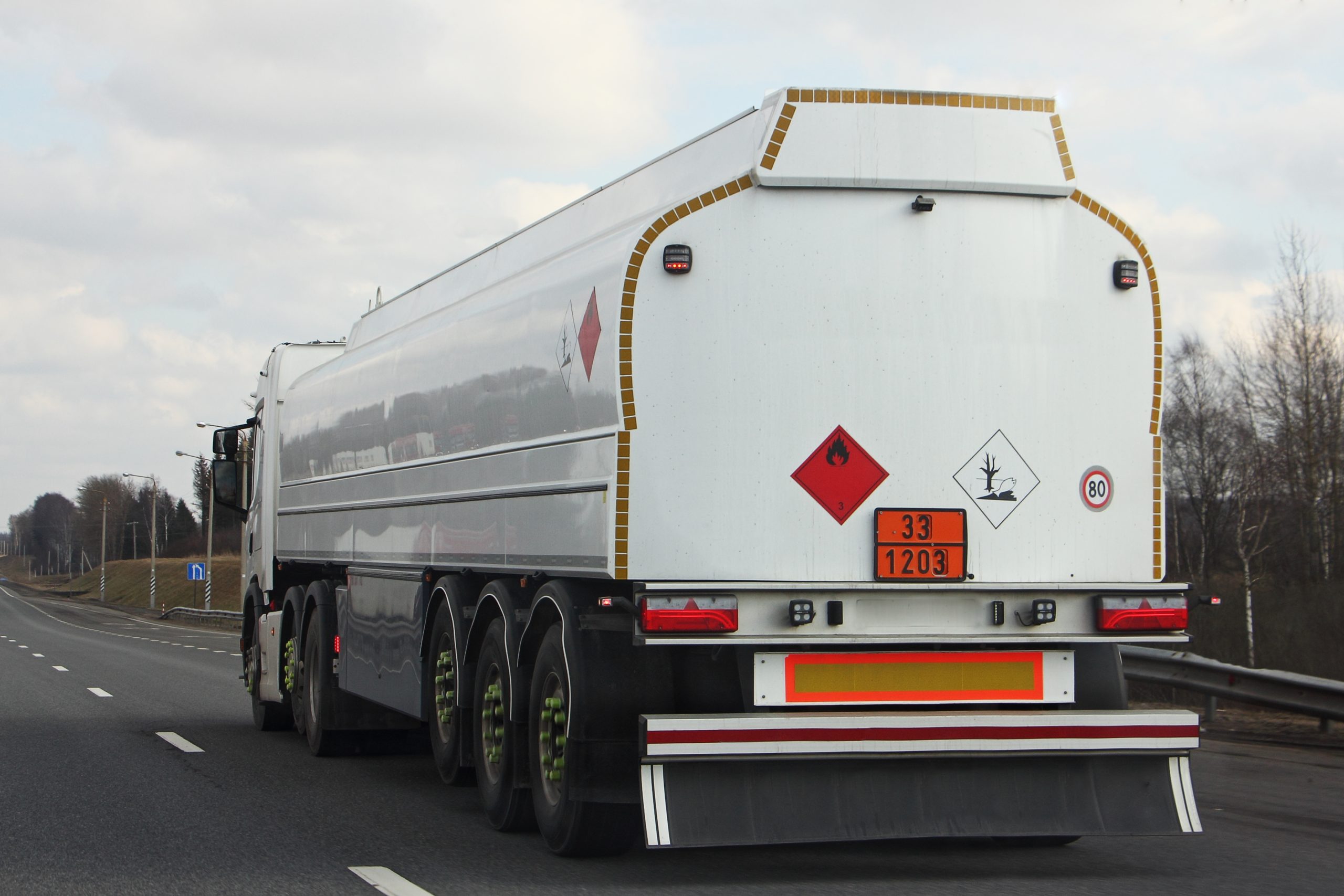
Europe is beginning to compete with Asia for physical fuel supplies, and growing shortages mean the market is facing not only higher oil prices but also limited availability of the raw material. Even if Brent falls in the short term, tension in the European fuel market may persist. In Poland, prices are rising; Pb95 has increased by a total of 40 groszy per liter in recent days, and diesel by 62 groszy, while pressure on fuel indices in April remains despite the stabilization of oil. In practice, this means increasing pressure on margins and the liquidity of transport companies, especially with delayed cost pass-through to customers.
Last week in the oil market once again confirmed that Brent quotes have not been behaving like a classic market for several weeks, where the price results from the balance of supply and demand. Currently, the market is not pricing in an improvement in fundamentals, but rather geopolitical risk and the probability that some physical supplies from the Persian Gulf region will remain limited. Within one week, the market moved by more than 10 USD in both directions, without any changes in European demand or economic activity that could justify this.
The root cause remains unchanged
The source of the problem has not changed. The March report from the International Energy Agency describes the current situation as the largest supply disruption in the history of the global oil market. Flows of oil and products through the Strait of Hormuz have fallen from about 20 million barrels per day to a level close to zero, and producers in the Gulf region have cut production by at least 10 million barrels per day. However, the problem goes beyond what has stopped leaving the region. Asia, responding to shortages, is intensively seeking supplies from the North Sea, the United States, and West Africa. As a result, Europe is no longer struggling only with higher oil prices, but also with limited availability of the raw material that would normally go to other markets. Even with a short-term drop in Brent quotes, tensions in the European fuel market may persist.
Volatility as the new norm: what this means for fuel surcharges
A single piece of information from Washington or Tehran can shift oil prices by several dollars within a few hours. This is the moment when the problem begins for transport companies in the Czech Republic and the entire European Union. Carriers do not buy Brent oil, but diesel fuel. The IEA clearly indicates that diesel and jet fuel are currently among the most sensitive segments of the market, with diesel prices in Europe reacting with a delay and not always proportionally to changes in oil.
Three scenarios for the coming weeks
- De-escalation of the conflict and a partial price drop: Brent could fall to around 100 USD per barrel, but would still remain significantly above the levels from the beginning of the year. In this scenario, fuel surcharges would also work in favor of customers. A real decline, however, requires an improvement in the situation in the Strait of Hormuz, lower insurance costs, and a return of maritime transport to normal conditions.
- Prolonged tensions and Brent in the 100–120 USD range: the most likely scenario, in which volatility becomes the new norm, and contract flexibility and liquidity management are of key importance.
- Further escalation and growth towards 130 USD+: a less likely, but realistic scenario. Without a quick update of rates and fuel surcharges, carriers may find themselves under strong pressure on margins and liquidity.
Currently, transport companies should spend less time trying to predict the “right” level of Brent oil prices and more time on how quickly they are able to translate its changes into rates, fuel surcharges, and purchasing strategy. This is what is of key importance today.
Source: Malcom Finance