Janusz Mincewicz talks to Kazimierz Karolczak, Chairman of the Board of the Upper Silesian and Zagłębie Metropolis.
Janusz Mincewicz: Are you satisfied with public transport in the Metropolis?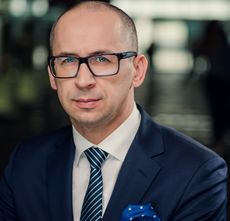 Kazimierz Karolczak: Of course, I would like it to function even better, and I am surely not alone in this assessment, as the mayors of other Polish cities think the same. The development of public transport is strategic for us because by creating an attractive public transport offer, we improve the comfort and quality of life. Thanks to this, our cities can stop being overrun by cars and can become increasingly friendly to residents. There is still a lot to be done in public transport. From the very beginning of our existence, we have been working to constantly improve this offer. We want a high standard to be something natural for us. That is what we are striving for. However, it must also be admitted that over the more than three years of our operation, a lot has already been improved. Residents have been waiting for some of these solutions for over 20 years. This includes not only the introduction of joint tickets, allowing the use of all vehicles operating under the ZTM brand, but also important organizational changes that have improved contact with passengers and accelerated response times so that unexpected traffic incidents are as little felt as possible.
J. M.: What are the further plans?
K. K.: If we are talking about our activities related to the development of transport, the priority is to build a sustainable urban mobility system. It is therefore about distributing the points of gravity and emphasis in such a way as to maximize the efficiency of moving around the Metropolis, thanks to which we will all spend less time commuting. In our assumptions, the backbone is to be the railway as the fastest and most ecological means of transport. In second place are bicycles, which are unrivaled for covering several-kilometer sections in the city. That is why we are investing in the expansion of new routes of communication and transport importance and are preparing to launch one of the largest city bike rental systems in Europe. However, when we look more broadly at our strategic plans, the activities related to reducing low-stack emissions, which have a huge impact on improving the comfort of life in our cities, come to the fore. We are very pleased with the change in specific acts that granted us new competencies in this area. Thanks to this, together with the municipalities, we can participate in the government’s Stop Smog program. Activities that increase the attractiveness of the region are also important to us. In addition to those we discussed earlier, these also include those related to the use of, among other things, new technologies in city management or building an international cooperation network.
J. M.: At what stage is the Metropolitan Railway project?
K. K.: We are in the process of developing a feasibility study. This is a document that will detail the assumptions of the concept and give us the “green light” to commission the first design works and break ground. It is also worth adding that the year 2020 brought us much closer to realizing our plans related to rebuilding the importance of rail transport in our area. All dozen or so projects that we submitted to the government’s Kolej Plus program have been qualified for the second stage and fit into our Metropolitan Railway concept. Thanks to this subsidy, the railway line in Pyskowice can be rebuilt, a new connection from Bytom to Ruda Śląska can be created, or a second track can be added on the route from Katowice to Orzesze. This is a huge opportunity for us. Importantly, when we receive the subsidy, the Metropolis will finance the own contribution from its budget, the total amount of which may reach approx. PLN 200 million.
J. M.: An idea has emerged to build an overhead railway in the region, modeled on Tokyo. Is this a realistic project?
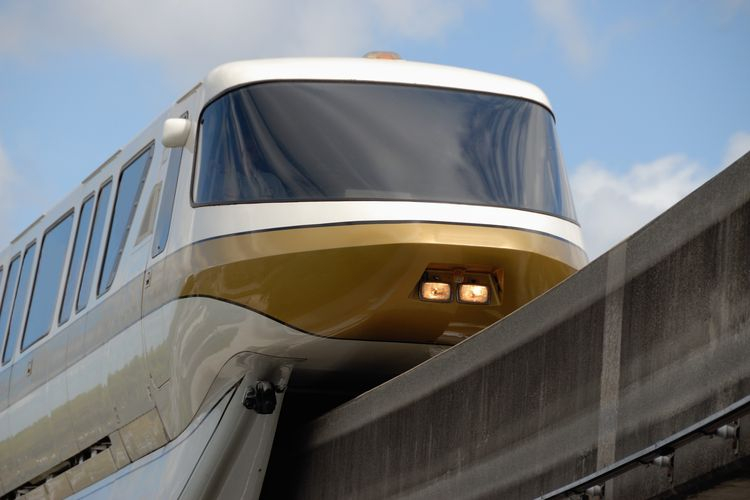
K. K.: Every idea that can contribute to increasing the attractiveness of our region and its competitiveness is worth considering. We make every such decision based on reliable analyses and hard data, which is why the possibility of building a monorail-type railway is one of the elements of the work on the Metropolitan Railway feasibility study. Detailed information will be presented there as to whether its creation in our area is possible, justified, and purposeful. If the results of the study confirm that the construction of a monorail will contribute to the development of our area, we will strive to implement this investment.
J. M.: From the perspective of 4 years of operation, was the creation of the Upper Silesian and Zagłębie Metropolis a good idea?
K. K.: Definitely yes, for which we are extremely grateful. The creation of the Metropolis gave a new impulse and tightened cooperation between the cities. It equipped us with legal tools thanks to which we can improve the quality and comfort of life for residents, as well as the economic attractiveness of the region, and take actions that will slow down the depopulation process of our cities. Over more than three years, we have managed to do a lot. This is not only changes in public transport, but also the creation of electricity and gas purchasing groups, which bring real savings to the cities, taking actions related to environmental protection and improving air quality, and looking for solutions to problems related to municipal waste management, for which local governments, and consequently also residents, are paying increasingly higher bills. It is also about involvement in new, innovative projects, thanks to which we have a chance to become a global leader, because we are already participating in this “race”. We see this future, among other things, in the development of hydrogen technologies and drones used to provide services in cities. These are not science-fiction movie scenarios, but real possibilities that can strengthen the specialization of our region and create new jobs.
We write more about modern urban logistics in the magazine Logistyka 2/2021.
The e-edition of the magazine is available in our offer!