Sustainability is a frequent topic in discussions about e-commerce. Additional packaging, artificial fillers, meters of plastic wrap, increased traffic of delivery vans, etc. – all this makes the dynamic growth of e-commerce raise legitimate concerns about the impact of e-business on the natural environment. What can be done to make online retail more eco-friendly?
 Tomasz Perkowski
Support and Network Development Manager at Pointpack S.A.
There are three main areas that can be improved to reduce the negative impact of e-commerce on the environment. First, information and education for customers. Today, in Polish e-shops, it is difficult to find information about the environmental impact of a delivery method, yet e-consumers should receive such information. E-shops and their business partners throughout the logistics process are increasingly monitoring their carbon footprint and the level of its reduction. If a customer has a choice of eco-friendly packaging and delivery to collection points, delivered by electric vehicles, they should be able to choose them consciously. Second, packaging. Within 3-5 years, we will approach the moment when the average Polish e-consumer will order 1 shipment per week. Already today, they feel discomfort due to the growing amount of packaging they have to dispose of and the need to sort it. These are also huge costs for the sender. Hence, we will see more and more reusable packaging, and consequently, the creation of an efficient system for the circulation and regeneration of such packaging. Innovative packaging can complement the image of a conscious and responsible company that, by becoming “eco-friendly,” attracts the same type of customer, i.e., a person with a wide range of shopping habits, often with a larger financial budget. Third, and most importantly, directing shipments to courier points and parcel lockers instead of delivery to a private address. Pickup at a collection point is the most eco-friendly form of delivery. An equally important aspect is the sharing of such infrastructure by many operators, which is slowly becoming a fact in collection point networks, and to a lesser extent in parcel locker networks. The very process of developing collection and drop-off points is also significant, thanks to which couriers cover fewer routes, which also translates into lower CO2 emissions while handling the same number of packages. Thanks to our calculations, we know that in such a model, the achievable level of CO2 emission reduction is up to 30% on the last mile. For every million shipments, the courier’s route length will decrease by 82,000 km, and the carbon footprint per million shipments will decrease by 13 tons of CO2. Taking into account the above data and individual calculations dedicated to retail chains and courier companies, we are developing a proprietary carbon calculator. In the further future, we can expect the combination of parcel deliveries with grocery e-shopping deliveries. Fortunately, efficient logistics does not exclude eco-friendly logistics, which is especially important for cities, although it requires the involvement of artificial intelligence in logistics – and training one AI algorithm is, unfortunately, another few tons of CO2 emissions. The Pointpack platform provides solutions that facilitate the cooperation of many partners in all the mentioned areas. Our goal is to create synergy, optimization, and space for sharing urban logistics infrastructure.
 Mateusz Boruta
Managing Director, ECR Polska
This is a very well-posed question, because whether e-commerce is ecological depends on many factors. From the buyers’ perspective, it is easiest to look at the context in which we use e-commerce. Remembering that in logistics there is always a trade-off, as well as looking at the value chain holistically (end-to-end), it is easy to point out when an e-commerce transaction will be definitely worse or significantly better than a “physical” purchase. The first case: let it be a grocery product. Having a choice between e-shopping or a visit to a neighborhood store – it is definitely better to go for a short walk! The situation will be completely different when we buy a specific product of a selected clothing brand, and in a less popular size. The probability that it will be available in a physical store is lower, maintaining stock also costs the environment, as does the very operation of the store and its surroundings, and on top of that – the distance we have to cover to this store can be several dozen kilometers (to a larger city where the store of this brand is located), which we will cover by car. At this point, it is also worth defining the impact of shopping on the environment and in this context compare stationary shopping to e-commerce. Two perspectives are important: a) Where this environmental footprint is created – the institutionalized part of the value chain (production, warehouses, logistics, store) and the consumer part (i.e., how we make the purchase); b) What this impact is (e.g., consumption of packaging materials, water and chemicals, or fuel, electricity, and heat consumption – responsible for the total carbon footprint). How we can reduce the environmental footprint of e-commerce without limiting the freedom of consumption depends on the place we occupy in the value chain and the specific means by which we affect the environment in a given scenario. Certainly – in the role of a consumer or buyer – we can make thoughtful purchases (to limit returns), group them into as few shipments as possible, choose those sellers who offer reusable packaging (if returns are necessary) and are as environmentally friendly as possible. It is also good to use parcel drop-off and collection points that we have nearby and can walk to (“zero-emission”), and if we have an environmental compensation option available in the purchase process – it might be worth allocating an amount to it that we will not feel in the total value of purchases. We have other possibilities when running a store or logistics operations – here we will naturally look for ways to reduce the carbon footprint (because it reduces energy consumption and its costs). It is also worth looking for improvements in packaging – because recent years have brought many innovations that over time may become the norm. Examples include paper carton fillers, recycled and recyclable packaging, and perhaps even reusable packaging for courier shipments. From a B2B position – the scale of our impact and responsibility is greater than that of an individual consumer – and this must be remembered. So, returning to the question – what to do? First – understand your impact on the environment. Second – start changing the world from yourself, your surroundings – perhaps with simple, small, easy, and seemingly insignificant steps. A drop hollows out the stone, and you hold the tap. It is also always worth remembering to avoid and prevent losses in the value chain, also understood as system inefficiency, i.e., e.g., excessive energy or material consumption. If we optimize our packaging properly at the beginning of the chain – we will not have the problem of managing, collecting, or recycling it. Yes, yes, recycling is still waste management – so it is simpler and cheaper not to create it whenever possible!
 Łukasz Łukasiewicz
Operations Manager, SwipBox Polska
Convenience is one of the first associations that come to mind when thinking about parcel lockers. Their efficient operation has a positive impact on the environment, among other things by reducing carbon dioxide emissions in transport, as well as improving the work of couriers themselves. The last mile is also optimized by reducing the number of returns or repeated trips due to the recipient’s absence. Parcel lockers are no longer just a safe or convenient, but above all an ecological way of receiving online purchases. Contactless devices, intuitive to configure, which do not require a power connection and are operated via a dedicated application, represent the future of the entire market, while at the same time fitting into green trends. The e-commerce market benefited from the outbreak of the pandemic because shopping largely moved to the Internet. Thus, the demand for safe shipments via parcel lockers increased. According to a report by the American university MIT, online shopping is more ecological than stationary shopping. Ecology, zero waste, or sustainable development are names for the same trend, focused on actions that limit the negative impact of individuals on the environment. In the case of e-commerce, ecology very often goes hand in hand with economy. Online shopping can be more ecological than shopping in a stationary store for several reasons. The first is the reduction of the carbon footprint resulting from delivering goods directly to the customer’s home. Another way is sustainable delivery, which gives the possibility of planning the most efficient route possible by the carrier, as well as delivering several shipments at once. The carbon footprint of delivery is calculated by dividing transport emissions by the number of products transported. The more products are transported to a specific location, the smaller the carbon footprint. On the other hand, one should also remember about packaging. It should be made of compostable or recycled materials. A good choice here is paper, recycled plastic, or biodegradable materials. Looking more broadly, the secondary market may turn out to be the future for e-commerce. Ecological shopping based on used products is increasingly breaking through into consumer awareness.
 Mariusz Pęsiek
Director of the ID Logistics distribution center in Teresin near Sochaczew
Over the last years of dynamic e-commerce development, we see how this market is changing, it has new expectations and needs. Companies in this industry, in order to satisfy customers, focus mainly on the timeliness and quality of delivered orders. Our observations also show that more and more customers shopping in e-shops emphasize the importance of ecology. Those who share their feelings most often point to the excessive size of cartons used to pack orders and the excessive amount of plastic fillers used to secure purchased goods. ID Logistics, in cooperation with business partners, tries to meet the expectations related to ecology. An example can be the changes introduced in cooperation with a client in one of the distribution centers we manage. They concern the order preparation process, including the methods of packing, securing, and shipping e-commerce parcels. We have implemented a system that “suggests” to employees preparing an order which carton they should use to pack products, which minimizes errors and prevents the choice of packaging that is too large. We also introduced a change in the methods of securing the product, replacing the plastic filler with ecological paper. Additionally, we have implemented quality procedures, from which we train employees, showing them how to properly secure, arrange, and place various types of products in a carton, protecting them from damage. The next step was to change the standard adhesive plastic tape for closing cartons to gummed tape made of durable paper. This type of tape has two uses: thanks to it, we close the package and at the same time it serves as a seal. We reach the moment of sending the shipment from the warehouse. Together with one of the courier companies, we managed to introduce metal roll containers into circulation, thanks to which we eliminated the use of plastic wrap to secure the pallet. We also use lithium-ion forklifts and LED lighting throughout the warehouse and at all workstations. Thanks to the introduction of these changes, we reduced electricity consumption and costs.
 Guillaume Sauzedde
Managing Director for Eastern Europe, CEVA Logistics
With a significant increase in consumer demand, mainly in the area of online shopping, e-commerce can pose a challenge for participants in its supply chain. Since e-commerce records incredible growth year after year, everyone involved in its implementation, from the manufacturer to online stores, logistics operators, couriers, and consumers, has their share in terms of impact on the natural environment. That is why more and more logistics companies are looking for efficient and at the same time environmentally friendly solutions. Delivering an increasing number of goods, including those sensitive to transport, mainly generates needs in terms of packaging and delivery time. CEVA Logistics works closely with clients and all subcontractors to explore the possibilities of using sustainable packaging, operational efficiency based on technology, and optimization of warehouse solutions, such as combining B2B and B2C operations. Concrete actions may include the implementation of electronic document circulation to reduce paper, reducing the amount of packaging film in warehouses thanks to co-packing automation, using electric delivery vehicles, and even offering CO2 compensation programs, thus reducing the carbon footprint of e-commerce shipments.
 Hubert Walczak
Head of eCommerce at Rohlig Suus Logistics
The main driving force for changes in many industries was the coronavirus. It was Covid-19 that contributed to the huge growth of online trade, and consequently, the development of, among others, the courier industry. The Polish CEP market reached a value of almost PLN 10.7 billion and 814 million parcels in 2020. Today, couriers deliver almost everything. The dynamically growing e-commerce meant that logistics operators had to adapt very quickly to the new reality in a short time, investing in new technologies, security, resources, and infrastructure. Many companies remodeled their business strategies to meet market expectations. The CEP industry became a natural beneficiary of the pandemic. But there is also the other side of the coin, namely, all-encompassing consumerism contributes to the production of a huge amount of waste from packaging. (Not forgetting also about CO2 emissions resulting from the involvement of a larger number of cars in deliveries). In 2019, the European Commission presented the European Green Deal as an opportunity for a pro-climate turn. It is a very ambitious strategy aimed at achieving climate neutrality by 2050. The Green Deal is a set of actions that are also aimed at reducing the amount of waste to a minimum. As a logistics company, we realize that we also have an indirect and direct impact on the reality surrounding us. For this reason, we are looking for solutions that reduce our impact with even greater commitment. Although we realize that we still have a lot of work ahead of us, we are following the strategy of implementing sustainable logistics solutions with increasing courage, consisting, among other things, in the use of reusable packaging, introducing a fleet of low- and zero-emission vehicles, investing in new technologies supporting effective route planning, eliminating the use of plastic wrap, implementing electronic document circulation, and new logistics models, thanks to which we can reduce our carbon footprint. It is also gratifying that consumers, when making purchasing decisions, more and more often choose brands that are environmentally friendly.
 Krzysztof Witos
All Green Pallets
Growing cargo flows, those to customers and those returned by them, absorb more and more logistics resources: appropriately equipped warehouse space, means of transport, personnel, loading equipment, and packaging, often different from those used in traditional distribution channels. A network of warehouses is involved in the delivery process from shipment senders to end recipients, which in their area carry out operations of collection, picking, storage, and distribution of individual shipments, as well as handle consolidated inter-warehouse flows. Is such a model more or less environmentally friendly compared to the traditional one? Intuition and experience suggest that a bottle of perfume bought in a store does not require additional cardboard packaging, bubble wrap, or other filler, tape, required for the goods to arrive safely when “shipped by courier.” Disposable packaging has a short life – usually, it ends up in the trash right after use. Reusing currently used packaging for “last mile” service is unlikely to be an option, at least not in the near future. Organizationally, we still cannot cope with bottles and beverage containers – a topic long solved by our neighbors. I would see a greater chance for improving the “balance with nature” in the case of consolidated cargo, in inter-warehouse transport. Consolidation of shipments gives a chance for better use of loading space. The use of containers and pallets of standardized sizes allows for limiting the downtime of transport means during loading and unloading operations. More effective driving means fewer transport means needed to handle the same cargo flows. It seems to escape our attention that the technical means used by us to handle logistics processes, even before they were started for the first time, have already left a mark on the environment. Life Cycle Assessment (LCA) – a method of estimating the environmental impact of the entire product life cycle allows for imagining and comparing the impact of processes, tools, and ways of using them on the environment. Dealing with pallets and pallet management, we performed such a comparison for euro-sized pallets, respectively: made of wood and plastic, having comparable utility properties. CO2 emissions during the production of plastic pallets, including oil extraction, are over 4 times higher than during the production of wooden pallets. CO2 emissions during the production of plastic pallets from recycled raw material turned out to be lower than the emissions accompanying the production of a wooden pallet. A significant weight difference – in favor of the plastic pallet, translates into a 30% reduction in fuel consumption when transporting plastic pallets compared to wooden ones. The biggest “secret” of the advantage lies in the possibility of reusing the same pallet and producing a new one from raw material obtained from a withdrawn, for example, as a result of damage, “old” pallet. Bottles have been produced from glass cullet for years and no one is particularly surprised by this. What conclusion does this lead to for the e-commerce supply chain element distinguished above? Calculations indicate that CO2 emissions, in connection with the use of plastic pallets in inter-warehouse transport, can be even 70% lower than that resulting from the use of wooden loading equipment. For comparison and to create a kind of background, within the framework of the European Union’s climate and energy policy until 2030, a target of reducing greenhouse gas emissions by at least 40% compared to the 1990 level was adopted. The presented example suggests that we are able to achieve this goal.
Read also about e-commerce:
– E-commerce among our neighbors
– Allegro acquires X-press Couriers
– Danish e-commerce giant strengthens its position on the Vistula
– Poles are increasingly buying online and paying digitally
– Will the e-commerce package be a generator of development for Polish online stores?
– Where and how do Poles shop? E-commerce ranking
The article comes from the magazine LOGISTYKA 5/2021.
The e-edition of the magazine is available in our offer!

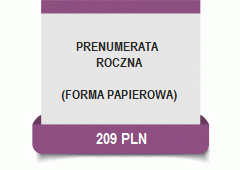
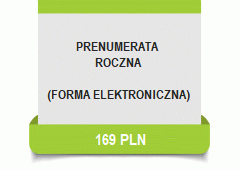
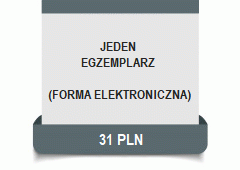
Stay up to date, order a subscription to the LOGISTYKA magazine!