









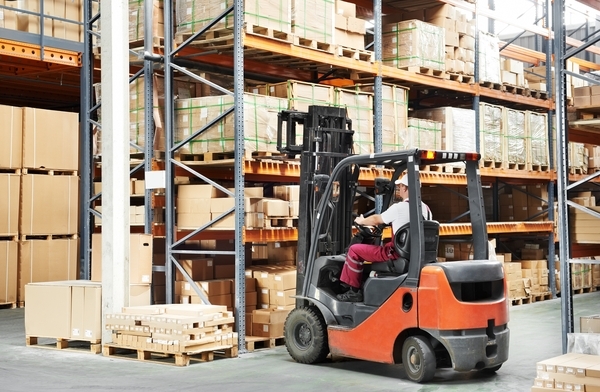
Despite the advancing automation of logistics processes and the development of modern systems enabling order picking, sorting, and shipping to the end customer, many processes will still require manual operation. Therefore, tenants are making every effort to attract and, above all, retain as many employees as possible at their locations. Experts from the international advisory firm Cushman & Wakefield predict that due to the rapid growth of the e-commerce market, the demand for warehouse staff will continue to rise. They are primarily responsible for the flow of goods within warehouse processes, order picking, as well as the safety and supervision of the entire delivery process, but above all, for returns logistics. From the latest report “How to tackle e-commerce in the warehouse”, we learn about the situation of employees serving the e-commerce market in the warehouse sector in Poland.
E-commerce is one of the fastest-growing distribution channels in Poland. Online shopping has become very popular among domestic consumers, who are increasingly choosing to visit online stores and shop using mobile applications. Due to the growing pressure to shorten delivery times, companies serving this dynamically developing sector must ensure both the selection of appropriately equipped warehouse space and sufficient human resources, which are crucial in the process of improving the quality of services provided.
Processes such as goods receipt, packing, or returns logistics are largely carried out manually, and since these factors allow for a competitive advantage in the market, requirements for transport companies and those performing so-called “fulfillment” services are increasing. Personalizing shipments and paying increasing attention to aesthetics require human labor – replacing it with even the fastest machine is impossible.
A high demand for employees is also particularly important during the pre-Christmas period and during the hottest sales periods, such as Black Friday or Cyber Monday.
– Labor costs and the availability of qualified employees, as well as constantly improved and developed transport and warehouse infrastructure, are the factors that most determine the attractiveness of our country as a place to locate production plants and warehouses. Despite existing problems with the availability of human resources, Poland remains very attractive compared to Western markets. The Polish labor market is still one of the most attractive in Europe, especially if we compare hourly labor costs in our country with Germany or Denmark, where these rates are three and four times higher, respectively. For this very reason, the e-commerce business is being transferred to Poland – said Damian Kołata, Associate in the Industrial and Logistics Agency at Cushman & Wakefield.
The vast majority of companies renting space in logistics parks and operating in the e-commerce sector employ over 500 people. Additionally, according to those surveyed, this number will grow in the coming years. As many as 73% of developers and 100% of logistics operators claim that the number of employees will increase in the coming years. Only 27% of developers believe that the number of employees will decrease.
Due to high competition in the e-commerce industry, employers are making special efforts to encourage work in the warehouse. They are introducing numerous amenities and incentives. Among them are, for example: a sports card, private medical and physiotherapy care, insurance, as well as various types of vouchers and gifts, to which the employee gains the right from the first day on the job. Proper work organization and regular training are also very important. Tenants also pay great attention to adapting the building space to the needs of employees, very often creating attractive common areas and places for rest. Additionally, most employees are provided with free transport to and from work.
– The decision to choose a location for a warehouse to serve e-commerce is strategic and is particularly sensitive to two factors: the possibility of efficient distribution, allowing for maximum shortening of delivery time, and the availability of human resources. Thus, ideal road infrastructure or the ability to provide staff capable of meeting the challenges associated with demand fluctuations and sales peaks become extremely important. The choice of location is a kind of compromise in favor of the latter aspect, and the investment is located in areas with better access to the workforce, such as Western or North-Eastern Poland – said Joanna Sinkiewicz, Partner, Head of Industrial and Logistics Agency at Cushman & Wakefield.