









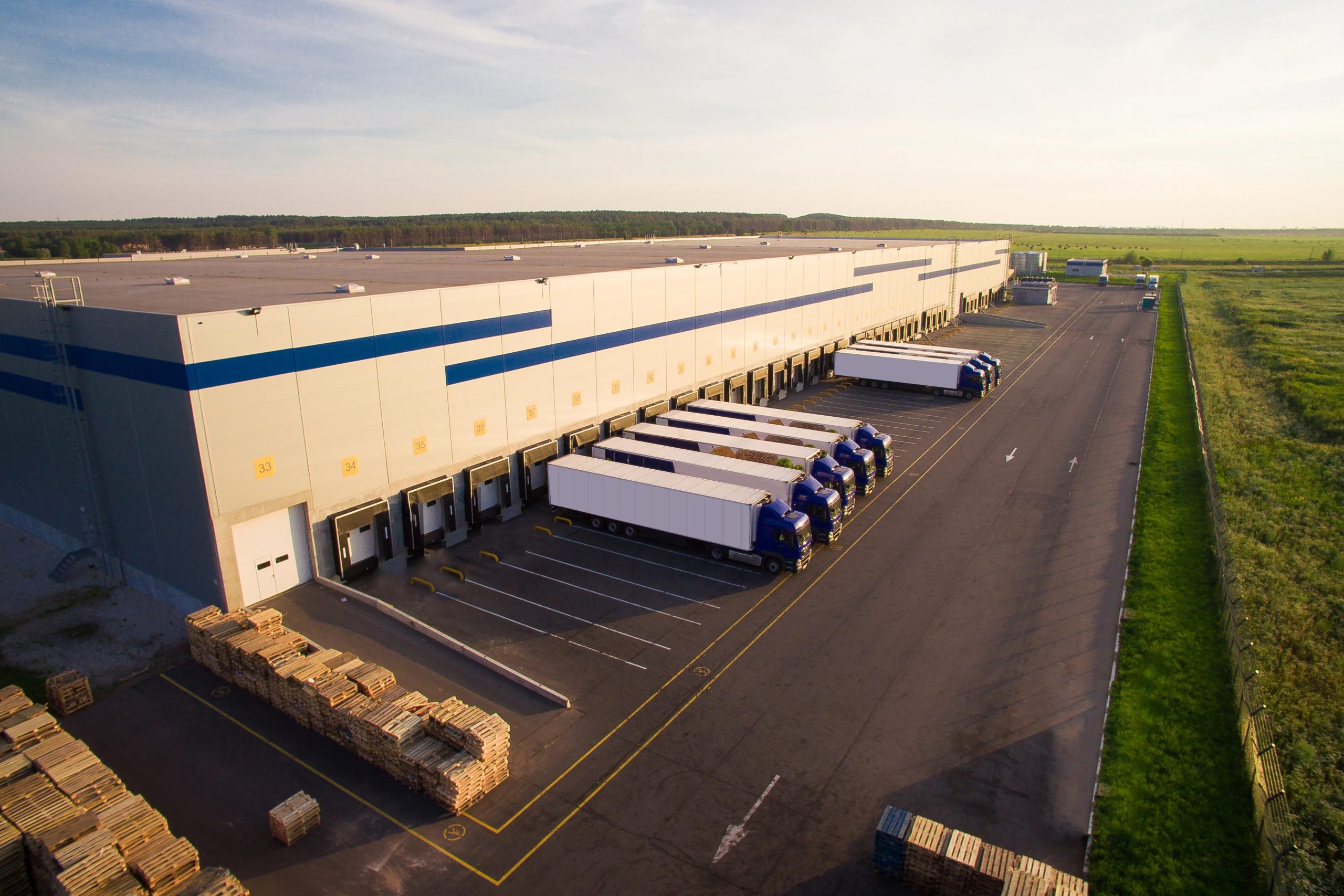
Tenants today expect space tailored to their ongoing processes, which can be scaled as their business grows and equipped with automation to address labor shortages. Costs – the level of rent and the predictability of service charges – remain invariably key, says Jakub Kurek, Head of Industrial and Warehouse Department at Newmark Polska.
The era of highly specialized warehouses is coming. The individual needs of tenants and their impact on the shape of new investments are playing an increasingly important role. For developers, this means more flexibility and more precise project preparation.
We design our parks in such a way that they can serve as warehouse or production facilities depending on the needs. The halls are built modularly, with the possibility of easy division or combination of space, which allows them to be quickly adapted to the needs of a specific client. Already at the foundation stage, we reinforce floors beyond the standard so that in the future they can accommodate heavy production machinery or mezzanines for tenants in the e-commerce sector. Thanks to this, the space can be flexibly adapted to complex logistics operations – from high-bay storage areas to order picking and fast return handling zones.
– explains Tomasz Pietrzak, Leasing Director Poland at MLP Group.
Jakub Kurek emphasizes that adapting space does not only apply to new investments. – Well-designed existing facilities can also be modernized, provided they meet certain technical standards. Class A facilities usually provide real space for discussions about changes – both in terms of installations and space organization. Limitations only appear where there is a lack of adequate height or fire safety standards are not met – explains the director at Newmark Polska.
Flexibility and personalization instead of universal solutions
According to Tomasz Pietrzak, the most demanding and at the same time expensive modifications are those related to the technical infrastructure of the facilities. – Access to adequate power, necessary for automation and production processes, is of key importance today. Fire protection systems, which must be adapted to the type of stored goods, are also important. In many projects, it is necessary to reinforce floors and foundations for heavy installations or high-bay racking, as well as changes within loading zones and ramps. There are also increasingly requirements regarding temperature and humidity control, which involves the implementation of extensive HVAC systems and clearly increases investment costs – explains the MLP Group expert.
Tenants also expect adjustments that directly translate into work comfort – a higher standard of office and social space, better lighting of picking zones with daylight, in accordance with BREEAM certification requirements, as well as the implementation of intelligent LED lighting systems. Air quality and an increased number of air changes are also gaining importance.
One market, many needs. From e-commerce to data centers
The growing complexity of operations and pressure for efficiency mean that universal solutions are increasingly ceasing to be sufficient. According to Jakub Kurek, there is no single lease model that will work for all tenants. The space must correspond to the business strategy, not the other way around.
These needs are compounded by the growing role of automation, which is a response to difficulties in the labor market. We are increasingly talking to tenants about solutions that reduce dependence on human labor. This direction, visible in Asia for a long time, is also accelerating in Poland.
– notes the Newmark Polska expert.
Differences between market segments are becoming more apparent
Manufacturing companies think long-term and most often decide on contracts for even 10–15 years. In such projects, specific technical parameters are key, such as lighting, ventilation, or increased power connection, and often also dedicated infrastructure. In e-commerce projects, storage height plays a greater role, often exceeding 12 meters. In turn, traditional retail chains focus primarily on costs. In their case, energy-saving solutions, such as photovoltaics or heat pumps, which directly translate into lower operating costs, are key.
– claims Tomasz Pietrzak.
A separate group are logistics operators, whose requirements change along with the contracts they handle. In their case, it is crucial not only that the space complies with the current operating model, but also that it is ready for further development.
The ideal warehouse must respond to the growing complexity of supply chains and the dynamic development of e-commerce. What counts is the ability to handle intensive operations, access to appropriate infrastructure and energy, but also the possibility of implementing automation that increases the scale and efficiency of operations. Ultimately, what is decisive is not so much the rent itself, but the total operating cost of functioning in a given location, including, among others, the availability of employees, process efficiency, and development potential.
– explains Daniel Korbus, Member of the Management Board and Chief Operating Officer at XBS Logistics.
A natural consequence of growing specialization is the emergence of new types of tenants on the market whose requirements go beyond existing standards. One of the most visible examples are data centers, which significantly raise the bar in terms of infrastructure. – In Western Europe, this segment is already developing very dynamically, and over time we will see a similar trend in Poland, so we should be prepared for it. These are projects with a huge demand for energy, which in practice determines both the location and the possibility of carrying out the investment – points out Jakub Kurek.
Costs under the microscope. Rent is only part of the equation
Despite the growing flexibility of the market, the cost factor remains one of the key decision-making elements. Increasingly, however, the focus is shifting from base rent to the total cost of leasing. – Operating costs, which have increased significantly in recent years, are equally important. If they are not well estimated before signing the lease agreement, tenants may be surprised by the amount of surcharges at the stage of the first settlement of advances – warns Jakub Kurek.
Following this, the role of contractual provisions that allow for better protection of tenants’ interests in a changing economic environment is growing. – Advising our clients, we pay a lot of attention to provisions regarding rent indexation and forms of security. In the case of companies planning to scale their operations in a facility, we negotiate clauses for the right of first refusal of space or guaranteed expansion, which allow for securing the possibility of expanding the warehouse on specific terms in advance – explains Jakub Kurek.
Such provisions are particularly important for logistics operators who grow with their clients and operate in conditions of high variability in the scale of operations.
The possibility of expansion within the same facility or logistics park allows for business development without the need for relocation. In turn, more flexible lease terms help to better manage risk in an industry where demand volatility is increasing.
– emphasizes Daniel Korbus.
Towards informed decisions
The warehouse market is maturing and clearly moving towards greater selectivity on the part of tenants. The choice of a facility is less and less often decided by a single factor.
This is no longer a “take it or wait” market, but a space for negotiation and building value on both sides. Tenants look broader: they analyze not only the rent, but the total cost of use, the flexibility of the contract, and the potential for further development. In such a complex process, advisory support plays an increasingly important role, helping to translate business needs into specific contract provisions – emphasizes Jakub Kurek. – We have a completely different level of market maturity than just a few years ago. In the coming years, this direction will strengthen – along with the growing role of automation, operational efficiency, and environmental solutions, which are becoming the standard.
– concludes the director at Newmark Polska.
Source: Newmark Polska