








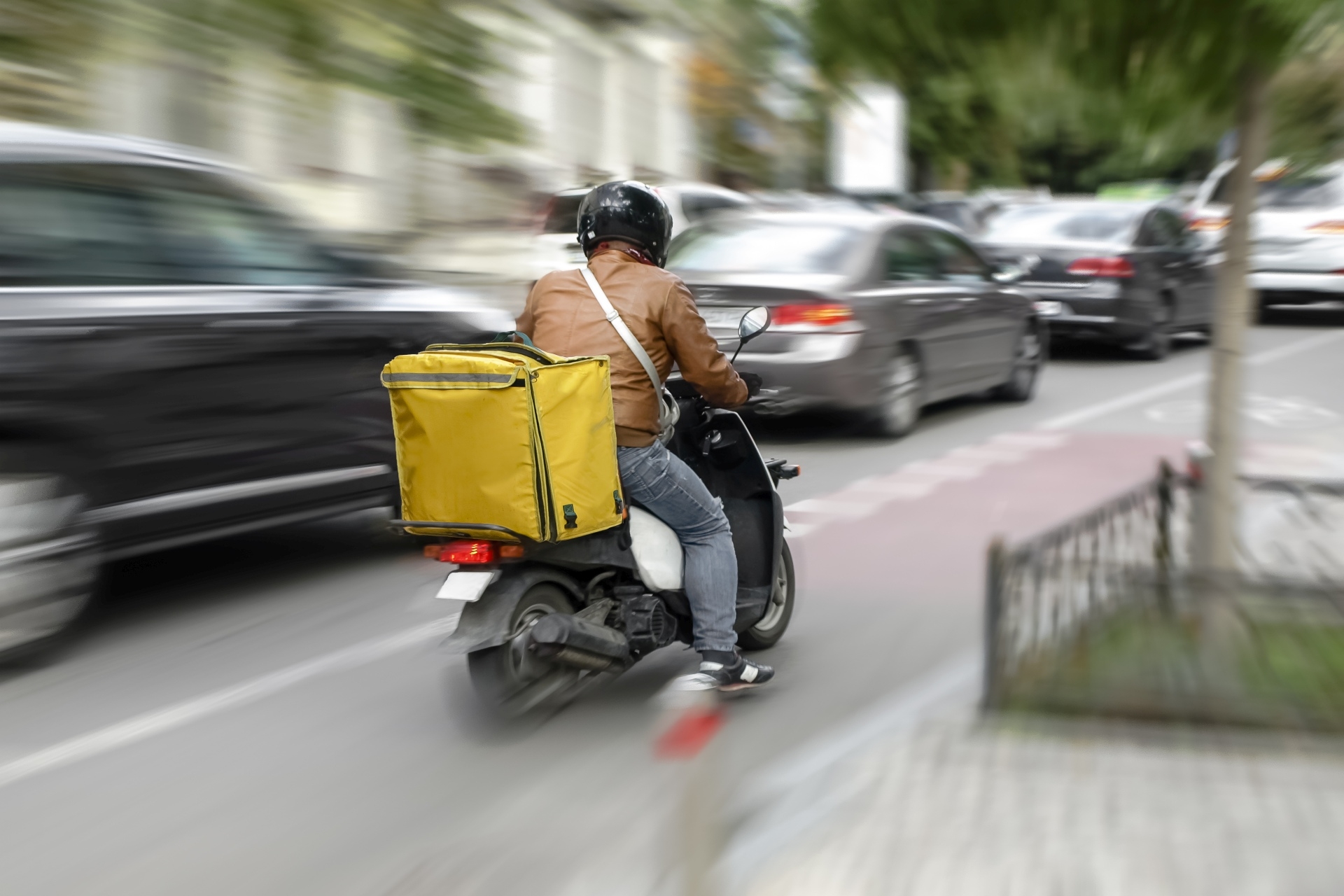
Every time we click “order groceries” in delivery apps, in times when Poles are consciously managing their budgets, a question arises: why does convenience win over savings? In an era of rising inflationary pressure, the demand for ultra-fast deliveries is stronger than ever. Q-commerce services are shifting from a luxury to a non-negotiable necessity – a way to save the most valuable resource: time. Wolt analyzes this phenomenon, showing how the concept of value is being fundamentally redefined today.
On one hand, data shows that consumers are meticulously counting their expenses. The growing popularity of financial tools such as Buy Now, Pay Later (BNPL), which is already regularly used by 66% of aware users1, is the best proof of this. On the other hand, the same studies indicate that nearly half of consumers are willing to pay extra for express service, and 70% declare they would shop more often if delivery were carried out on the same day.
This market paradox shows that convenience is no longer perceived as a luxury add-on. Daily life has become significantly more compressed – data from Statistics Poland (GUS) shows that Poles spend only about 19 percent of their day on leisure, which includes media consumption, social life, entertainment and culture, hobbies, online activity, or sports. This is less than a decade ago, which shows that the space for relaxation is systematically shrinking. As a result, every minute gains value, and the willingness to tolerate delays is drastically decreasing. Expectations regarding speed and seamless service are rising: internet users’ patience has shortened from days to seconds – a user leaves a site if it takes longer than 3 seconds to load – and “same day” delivery is becoming an expected standard, not a premium extra.
We observe that consumers are making a conscious substitution – they are giving up certain goods, but not services that save their most valuable resource, which is time. This phenomenon shifts q-commerce from the category of luxury goods to the category of basic services that genuinely increase efficiency and quality of life. Convenience is no longer a whim, but is becoming an investment in a resource that cannot be recovered.
– says Agata Polityło, General Manager of Wolt in Poland.
Time is the new currency
Wolt’s perspective fits into the broader context of the “convenience economy,” where seamlessness and the availability of the right solutions at the last stage of the shopping journey (the so-called last mile) determine conversion and customer loyalty. As many as 82% of internet users admit that they have abandoned a shopping cart, and one of the main reasons was the lack of a preferred delivery method.
Wolt is consistently expanding its offer with new categories – from convenience with Żabka Jush, through home furnishings with Homla, to jewelry from Lilou, cosmetics from Inglot, fresh flowers, and even dog treats and other pet products. Thanks to this, the app is effectively becoming a “shopping mall in your pocket,” where you can satisfy both daily needs and sudden, often forgotten ones in one place – from a missing ingredient for dinner to a last-minute gift.
Importantly, thanks to the order as a gift option, users can send purchases to any address in another part of the country – even from Warsaw to a grandmother in a city where Wolt operates. Just enter the recipient’s address, and the app will display a list of products and stores available specifically for that location. This is a functionality that further strengthens the sense of convenience and control, showing that quick commerce can be not only a fast grocery delivery service but also an intelligent tool for managing daily life and special occasions.
Convenience is not a luxury
Thanks to technology and logistics optimization, ultra-fast deliveries are becoming available to an increasingly wider group of recipients. This shows that delivery platforms can operate in a sustainable way, responding to the real needs of consumers, even in economically difficult times.
The shift in the perception of convenience from a luxury to a basic necessity is permanent and will shape the future of retail. For customers, it means more time for themselves; for retail partners, it means stable growth and access to new groups of recipients; and for the entire economy, it acts as an impulse for further digitalization and innovation in the area of urban logistics.
1] people who are aware of the existence of BNPL payment options
Source: Wolt