








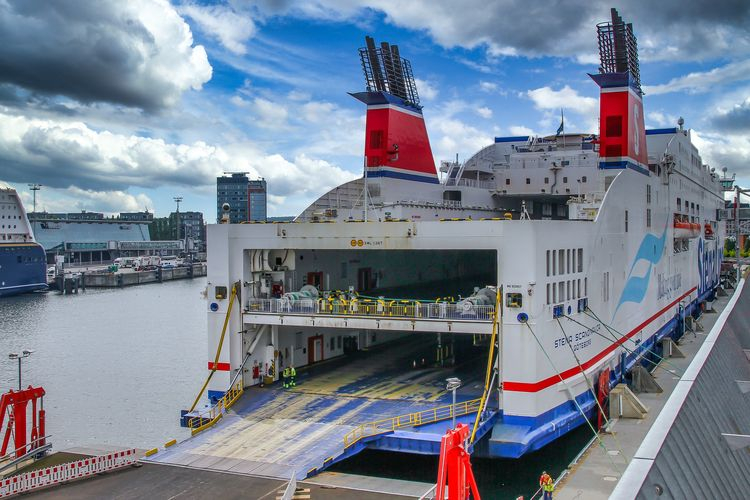
Technical acceptance procedures are underway at the Port of Gdynia for the new, larger Public Ferry Terminal with a ro-ro ramp.
The facility is designed to be used by several operators and to accommodate various ferries. An innovative ramp and passenger boarding bridge have been installed at the terminal. On Monday, July 19, the first test mooring of a Stena Line ferry took place.
The implementation of one of the largest investments at the Port of Gdynia is nearing completion. The main construction works for the Public Ferry Terminal have finished, and technical acceptance procedures are currently in progress. The new terminal has been adapted to handle ferries up to 240 meters in length—one-third longer than the current Stena Line vessels docking at the old terminal. The ability to accommodate longer ferries is a response to the conditions of the Baltic market.
Ferries of various lengths, operating connections for Stena Line and Polferries (Polish Baltic Shipping), will dock at the new terminal. As part of the tests, a trial mooring of the 176-meter-long Stena Spirit ferry, owned by Stena Line, was conducted. Technical acceptance will continue over the coming weeks, and the opening of the new terminal is scheduled for September 23, coinciding with the 99th anniversary of the Sejm’s passing of the act on the construction of the port in Gdynia.
The Public Ferry Terminal at the Port of Gdynia is being implemented in accordance with the “Green Port” concept, which is reflected in the installed electrical connection. Ferries docked at the terminal will use it. Utilizing shore-based electricity eliminates exhaust emissions, vibrations, and noise generated by the ferry’s onboard generators. This reduces the negative environmental impact of ferry transport, its effect on the city center, and also improves the working conditions for ferry crews.
The value of the investment is approximately PLN 292 million, of which PLN 116.8 million is co-financed by the European Union.
Source: Port of Gdynia