









A trip is associated with a specific user of the transport system, and a change in the number of trips is related to changes in the causal factors of making a trip, i.e., the activities offered, characterized by their type and intensity, which depend on spatial development. However, a change in the number of trips made can also occur without changes in spatial development, e.g., through changes in the transport system, including infrastructure and transport service parameters.
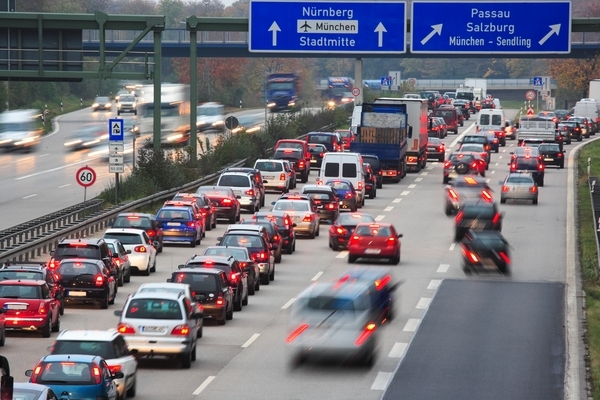
Stimuli for an increase in the number of trips may include, in particular: the construction of a new street section, the widening of an existing street, the reconstruction of an intersection to increase its capacity, the construction of a tram line, or an increase in the frequency of public transport vehicles. This leads primarily to a reduction in the duration of a potential trip and, in general, improves the standard of travel through, among other things, smoother passage through a given section. A decrease in the number of trips may be influenced in particular by, for example: narrowing the roadway permanently or temporarily during intersection reconstruction, reducing the frequency of service, or eliminating a direct public transport line connection. The result is an increase in travel time and a deterioration of travel conditions (increasing congestion, longer waiting times for public transport vehicles, traveling in crowded conditions, the need to transfer, etc.). The emergence of additional trips or their reduction affects traffic changes in the network (changes in traffic volume, passenger flow size, and transport work). Changes in the traffic pattern can also occur without a change in the number of trips made, but as a result of changes in certain trip attributes, e.g., lengthening or shortening of the trip, change of route, or changes in the number of people in a car.
Similar to trips, changes in the traffic pattern are caused by: changes in transport infrastructure parameters manifested by an increase or decrease in the capacity of street network elements and the transport capacity of public transport, an increase or decrease in commercial speed, improvement or deterioration of traffic flow, changes in the availability of parking spaces, an increase or decrease in the frequency of public transport lines, or changes in the comfort of travel in a public transport vehicle. As a result of changes in the transport system, there is a change in travel time as well as the generalized cost of travel. The change in transport accessibility caused by changes in the state of the transport network, reflected by the shortening or lengthening of travel time by various means of transport, significantly affects the number of trips.
Travel modeling
The need to build travel models was recognized as early as the mid-19th century. As one of the pioneers in this field, Henry Charles Carey described the issues of the flow of people and goods. About a hundred years later, while working on travel models, an approach was created that combined four components of a trip, and since then, four-stage models have begun to develop and have found wide application in the field of transport system planning. Despite their imperfections and the use of numerous simplifications, four-stage models still constitute a basic planning tool. In these models, the adopted spatial unit is a transport zone, which is a designated area that serves as the origin and destination of a trip.
The article contains 28,070 characters.
Source: Logistyka Magazine