









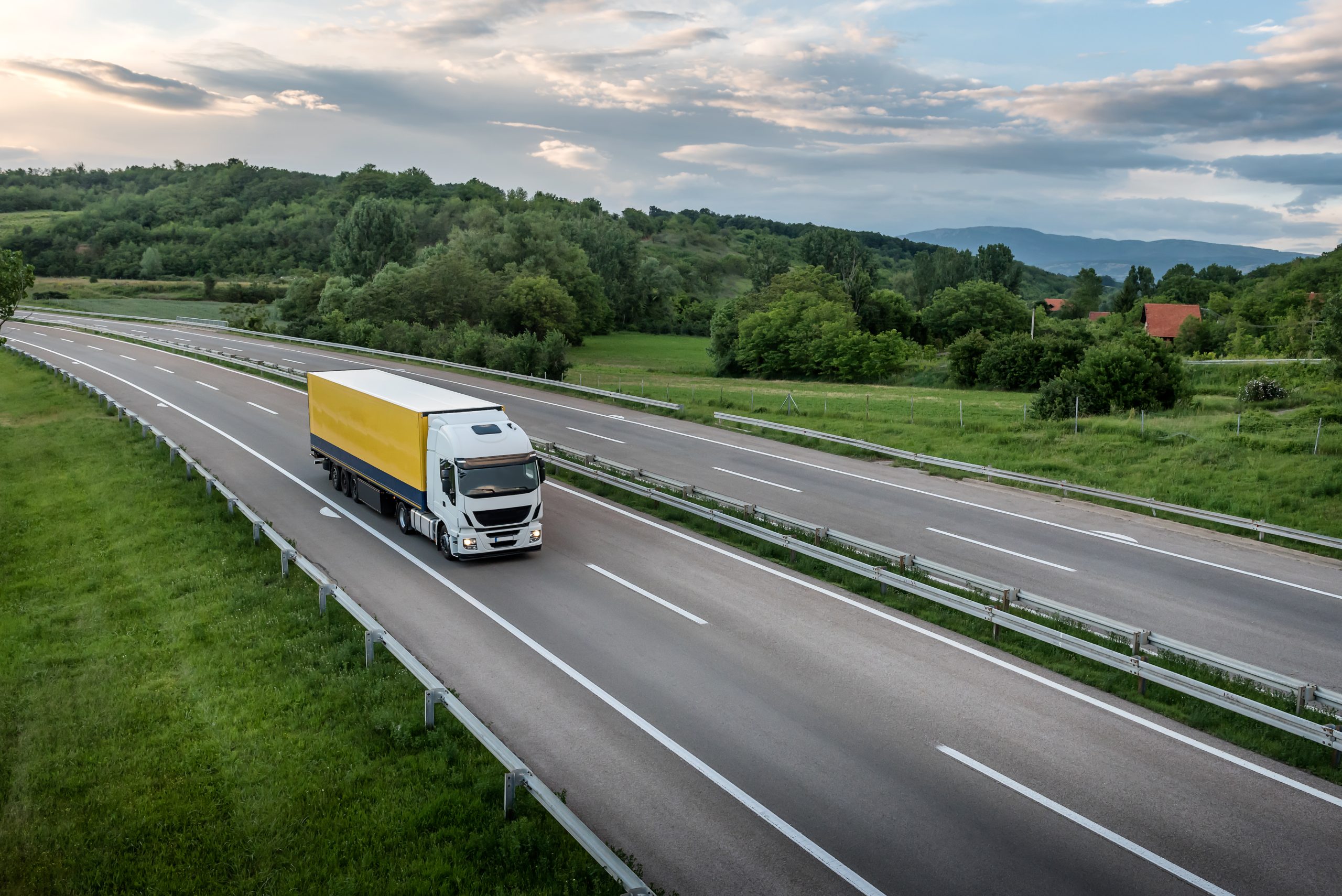
According to data for the second quarter of this year, carriers waited for payment the longest in the economy – the average payment time stated on the invoice is 21.9 days (in reality, a month or two). Real estate companies wait on average more than half as long. 95 percent of transport companies point to unfavorable provisions in contracts. The problem is not only the payment deadline, but also the use of a stronger position by principals. In the first quarter of 2026, 1,234 Polish companies disappeared from international road transport. If the pace from the first quarter were to continue throughout the year, this number could approach 5,000 companies. However, there are also many carriers who are doing well and investing in a new fleet: from January to June, 26% more new trucks were registered in Poland year-on-year.
Carriers wait for money almost twice as long as companies in the real estate market
The TSL industry is among the sectors that wait the longest for money from issued invoices. Data from Faktura.pl for the second quarter of 2026 shows that the average payment term recorded on invoices for small and medium-sized enterprises was 13.6 days. In transport and warehousing, however, it was as much as 21.9 days, the longest in the economy.
The difference is even more visible when transport is compared with industries with lower current capital intensity. Companies related to real estate market services wait for payment on average 10.3 days, the same in other service activities, and 9.8 days in financial and insurance activities. This means that a carrier waits for payment more than twice as long as some service companies. This is a drastic disproportion.
In reality, it looks even worse. That less than 22 days is the average value written on the invoice. In reality, many companies wait two or three months. During this time, the transport company must finance the execution of the order out of its own pocket before it receives money for it. Money for the completed service appears only after a few weeks, and sometimes after a few months. For a carrier, a deferred payment is therefore not just an entry in Excel. It is a real hole in finances between the execution of the transport and the inflow of money into the account.
– comments Rafał Kozielski, Commercial Director at Finea, a company specializing in TSL financing.
Contract without negotiations, payment after the deadline. This is what asymmetry in transport looks like
The liquidity problem in the TSL industry does not result solely from long payment terms. It is also compounded by the imbalance in relations between carriers and principals. A report by Transport and Logistics Poland shows that 95 percent of companies signal unfavorable provisions in transport contracts, and more than 90 percent of respondents often, very often, or always encounter a lack of possibility to negotiate contract terms.
In such a market environment, extended payment terms become particularly burdensome for carriers. More than 93 percent of companies often, very often, or always encounter payment terms ranging from over 30 to 60 days. 42.3 percent of companies admitted that they have encountered payment terms exceeding 120 days from the completion of the service.
120 days is a really long time, it is as much as 4 months of waiting for a transfer after the service is performed. This often results from conditions imposed by a stronger economic partner. The company carries out the transport, covers all costs, and yet has no major influence on when it will actually get paid. In an industry with low margins and high fixed costs, every such delay increases the risk of losing liquidity.
– says Rafał Kozielski from Finea.
More companies are falling out of the market. This year there could be several thousand of them.
Long payment terms would be less burdensome if carriers operated in conditions of stable costs and high margins. However, this is not the case. The Polish Economic Institute report “The transport sector facing cost pressure and decarbonization” shows that the Polish TSL industry is gradually losing its existing competitive advantages.
A model based on lower operating costs, high flexibility, and rapid response to demand is weakening under the influence of wage pressure, driver shortages, competition from outside the European Union, and growing regulatory requirements.
This is already visible in the falling number of entities operating on the market. According to the Polish Economic Institute report, in 2025 the number of Polish companies operating in international road transport decreased by 1,327, and in the first quarter of 2026 alone, another 1,234 companies ceased operations.
Data on entities falling out of the market show that the problem in transport is no longer just low margins. A carrier may have orders, trucks, and drivers, but without access to capital, it will not finance subsequent routes. In TSL, cash decides whether trucks will even hit the road. That is why access to capital is not just an addition to a financial strategy. It is one of the basic conditions for the further operation of the company.
– notes Rafał Kozielski from Finea.
Oil is getting cheaper by almost 37%, but diesel at the pump by 4%
The costs that the industry unexpectedly has to face are shown by the valuation of oil and its comparison with prices at domestic distributors. After the US-Iran memorandum, Brent crude oil fell from $113.88 per barrel on May 3, 2026, to $72.01 on July 6, i.e., by 36.8 percent. At the same time, the maximum price of diesel in Poland fell from PLN 7.31/l to about PLN 7/l (after the withdrawal of government subsidies). This means a reduction of 31 groszy per liter, or 4.2 percent. However, the situation reversed in mid-July: after the renewed escalation around Iran and the restriction of traffic in the Strait of Hormuz, Brent crude exceeded $85 per barrel, and the average price of diesel in Poland rose to PLN 7.19 per liter.
For a carrier refueling 1,000 liters of diesel, the current price of PLN 7.19 per liter means only about PLN 120 in savings compared to the level of PLN 7.31. Meanwhile, Brent crude, despite the recent rebound, is still about 25 percent cheaper than at the beginning of May. If the fuel price had fallen proportionally, such refueling would have cost about PLN 1,850 less. The difference shows that lower raw material prices do not translate automatically and immediately into refueling costs. Carriers are increasingly operating under pressure from principals, banks, leasing companies, growing regulatory requirements, but also geopolitics.
– calculates Rafał Kozielski from Finea.
Over a quarter more new truck registrations this year
However, there is a part of companies that are able to accelerate the circulation of money, function more flexibly, and even invest in development. According to data from the Polish Automotive Industry Association, in the first half of 2026, 26% more new trucks over 3.5 tons were registered in Poland year-on-year. In part, this is the result of the expiration of some old type approvals, including those related to noise standards or “black boxes”. However, the very fact that many companies are finding funds to rejuvenate their fleet is positive and optimistic.
Source: Brandscope