








The Transport Research Arena 2016, titled “Moving Forward – Innovative Solutions for Tomorrow’s Mobility”, took place in Warsaw from April 18-21. TRA is the largest transport conference in Europe, organized with the support of the European Commission and European Technology Platforms dedicated to transport and logistics, including ERTRAC, ERRAC, WATERBORNE, and ALICE.
TRA 2016 was the sixth edition of the conference, which is held biennially. Previous editions took place in Paris (2014), Athens (2012), Brussels (2010), Ljubljana (2008), and Gothenburg (2006).

The program included a series of plenary sessions dedicated to the most important challenges facing Europe, including policy issues presented by representatives of the European Commission, such as European Commissioner for Transport Violeta Bulc, representatives of the European Parliament, including Jerzy Buzek, and government administration represented by Deputy Prime Minister and Minister of Development Mateusz Morawiecki. Furthermore, strategic sessions were held presenting the most important innovations in the transport and logistics industry, including automation in transport, low-emission and highly efficient transport systems, green and responsive infrastructure, intelligent and sustainable urban transport, and the Physical Internet. Additionally, numerous scientific and technical sessions, workshops, and special sessions organized by the European Commission regarding future research in the field of transport and social issues such as the role of women and job growth in the transport sector were held in parallel.
The primary goal of the conference was to promote the development of research and implementation in accordance with the needs of modern European society and to build cooperation in the development of innovation in transport. This included initiating discussions on the challenges facing freight and passenger transport in terms of environmental pollution, energy consumption, safety, and socio-economic aspects. The latest research, implementations, technologies, and innovations were presented, including best practices from Europe and around the world that allow for a more efficient and “green” transport system.
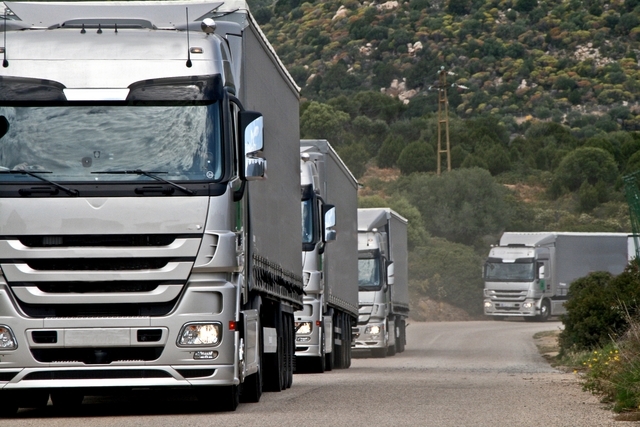
Among other things, the concept of the Physical Internet was presented as a hyper-connected, global logistics system enabling efficient resource sharing and flow consolidation. Furthermore, new trends were presented, such as the development of e-commerce and 3D printing, which will influence the shape of the logistics sector. Among the technologies influencing the development of supply chains, freight transport, and logistics, the Internet of Things, Big Data, Transport Automation, and Robotics were highlighted. Additionally, the growing role of cooperation between logistics service providers and their customers was emphasized, as well as the need to develop business models and information exchange tools, including information exchange standards. Industry representatives also spoke, including those from companies such as: VOLVO, which is currently testing the concept of “platooning,” consisting of savings obtained by driving heavy goods vehicles in a convoy; and BAYER, which presented portable production modules the size of a container that can be moved depending on the increase in demand for production in a given area.
Both participants and organizers emphasized the necessity of transnational cooperation in the field of research and innovation development in Europe and beyond. The need to develop a knowledge base, share risks, achieve critical mass, and more efficiently address common challenges through the implementation of innovative solutions was highlighted.
Transport Research Arena is a meeting place for scientists, business representatives, and local authorities, who were able to familiarize themselves with innovative solutions shaping the transport system in Europe.
Transport is one of the pillars of the competitiveness of the European region and an important labor market. Transport must, on the one hand, respond to social challenges regarding energy consumption, environmental pollution, and road congestion, while simultaneously meeting social needs related to easy access and the safety of means of transport. Efficient and sustainable transport is possible thanks to intelligent and safe means of transport, infrastructure, and services, as well as the ability to adapt user behavior to the changing environment and new technologies.
“A Digital Era for Transport – New Solutions for Society, Economy and Environment” will be the theme of the next TRA, which will take place in 2018 in Vienna.
For more information, see the TRA website (http://www.traconference.eu)