








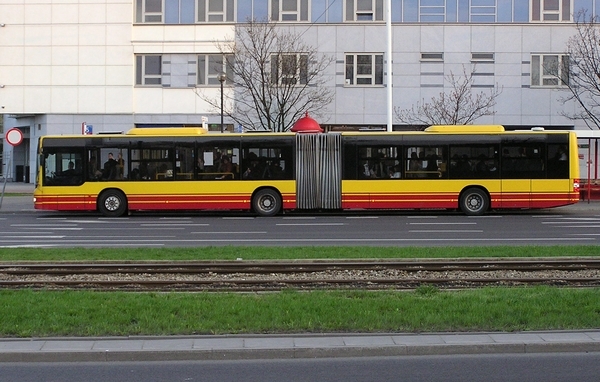
Statistical data indicate a decline in the number of passengers carried by public transport in Poland. This trend is primarily influenced by a decrease in passenger transport in rail and road sectors. Although the growth in the volume of passenger transport by air in domestic traffic shows an upward trend, it does not offset the overall downward trend.
It seems that one of the reasons for the decline in passengers carried by public transport in Poland is the reduction of the transport network, especially in rail transport. Consequently, the number of transport points, which constitute a significant determinant of transport accessibility, is decreasing.
In road transport, despite the increasing length of the road network, one can observe a decreasing number of transport services offered by transport companies in regional and national traffic.
The essence of transport accessibility
Accessibility is a concept commonly used in many areas of social and economic life. However, in the vast majority of scientific papers, authors using this concept do not attempt to define it. It should also be emphasized that the issue of accessibility is understood very broadly. Its scope includes, among other things, both the needs of people with disabilities and food and living needs. It can therefore be noted that it is a universal and capacious concept, referring to many aspects of socio-economic life.
The beginning of research on transport accessibility issues can be considered the work of Hansen (1959). In subsequent years, the issue of accessibility was addressed by researchers such as Pirie (1979), Guy (1983), Song (1996), Handy and Niemeier (1997), and Kwan (1998), who indicated two possible scopes for studying accessibility. The first is related to place analysis, the second to accessibility analysis. Researchers simultaneously noted that there is no single best way to analyze accessibility.
In Polish literature, the evolution of the concept of accessibility is contained, among others, in the work of Z. Taylor. The author notes that in geographical and economic literature, the concept of accessibility is most often referred to the concept of proximity, ease of spatial interaction, or (potential) contacts with an activity or function (access to school, hospital, etc.).
Undoubtedly, transport occupies an important place in the scope of the accessibility issue, enabling the realization of all social and economic needs. However, it seems that these are works emphasizing the geographical aspect; investigating primarily the relationships and dependencies between transport and space (spatial accessibility). On the other hand, broader considerations in the economic aspect are missing. It seems important, when analyzing transport accessibility, to also consider the issue of transport service prices in connection with the tariff system (economic accessibility) and the time of transport service delivery (time accessibility). (…)
The article contains 21,703 characters.
Source: Logistyka Magazine