An interview with Małgorzata Jarosińska-Jedynak, Deputy Minister at the Ministry of Development Funds and Regional Policy, Government Plenipotentiary for the preparation of the World Urban Forum in Katowice in 2022.
Janusz Mincewicz: Katowice, following Barcelona and Naples, is the third European city to host the 11th session of the World Urban Forum (WUF11) from June 26-30 this year. Why were Katowice and Poland chosen for this honor?
Małgorzata Jarosińska-Jedynak: I believe three issues were key here. First, the very strong candidacy of Poland and Katowice. The capital of the Silesian Voivodeship already has experience in organizing large events, including in cooperation with the UN. The largest of these was the World Climate Summit in 2018. We showed then that we are a credible partner. Second, we effectively promoted our candidacy through various channels, everywhere we could. As a result, it was not Mexico City or Dortmund, but Katowice that became the host of WUF11. The third element is the story we want to tell. I am referring to the transformation that Polish cities, and especially Katowice, have undergone. We did not have the Marshall Plan, the European Union, or economic freedom. Instead, we had a Soviet dictate for which heavy industry was key. And everything was seasoned with the sauce of an alleged fight for workers’ rights. Please look at where Katowice, Kraków, or Gdańsk are now. These are cities attractive to investors, increasingly green, resident-friendly, and well-connected. It is precisely this story of the transformation of Polish cities that we would like to tell at WUF11.
J.M.: What exactly did the capital of Silesia surprise the competition with to win against other cities and secure the organization of the WUF?
M.J.-J.: I think it was precisely its story. Katowice has transformed from a typical mining, industrial city into a green, modern metropolis that emphasizes culture and business, while at the same time being full of respect for its history. Katowice provides an example of how to use post-industrial areas for other purposes. The place where the Polish National Radio Symphony Orchestra and the Silesian Museum are now located are the grounds of the former Katowice coal mine. Many Polish cities have similar experiences. All this makes the 11th session of the World Urban Forum unique. I deeply believe in that.
J.M.: What will be the main theme of the Katowice World Urban Forum?
M.J.-J.: During WUF11, we will be guided by the slogan “Transforming our cities for a better future.” These words may seem like an empty slogan, but they are not. It is a call to take concrete action. Sustainable urban development is not a task for “sometime,” it is a need for “here and now.” The WUF11 theme translates into 6 topics that will be addressed at the event. During WUF11, we will therefore talk about equitable and resilient cities. We will also focus on urban planning and management and the green future of cities. We will also debate innovation and technology, as well as the future of the economy and urban finance. The WUF11 program is still being created, so we will announce the details together with Katowice and UN-Habitat.
J.M.: The largest Polish, European, and global cities are focusing on smart solutions that fit into the smart city concept. Are Polish cities already on par with the best?
M.J.-J.: We see that in recent years, many Polish cities have been taking up challenges that fit into the concept you are talking about. What pleases us most is that these are not just actions like “let’s introduce a technological novelty and call it a smart city.” More and more local government officials know that a smart city is not just innovative gadgets, but also, for example, citizen participation in management, accessibility, or care for the environment. These are comprehensive solutions based on strategy, not point actions. An example could be Gdynia, where the Social Innovation Laboratory was created. It is a place where innovative solutions are sought and implemented to meet the needs of residents. Another city with a smart solution is Kielce and the Kielce Technology Park. In the capital of the Świętokrzyskie Voivodeship, it was decided to base the implementation of the smart city idea on a long-term vision of a sustainable city of the future developed together with residents. To this end, the Kielce City Development Strategy 2030+ towards a Smart City was developed. Today, Rzeszów is also a center of innovation. It was in this city that the Integrated Traffic and Public Transport Management System was created. At the end of 2021, Rzeszów, as the first city in Poland, introduced hybrid monitoring of the status of free parking spaces, which became possible thanks to the opening of urban data. Information about parking possibilities is made available on interactive boards in a mobile application. These are just a few examples. It is clear that the idea of a smart city excites our local government officials. We support them and will continue to support them.

J.M.: Which Polish cities, besides Katowice, will we be showing off at the Forum?
M.J.-J.: I have already mentioned several cities in our conversation as examples, but there are many more. Our local government officials do not have complexes, which is why we are also counting on the cities to promote themselves. This is what various types of events at the WUF are for, including WUF EXPO, which always enjoys great interest during the World Urban Forum. Cities can register their stands at the EXPO and show how they work for sustainable development.
J.M.: The Ministry of Development Funds and Regional Policy is responsible for the National Urban Policy, which is why it oversees the organization of the WUF. Is organizing the World Urban Forum a big challenge for you and the MFiPR?
M.J.-J.: We found out that Katowice would host WUF11 in May 2019, and the first meeting of the Coordination Team took place in October. Since then, we have been meeting regularly within the team and sub-teams. We work closely with UN-Habitat, the City of Katowice, and the Institute of Urban and Regional Development, which coordinates program issues and helps us with promotion. We also draw on the experiences of our predecessors – the organizers of previous WUF sessions. Organizing the World Urban Forum is one of the priorities for our ministry, as well as for me personally, but it is also a novelty, because this is the first such large event that we are hosting. The pandemic is also a challenge. For the first time, the event will be held in a hybrid format, so we are completely breaking new ground here. We have substantive foundations – as the ministry responsible for the National Urban Policy, we know the problems and challenges of modern cities, we have proven partners and the experience of other institutions. These elements added together create a really strong capital. WUF11 will be a success. I am sure of it.
J.M.: At what stage are the preparations?
M.J.-J.: We are in the final stretch. The next few weeks will be a time of working at full speed for us. We sometimes joke that we will probably just move to Katowice. We estimate that even several thousand people wanting to take part in WUF11 may come to our country, although the development of the situation in Ukraine and pandemic restrictions will not be without significance here. Please remember that the World Urban Forum is not just debates at the International Congress Centre in Katowice (MCK), but a huge undertaking that will spill over into the entire city. We really have a lot to offer. The Youth Town, Chillout Zone, City of Music Zone, and many other places – each offering numerous opportunities not only for WUF11 participants but also for residents and tourists.
J.M.: To what extent did Katowice get involved in organizing the WUF?
M.J.-J.: Katowice is one of the three organizers, which is why it operates in all areas. The city, in particular, coordinates issues related to the presence of WUF11 in the urban space. This includes public transport or the part of the zones accessible to everyone, which will be located outside the MCK. Katowice also puts a lot of work into promoting the event locally and throughout Silesia.
J.M.: What experiences will we gain from organizing the WUF?
M.J.-J.: There will be plenty of them. I will mention three. First of all, these will be experiences related to sustainable urban development. People from all over the world will come to WUF11 who will want to say: look at us, we do it this way and that, and it works for us. Use our experiences. For us and for them, it is an opportunity. For them, it is for promotion; for us, it is for inspiration or the implementation of a specific action. A classic win-win situation. The second important aspect is organizational and logistical issues. The more such events Poland organizes successfully, the more credible a partner we become, because we show that we can simply do it. Such an event is not just renting the MCK. You have to prepare a program, invite guests, ensure security, translations, hotels, and promote it all properly. One could list for another hour. The third issue is the experience regarding the promotion of Poland and Polish cities. After WUF11, we will be able to draw conclusions regarding the adopted assumptions and the effects of the promotion. In the future, we will be able to do it more effectively. I invite everyone to Katowice in June. You don’t have to be an expert, an official, or an entrepreneur. You can simply register, come, and see what such an event looks like. Perhaps this visit will result in inspiring photos, new contacts, or an interesting post on social media.
We wrote more about digitalization in the magazine LOGISTYKA 6/2021.
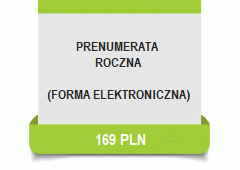
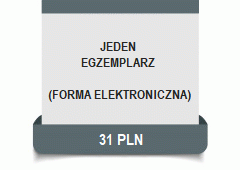
The e-edition of the magazine is available in our offer!

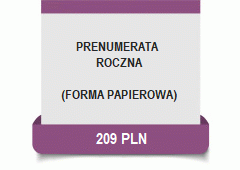
Stay up to date, subscribe to the LOGISTYKA magazine!