








The global chemical industry is responsible for nearly 6% of global CO₂ emissions and generates some of the most complex supply chains in the economy. The transport of chemicals, including hazardous substances, is a key element of this ecosystem, and its importance is growing along with the intensification of trade and the tightening of environmental regulations. Sustainable logistics in the chemical sector is no longer just a matter of image – it is becoming a strategic imperative, encompassing both the reduction of the carbon footprint and the assurance of the highest level of operational safety.
The European chemical industry has set itself an ambitious goal of achieving climate neutrality by 2050. This means the necessity of implementing innovations in the areas of transport, warehousing, and supply chain management. Solutions based on digitalization, intermodality, and alternative energy sources are gaining increasing importance, simultaneously supporting cost reduction and enabling compliance with increasingly restrictive legislative requirements.
Dachser’s climate strategy – four pillars of transformation
Dachser, as a global logistics operator, has been consistently implementing its “Dachser climate protection” strategy for years. The goal of the “Dachser climate protection” strategy is to achieve significant progress in environmental and climate protection.
The foundations of this strategy are four pillars:
- Process efficiency – route optimization, shipment consolidation, reduction of empty runs, and the development of multimodal transport models supported by digital planning tools.
- Energy efficiency – modernization of fleets and infrastructure, use of renewable energy sources, and systems that reduce energy consumption.
- Research and innovation – investments in the development of zero-emission vehicles (BEV, FCEV), testing of hydrogen technologies, and implementation of intelligent energy management systems.
- Corporate citizen program – social and environmental projects implemented in cooperation with international organizations, such as terre des hommes or myclimate, supporting youth and climate initiatives in developing countries.
Sustainable development in chemical logistics – concrete actions
In the chemical sector, where the safety of transport and storage is of key importance, the highest operational standards and Dachser’s eco-friendly solutions become particularly significant, such as:
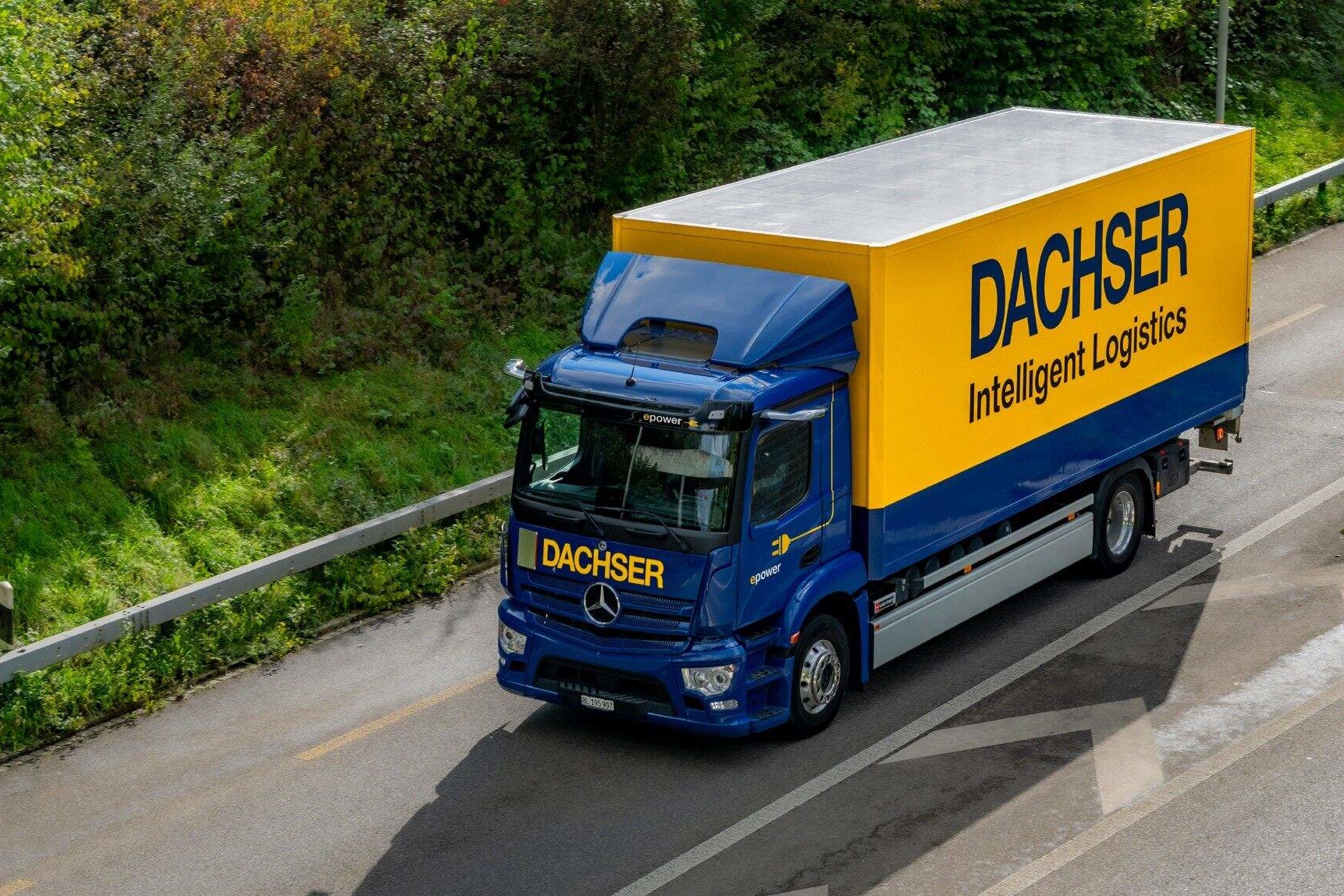
- Modern fleet and transport optimization – the use of solutions such as double-deck loading, megatrailers, or long vehicle combinations allows for a reduction in CO₂ emissions by up to 20%. The company has implemented over 100 zero-emission vehicles in Europe and is working with universities and consulting partners on the implementation of hydrogen drives (FCEV). Dachser also actively participates in industry initiatives, such as the German Hydrogen Association (DWV), supporting the development of alternative drives.
- Infrastructure and energy – Dachser is successively switching to renewable energy sources. By 2025, the capacity of photovoltaic installations in Europe will exceed 20 MWp. Furthermore, replacing 6,500 forklifts with lithium-ion battery-powered models will reduce emissions by approximately 10.4 thousand tons of CO₂ annually.
- Digitalization and reporting – the use of AI and 5G/LPWAN telematics in route planning, full digitization of documentation, and the ability to generate individual carbon footprint reports for every shipment.
Transparency and standards
Dachser consistently subjects its activities to external audits and independent assessments, which forms the foundation of the credibility and transparency of its climate strategy.
- SQAS (Safety and Quality Assessment for Sustainability) – a score of 92% in transport and 93% in warehousing confirms that Dachser not only meets but exceeds industry quality and safety standards, which is of key importance in the chemical logistics sector. This assessment includes, among other things, risk management, safety procedures, employee training, and environmental standards, and such high results place the company at the forefront of logistics operators in Europe.
- CDP (Carbon Disclosure Project) – the B level achieved in 2023–2024 indicates Dachser’s advanced approach to managing its climate impact. This result means that the company systematically implements emission reduction strategies, monitors its progress, and transparently reports it within the framework of an international comparison system. This positions Dachser above the market average and confirms its readiness to further strengthen its actions towards climate neutrality.
- EcoVadis – a score of 56% in 2024 confirms solid foundations in the area of ESG (Environmental, Social, and Governance). The assessment covers, among other things, policies and practices regarding human rights, business ethics, resource management, and climate change mitigation. Dachser treats sustainable development not as a declaration, but as a key element of its strategy, which it consistently develops and improves.
Dachser Chem Logistics – a dedicated solution for the industry
- Dachser has created a specialized solution for the chemical sector – Dachser Chem Logistics. It combines the highest standards of safety and regulatory compliance with a strong emphasis on sustainable development. Thanks to this, customers from the chemical industry can build stable, future-proof, and environmentally friendly supply chains.
- Sustainable development in chemical logistics is not just a regulatory requirement, but also a source of competitive advantage. Dachser proves that it is possible to simultaneously meet rigorous safety requirements, reduce emissions, and implement innovative technologies. For Polish chemical companies – which are often just beginning the process of building an ESG strategy – Dachser’s approach can provide an impulse for transformation and inspiration for implementing real actions.
Source: Dachser