This year’s forum was guided by the idea of debating the challenges posed by the ongoing fourth industrial revolution. We learned about forecasts regarding the latest trends and innovations in the chemical, automotive, and industrial sectors. Among the topics addressed were issues concerning smart factory and innovative technologies ensuring business savings. The goal of the conference was to show how various production sectors are changing to stand among the leaders of the 4.0 revolution.
This year’s edition of the “Top Industry Summit” was opened by a speech by Dr. Oktawian Makowski, Project Coordinator at the National Centre for Research and Development (NCBR), on the programs offered by NCBR to scientists and entrepreneurs. He spoke about the main beneficiaries of project funding and programs dedicated to the chemical industry, such as INNOCHEM, RANB, Fast Track, or Application Projects.
The role of R&D in the innovation implementation process
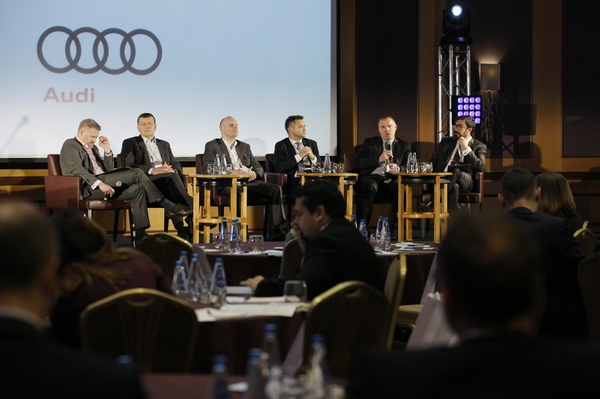
The conclusions from the NCBR representative’s speech set the tone for the further debate. The discussion in the inaugural panel titled “Chemicals 4.0” was moderated by Jerzy Polaczek, Deputy Editor-in-Chief of “Przemysł Chemiczny”.
– The fourth industrial revolution is the digitalization of both social life and industrial processes – said Jerzy Polaczek at the beginning, who in the discussion asked the speakers, among other things, whether the Polish chemical industry is ready for the changes dictated by digital transformation and what challenges the industry faces.
Grzegorz Czul, President of Fluor S.A., referred to relations with investors and engineering companies: – Innovations are associated with higher costs. From the investors’ point of view, a dilemma arises whether it is worth bearing these costs in exchange for technological progress, or perhaps to stick with proven elements and systems. The implementation of every innovative idea involves significant risk, which Polish investors are reluctant to take.
In turn, Andrzej Krueger, Director of the “Blachownia” Institute of Heavy Organic Synthesis, referred to the presentation by Dr. Oktawian Makowski, emphasizing the significant role of NCBR, which is the largest institution supporting R&D activities, actively participating in the creation of new technologies. However, he maintained the opinion that the agency still approaches entrepreneurs too bureaucratically, as they should have clearly defined rules and reduced formal restrictions. Maciej Lubomski, Director of the Waterproofing Division at the Selena Group, emphasized that it is crucial to create an ecosystem of cooperation between R&D departments, which possess enormous competencies, and the market and final product users. The topic of NCBR was continued by Oktawian Makowski, who noted that the agency’s role is not to invest in specific technical solutions but to support scientific and engineering research that will end in the implementation of a product or project. Meanwhile, Artur Kucia, Director of the Strategic Client Office, Heavy Industry and Mining, PKO Bank Polski, said that from the bank’s perspective, it is extremely important that supported projects provide certain and stable growth effects for the entities implementing a given project. In summary, Jerzy Polaczek emphasized that the research base is aware of the approaching revolution, and the industry is trying to use the scientific and technical solutions available to it. Investors, in turn, need to be convinced to modernize their projects despite the fact that it involves risk.
The next speaker at the conference was Dariusz Downer, Industry 4.0 Project Coordinator at the Robert Bosch Brake Systems Factory in Mirków near Wrocław, who presented the practical application of RFID in supply chain optimization and thus introduced the topic of the next panel.
Smart Factory Solutions
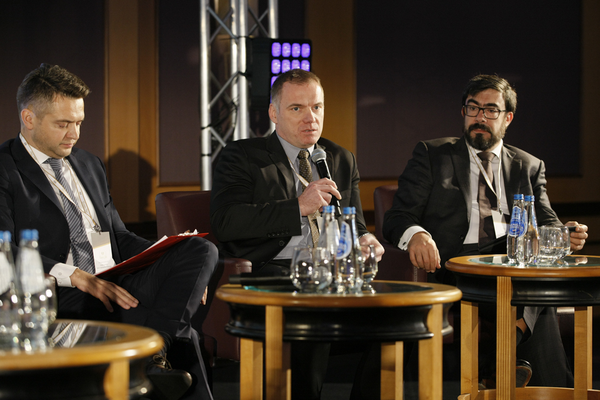
After Dariusz Downer’s case study, the speakers of the second panel, which was led by PWC Manager Michał Gawrysiak, were welcomed. The main theme was solutions for Smart Factory. One of the discussants was Michał Ziajowski, General Director of Precia Molen, who emphasized that a company operating in the spirit of the fourth industrial revolution reacts instantly to market changes, changes regarding suppliers, and above all, to the needs of its customers. He stressed that sooner or later the revolution will affect everyone. This statement was joined by ERBUD Industry Board Member Mariusz Grochowski, who expressed his concern that the principle of “repair only when something breaks” prevails. He noted that Polish entrepreneurs are not forward-thinking. They are afraid of new solutions that are not implemented due to internal organizational barriers. The thread was also raised by Boryszew President Jarosław Michniuk. He admitted that Polish entrepreneurs are still not convinced to invest in smart factories, but to survive, they will have no other choice over time. Finally, the question arose as to what the financing of modern factories looks like. Łukasz Jasiński, Director of the Sectoral Projects Department at BGK, provided the answer. He confirmed that there is plenty of money for such ventures. There are appropriate instruments and products on the market (including technological credit) that will allow for financial liquidity for entities that will move in this direction. One of the biggest challenges in smart factory implementations is the human area and the related education. This is a complex process that concerns training for employees, customers, and suppliers. Banks must also educate themselves in this direction to understand what effect the financed ventures will bring. Returning to the issue related to customer needs, the topic was taken up by Jean-Andre Barbosa, Vice President of the Management Board of Future Pipe Industries. He clearly pointed out that consumer needs have changed, everyone expects tailor-made products, and a modern company should not wonder whether to adapt to these changes, but how quickly and effectively to achieve it. The panel was summarized as follows: the revolution is happening before our eyes – either we will be part of it, or we will be left behind. There are no financial barriers to implementing modern factory strategies. The challenge around these solutions is the human being, who should change their way of thinking, switch from operational mode to control and supervision mode, and for this, they will need commitment to the education of their employees, customers, and suppliers.
What hinders and what drives the development of the automotive industry?
The third panel of the conference, led by Prof. Andrzej Kolasa, Dean of the Faculty of Production Engineering at the Warsaw University of Technology, concerned the development of the automotive industry. The main topics addressed during the panel were the future of the sector, the development of electromobility, and the impact of robotization and automation on the production process. Roman Kantorski, President of the Polish Automotive Chamber, began the panel with an optimistic statement that the Polish automotive sector is developing very well. The main element determining the growing success is primarily the high quality of production in Polish factories of global car concerns and excellent management staff, while the problem is the lack of qualified labor. He was echoed by Piotr Stański, Managing Director of MAN Truck, who simultaneously emphasized that some professions are beginning to be threatened. Among them are truck drivers, who are still in deficit on the market, which is a huge problem for manufacturers.
Andrzej Szałek, Toyota Motor Poland, argued that implementing automation into production is extremely important because it significantly relieves employees and also lowers production costs. However, he emphasized that the human factor cannot be eliminated from production and that humans will still play a major role. According to Krzysztof Biernat, Coordinator of the Polish Technological Platform for Biofuels and Biocomponents of the Automotive Industry Institute, we are facing a transformation of the propulsion energy source and we are striving to ensure that combustion emissions are as low as possible. However, he noted that due to the development of alternative propulsion sources, fuel concerns still have nothing to fear. Adam Holewa, Managing Director for Technical Affairs at SITECH, spoke about trends and new production possibilities:
– Robotization of production processes is a noticeable change that production companies are implementing. In addition, a noticeable trend is virtual reality, which supports manual processes requiring experience in operation. The use of unmanned forklifts is also increasingly used in the industrial area.
The panel was complemented by a speech by Luiza Wójtowicz-Waga, an English language trainer and lecturer, who argued that hard data is not everything in the world of social and cultural skills of a team.
“Successful Industry 4.0 – Business Models”
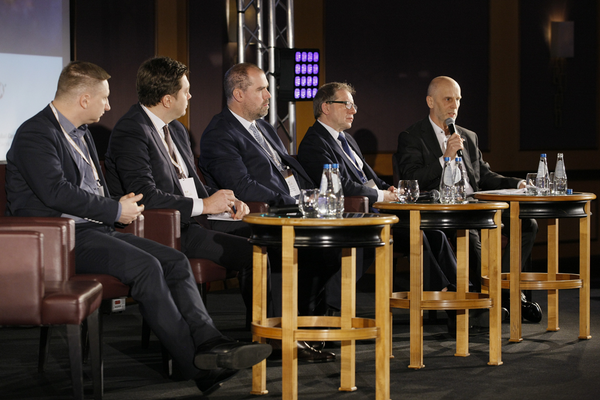
The last panel was opened by the editor of the monthly iT Reseller, Mieczysław Starkowski, who, putting a “smart helmet” on his head, welcomed the guests and panelists with the statement that in our times everything is already “smart”. Wanting to provoke the discussants to a lively conversation, he used a provocation and put forward the thesis that in the factory of the future there will be two employees – a dog guarding the factory and a human who will feed it. Thus, he began a conversation about the vision of Industry 4.0. A prelude to the entire discussion was the statement by Ryszard Gongor, Board Member of GEDIA Poland, that the 4.0 industrial revolution is primarily the domain of Europe, and the engine for change will be the Customer. It is they who set the path for the future. Dr. hab. inż. Jacek Reiner, associate professor at the Department of Laser Technology, joined the discussion. He referred skeptically to Mieczysław Starkowski’s thesis. He mentioned that the lifespan of electronics will shorten. It will not be repaired, but replaced with new ones, so the human factor will be key here. Another issue raised by the moderator was the participation of artificial intelligence in business. Artur Pollak, President of APA Group, referred to this topic, in whose opinion AI already surrounds us, sometimes we are not even aware of it. He also referred to the process of the ongoing 4.0 revolution itself, which in Poland has less acceleration than, for example, in Western markets, and the reason for this is the lack of courageous managers who are afraid of risk. A valuable note was added by Professor Jacek Reiner, that we will not be able to cope with collecting and analyzing Big Data without the participation of artificial intelligence. He also clearly expressed that in the era of customer needs, we should also look at the employee to ensure the company’s stability and loyalty among the staff. Meanwhile, Michał Sieczko, Senior Manager of the professional services department at Canon Polska, pointed to the problem of technology layering. We must process information effectively and store it prudently. Our threat is the ubiquity of data. Jacek Pogonowski, President of the Management Board of Konsalnet Holding, joined the discussion on security. He pointed to prosaic issues regarding both digital and physical security. Everything depends on how much money we want to spend on it, however, we are not able to protect ourselves 100% against sudden situations. What we should bet on is fewer people and more technology.
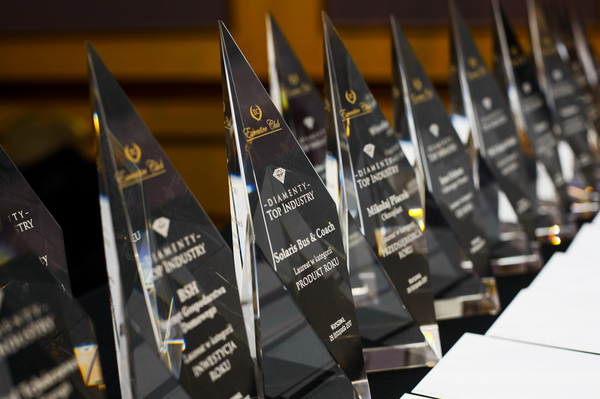
Presentation of Top Industry Diamonds
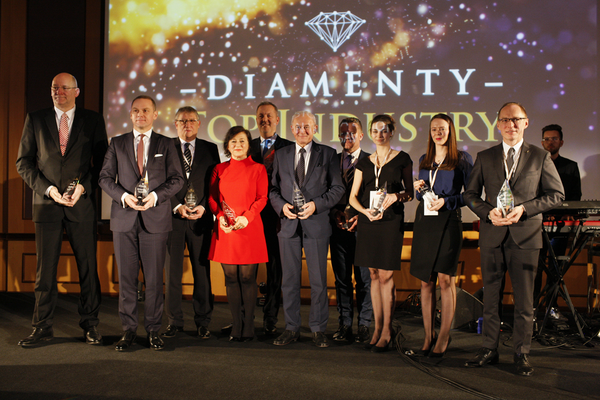
During the Top Industry Diamonds Gala, those entities that particularly distinguished themselves in the chemical, automotive, manufacturing, and IT sectors were honored. The special guest of the Ceremony was the Minister of Energy, Krzysztof Tchórzewski, who clearly emphasized that the energy industry in Poland is doing excellently.
This year, the Competition Jury chaired by Prof. Michał Kleiber selected winners in 8 categories:
SPECIAL AWARD – MERITORIOUS FOR THE INDUSTRY
Krzysztof Tchórzewski
Minister of Energy
INVESTMENT OF THE YEAR
Bosch Group
Grupa Azoty
PRODUCT OF THE YEAR
Solaris Bus & Coach for Solaris Urbino 12 electric
PERSONALITY OF THE YEAR
Mikołaj Placek, President of the Management Board of Oknoplast
CEO OF THE YEAR
Jens Ocksen, President of the Management Board of Volkswagen Poznań
Wiesław Hałucha, President of Alwernia as a Development Leader
FINANCING ENTITY OF THE YEAR
PKO Bank Polski
LEGAL ADVISOR OF THE YEAR
Dentons
START-UP OF THE YEAR
NanoThea
COMPANY OF THE YEAR
PGNiG
SPECIAL AWARD – LEADER OF SUSTAINABLE DEVELOPMENT
BASF Polska