








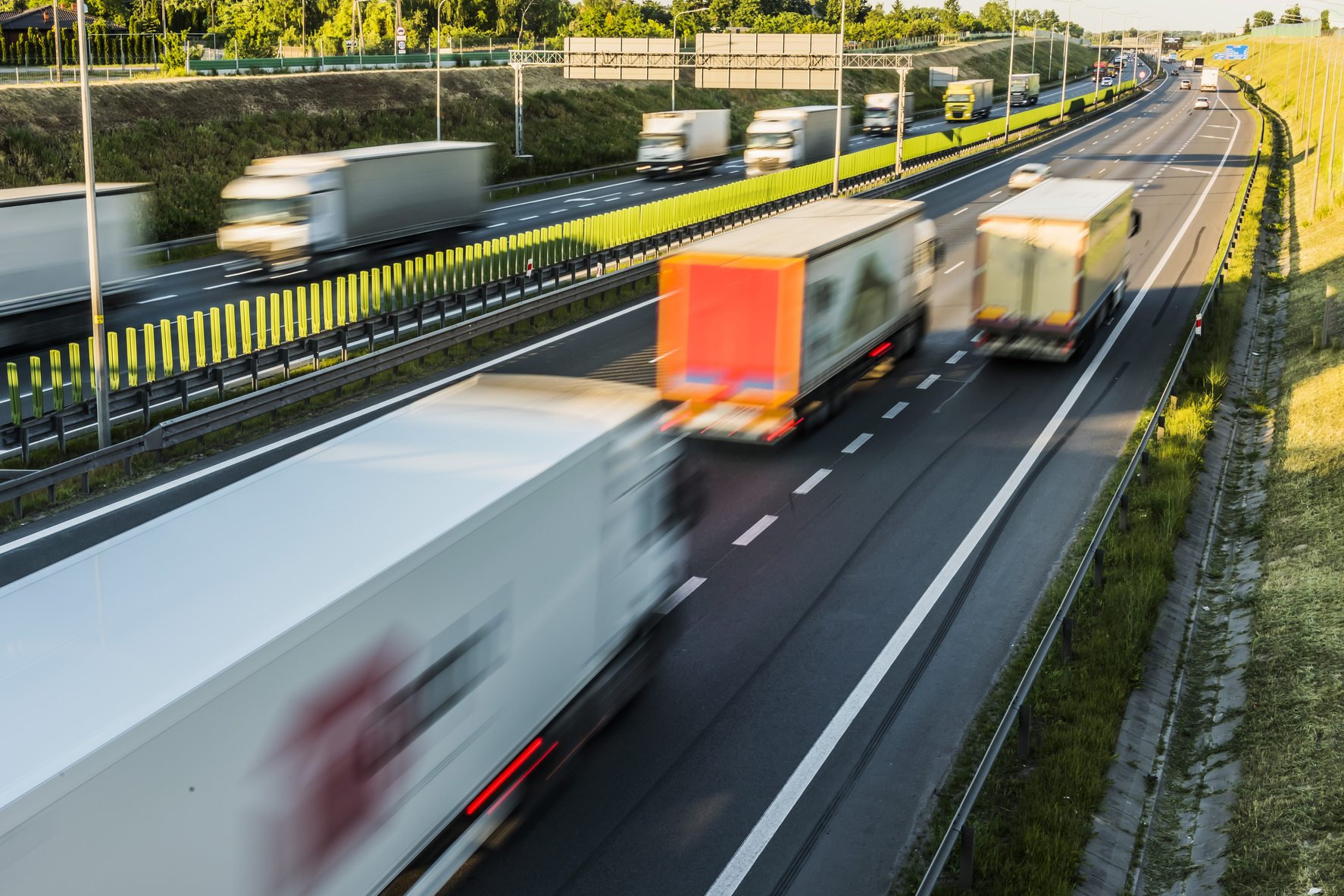
In international transport, carriers cover thousands of kilometers across various countries. Before each trip, it is worth paying attention to the regulations in force in the countries through which the route will pass. Ignorance of them can result in a hefty ticket or fine. However, they can be avoided if we react in time.
Border Force in the UK
Last year, British authorities were exceptionally rigorous in monitoring compliance with regulations aimed at preventing illegal immigrants from entering the UK.
Carriers were made aware, often through a fine, that failure to comply with the rules and guidelines of the British Border Force could cost them several thousand pounds. The penalty will be imposed even if no stowaways were found in the vehicle.
London’s LEZ and ULEZ zones
Further regulations that caused trouble for carriers concerned entry into so-called green zones. Only vehicles meeting a specific emission standard can move within them. Each country has its own guidelines and restrictions related to entering them, so meeting the standards in one does not necessarily mean a lack of problems in another.
Fines for carriers for unauthorized entry into low-emission zones, such as the Low Emission Zone in London, can be very high. Ignoring LEZ regulations while driving through the capital of the UK can cost even tens of thousands of zlotys. Currently, its coverage includes almost the entire city.
– As the owner of a vehicle from outside the UK, we must note this fact on the website of the municipal transport authority, i.e., Transport For London. We also repeat the registration with Euro Parking Collection plc, which allows for appealing a fine and confirming compliance with requirements and exemption from fees. Only drivers of cars that meet the Euro 6 standard will not pay for entering the zones – explains Lucica Kucharec, a lawyer at TC Kancelaria Prawna.
Each car must be registered individually, and approval for registration equals exemption from fees for entering both zones – LEZ and ULEZ. And how to check if a given vehicle has been registered? Just go to the website tfl.gov.uk/lez.
Remember that cost-free entry will only be possible once we receive confirmation of registration. Otherwise, carriers must pay fees for entering the zones. Their amount depends on the conditions of the standard the vehicle meets. For Euro 4 and 5, it is 100 pounds, and for lower ones – as much as 300 pounds per day.
How to avoid a fine for unauthorized entry into a green zone?
In the event of receiving a fine, the most important thing is to register the vehicle in the LEZ or ULEZ zone as soon as possible. If the vehicle does not meet the required emission standards, you can also pay for entry into the LEZ zone retroactively. We have a maximum of three days from leaving the zone to do this, with the deadline counting until midnight on the third day. Then, you should file an appeal against the fine as soon as possible. Thanks to this, you can even get a complete cancellation of the fee, provided the vehicle meets the adopted standard.
– Our clients most often report fines for entering green zones in London to us. However, it must be remembered that the zones also apply in other countries and one must adapt to local rules. One client recently reported a €500 fine imposed for the lack of a sticker indicating the emission standard in Switzerland. In this country, there are no official low-emission zones, but there is an ecological zone that covers Geneva and some of the surrounding municipalities – advises Lucica Kucharec.
Stick’AIR – ecological sticker
Vehicles registered both in Switzerland and abroad are subject to the obligation to have a valid ecological sticker or Stick’Air when entering the ecological zone of the city of Geneva and its surroundings.
Users of these vehicles must purchase a sticker compliant with the emission standard. Colored stickers are used to identify the vehicle and are divided into 6 different categories.
Stick’AIR stickers are mandatory for, among others, passenger cars, campers, minibuses, buses, delivery vans, trucks, and heavy goods vehicles that intend to move around Geneva and its surroundings during specific hours. These hours apply from Monday to Sunday from 6:00 AM to 10:00 PM.
There are 6 Stick’AIR ecological stickers in 6 different colors: green, purple, yellow, orange, brown, and gray. The numbers on the stickers (5, 4, 3, 2, 1) are white and denote different pollution classes, not the Euro standard. Additionally, the sticker has a white field for the license plate, in which a unique sticker issuance number is printed in black.
The Swiss ecological sticker or Stick’AIR can be purchased on the official website ge.ch. Stickers are also available at gas stations, car service stations, car accessory stores, and at the counters of the Office cantonal des véhicules. Another option is to order the sticker on the green-zones.eu website.
The price of one sticker is 5 CHF, however, the specific price may vary at some points of sale depending on the country of registration.
Penalty for lack of an ecological sticker
Stick’AIR is only valid if it is stuck on. Therefore, if we have the sticker in the car but it is not stuck on, we must count on a fine of up to 500 euros.
According to EU Directive 2011/82 of October 25, 2011, “to facilitate the cross-border exchange of information on road safety-related traffic offences,” failure to pay a fine of at least 70 euros will result in the initiation of enforcement proceedings in the home country. In this case, one must even count on a prison sentence.
If the offense was committed by a foreigner, they are obliged to pay the fee on the spot or provide a security deposit if they do not agree with the imposed fine.
According to Swiss regulations, one can appeal against an imposed fine within 30 days. In the event of filing an appeal, the procedure of ordinary misdemeanor proceedings is launched, as a result of which a judgment is made regarding the validity of imposing the fine.
In the event that the fine is deemed unjustified, the collected security deposit is returned.
– If we believe that the fine was imposed groundlessly and we want to appeal, we cannot pay it. Paying the fine on the spot is equivalent to admitting to committing the offense and thus we will no longer be able to appeal it. This was also the case with a client who came to us. Because the driver paid the fine on the spot, he could not appeal it after returning to the country – says a lawyer from TC Kancelaria Prawna.
An appeal would be possible if the driver did not accept the fine and decided to pay a security deposit. The basis for challenging the penalty can be the fact of having a sticker and the vehicle meeting emission standards.
A ticket or fine on an international route can be avoided thanks to proper preparation before the trip and correct conduct in case they are imposed. It must be remembered that in many cases, paying the fine on the spot closes the path to an appeal. If we receive a penalty with deferred payment, it is worth handing the case over to a law firm that will help prepare an appeal.
Source: TC Kancelaria Prawna