We talk to Justyna Glaza, Environmental Manager at GLS Poland, about being a conscious and responsible logistics company and the practical aspects of implementing a pro-ecological strategy.
 Konrad Michalski: How does GLS perceive environmental awareness in the courier operator’s strategy?
Justyna Glaza: The GLS Group has been implementing the Think Green initiative since 2008. It has allowed us to implement and coordinate various activities that actively support environmental protection, primarily in three areas: responsible resource use, waste management optimization, and emission reduction. Today, sustainability is an integral part of our new Accelerate development strategy, just as important as the continuous improvement of service quality. We are consistently introducing, among other things, zero- and low-emission vehicles and advanced digital tools to optimize logistics processes. The environmental responsibility of the entire CEP industry, like any other related to logistics and transport, consists primarily of reducing emissions. Is it “worth it” to be eco-friendly? Answering this question requires a broader perspective. E-commerce customers are placing increasing importance on ecological aspects. Those online stores and platforms that focus on “green” solutions can gain a significant image and competitive advantage. Therefore, they will be more willing to cooperate with courier companies that provide, for example, low-emission transport.
Konrad Michalski: What is the primary goal of the pro-ecological activities implemented at GLS?
Justyna Glaza: Let’s take a closer look at the B2C segment, because the boom in e-commerce is currently the most important driver for the rapid development of the CEP industry. This dependence, or rather interdependence, has been growing stronger for several years. From the point of view of online stores or online sales platforms, what matters is that the purchasing process is as convenient and fast as possible. The delivery of ordered products is actually the only element of this process that cannot be carried out online. Consumers perceive the method and quality of delivery as an integral part of their shopping experience. That is why the punctuality, reliability, and flexibility of courier services are so important for e-commerce. I mention flexibility here for a reason: it means the operator’s openness to the expectations of individual recipients and a readiness to constantly adapt to their needs, including those related to environmental protection. The same trend can be seen in the B2B segment – companies are looking for solutions that fit into the idea of sustainable development in all areas of their operations and expect the same from their business partners. In summary: in the context of long-term market positioning and developing business relationships, implementing ecological solutions already brings benefits and will be a necessity in the near future. Naturally, the entire economy is beginning to shift to a sustainable development model. This process covers all industries and has already begun. At GLS, we see many business opportunities and interesting development possibilities in this. Readiness for change is written into our business DNA.
K.M.: Which eco-projects is GLS proud of, and what benefits does it derive from them?
J.G.: GLS was the first operator in Poland to introduce a courier bicycle into regular parcel handling. This solution has been in operation since June 2020 in the very center of Krakow, where traffic restrictions apply. Thanks to this, we provide recipients in this part of the city with timely, reliable, and, above all, zero-emission deliveries. This is an excellent example of how pro-ecological solutions can harmonize with business goals. Such solutions will soon appear in other cities in Poland. In Warsaw, we introduced electric courier vans, along with charging infrastructure for this type of vehicle. Such vehicles in GLS colors also operate in Krakow, Siedlce, and Wodzisław Śląski. We are convinced that pro-ecological solutions bring the best results when they are well-adapted to local conditions. This approach also allows for providing courier services at a high standard expected by customers. I will add that the GLS Group across Europe has been implementing various types of alternative and zero-emission vehicles for last-mile delivery for several years. These include, for example, small three-wheeled electric scooters or electric-assist bicycles. More and more electric courier cars are also driving in GLS colors in various European cities. In the case of heavy transport, the electrification of the drive is at a less advanced stage. Experts generally agree that for this category of vehicles, we must currently look for ways to reduce emissions based on more modern internal combustion engines that do not use diesel fuel. Technically, this is already feasible, and the benefits for the environment are very measurable. Since 2019, an important long-distance route in the international GLS network has been served by LNG-powered trucks – the Iveco Stralis NP 460. They consume up to 15% less fuel than similar heavy-duty vehicles with diesel engines. And even more importantly, they emit as much as 99% fewer particulate matter and 60% fewer nitrogen oxides than required by the limits set in the Euro VI standard.
K.M.: What are GLS’s plans for the future regarding environmentally friendly implementations?
J.G.: Our entire fleet, including vehicles belonging to subcontractors and company cars, is being gradually replaced with more ecological models, including zero-emission electric vehicles. However, this is a process largely dependent on the pace of technological development. Whenever appropriate opportunities arise, we check and test new solutions. Reducing emissions is the primary goal, but the Think Green program concerns all aspects of GLS’s operations, not just those directly related to providing courier services. For example, this year GLS Poland, like other national GLS Group companies in Europe, began ordering energy from renewable sources. The scope of orders covers 85% of the total electricity consumption of GLS Poland. This applies to nearly 20 of our branches and subsidiaries across the country, including the largest facilities, such as sorting centers near Warsaw and in Stryków near Łódź. We have implemented the solution in all our own locations and in those rented facilities that could be covered by a central electricity purchase agreement. Approximately 500 “clean” megawatt-hours are generated for the company’s needs every month. This is energy produced in photovoltaic power plants, wind farms, hydroelectric power plants, from biomass, or geothermal sources. The installation of photovoltaic systems on our own facilities has also already begun.
K.M.: What role do digital solutions play in the green transformation of GLS? Does GLS know how to systematically harness IT for pro-ecological activities?
J.G.: I will give examples of specific, already implemented solutions. Since last year, GLS Poland has been using an advanced tool for managing courier routes. It is based on geocoding: precise geographical coordinates, so-called geocoordinates, are assigned to every pickup or delivery address. In this way, it is possible to very accurately map real courier routes, and in real-time, which enables optimal planning of the entire delivery process. The more accurately routes are determined, the shorter the transport time and the greater the fuel savings, which of course directly translates into lower emissions and brings measurable benefits to the environment. Another example is our proprietary application for courier scanners, the implementation of which allowed for paper savings of nearly 30% within a year. In the future, as technology develops, we will certainly implement more digital tools that fit well with sustainable development goals. We are ready for it.
More articles about ecological solutions, not only at GLS, can be found in the magazine LOGISTYKA 4/2021.
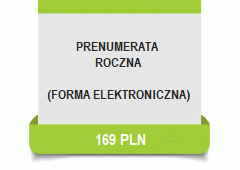
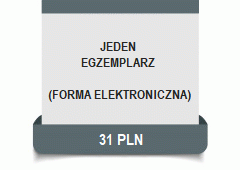
The e-edition of the magazine is available in our offer!

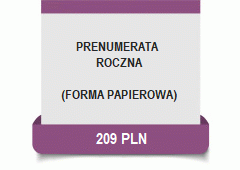
Stay up to date, subscribe to the LOGISTYKA magazine!