









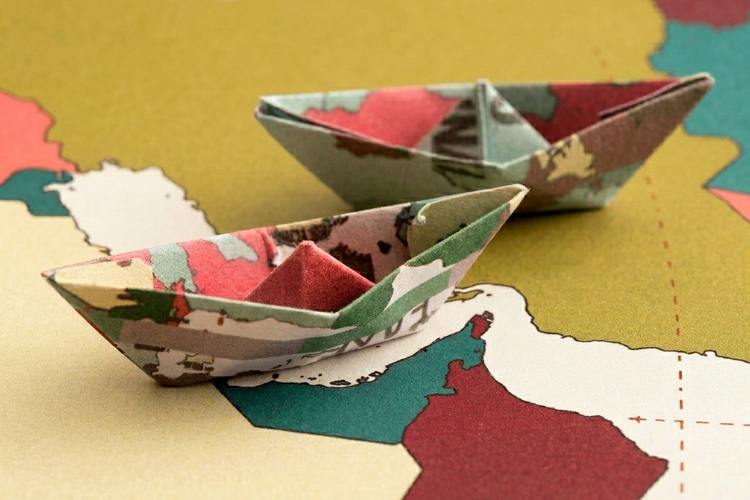
The situation in the Strait of Hormuz – one of the most important oil transport routes in the world – is still far from stable. The prolonged conflict between Iran and the USA is paralyzing maritime traffic, which in practice means that global trade has entered a state of deep uncertainty. The consequences of this blockade are felt not only in the Middle East region but also in Europe, where concerns about rising energy prices, inflation, and supply chain disruptions remain vivid. Poland, as an economy strongly linked to global trade and raw material imports, is also feeling the effects of the crisis. In this context, the question of the scale and durability of these disturbances, as well as the logistics sector’s ability to adapt, becomes crucial. We asked four industry experts to assess the situation and its potential consequences for the Polish economy.
The significance of the conflict for Polish road transport
 Anna Majowicz, CEO of MAI Institute:
The conflict in the Strait of Hormuz area, although geographically distant, has a direct impact on Polish road transport. It is one of the most important points of global energy infrastructure – every day, about 20 million barrels of oil flow through it, which is nearly 20% of global demand, as well as a significant portion of global LNG trade. Any tension in this area immediately translates into energy commodity prices, and consequently, into fuel costs in Europe. For transport companies, this is of key importance because fuel accounts for an average of 30-40% of a road carrier’s operating costs. Even a diesel price increase of 0.20 PLN per liter, with a fleet of several dozen vehicles, can mean an increase in costs of tens of thousands of zlotys per month…
The second important aspect is the disruption in global supply chains. Problems in the Persian Gulf region can lengthen maritime transport, cause changes in ship routes, or delay deliveries of components from Asia. This creates a domino effect – after periods of downtime, sudden surges in transport orders appear, requiring high operational flexibility from road transport companies.
For Polish TSL (Transport, Spedition, Logistics) enterprises, this means the necessity of active risk management, monitoring the geopolitical situation, and placing greater emphasis on diversifying clients and transport directions. The conflict in the Strait of Hormuz shows that supply chain security begins far outside of Europe, but its effects are very quickly felt by carriers on Polish roads.
The significance of the conflict for Polish e-commerce
 Damian Kołata, Head of Commercial, 7R:
The conflict in the Strait of Hormuz is important for Polish e-commerce not because deliveries to customers using the electronic sales channel are carried out through it, but rather because about one-fifth of globally consumed oil and large volumes of LNG pass through this strait, so any crisis concerning the supply chain of these raw materials immediately drives up fuel, freight, and insurance prices, and these things indirectly, though sooner rather than later, affect not only transport rates but also the final prices of goods offered by sellers.
Ship traffic in the strait has recently fallen to less than 10 percent of the average volume, and war insurance for some voyages has increased from about 0.25 percent to 3 percent of the ship’s value, while air freight rates from Asia to Europe have simultaneously risen by as much as 70 percent. For Polish e-commerce stakeholders, this means more expensive deliveries, more expensive returns, and a higher risk of delays, especially in low-margin segments such as clothing or electronics. We could therefore venture to say that while the Strait of Hormuz is quite far from our country on the map, in the global village, it is unfortunately very close to the shopping cart.
The significance of the conflict for Polish maritime transport
 Prof. Marek Grzybowski, PhD, President of the Baltic Sea and Space Cluster:
The Strait of Hormuz connects the Persian Gulf with the Gulf of Oman and the Arabian Sea. The largest tankers, bulk carriers, and container ships can pass through it. Its blockade means that only a portion of oil, gas, and products can be transferred via pipelines to the international market.
Up to 21 million barrels per day reach the market from the Persian Gulf. This means that 20% of global demand is met by this region. Countries using ports in the Persian and Oman Gulfs are also significant participants in the market for grain, fertilizers, as well as industrial and consumer goods.
As a result of the inhibition of containerized goods deliveries, exporters and freight forwarders, shipowners, and seaports, all participants in the logistics chain, lose out. Polish exporters sell over 200 million USD worth of goods to this region monthly. Polish yachts and machinery, meat and dairy industry products, sweets, furniture, and mechanical and electrical devices are purchased in the Middle East.
We import gas, crude oil, and petrochemical industry products from this region worth over 1 billion USD monthly. A decline in trade turnover with the Middle East also means significant losses for Polish container and fuel terminals.
Global operators are making adjustments to sea-land transport chains, and freight forwarders are changing logistics plans for the delivery of industrial and consumer goods. Many operators pay the Islamic Revolutionary Guard Corps to get ships with goods out of the Persian Gulf. Exports to the region have practically been halted.
The significance of the conflict for the Polish fuel market
 Grzegorz Lichocik, PhD Eng., TSL market expert, lecturer at WSB Merito University in Toruń:
Uncertainty about the future is part of our lives, including economic activity. Crises and geopolitical tensions directly affect our reality and influence economic processes to a greater or lesser extent.
The Persian Gulf region supplies about 20% of oil to global markets. We cannot forget that this is not the only area currently excluded from regular supplies. Before the invasion of Ukraine, Russia supplied about 13% of global supply. Supplies from Russia before the embargo were the main source of supply for most EU countries. After the sanctions on Russia were introduced, EU countries focused on obtaining hydrocarbons from other sources, including the Persian Gulf area. The world’s largest supplier is the USA, which accounts for 18–19% of production. Canada, China, and Brazil together account for 14% of production, while other countries such as Mexico, Norway, Nigeria, or Kazakhstan produce at a similar level of 1.75 million barrels per day, i.e., about 2% of global production each, which together with Venezuela accounts for another 9%.
Blocking the Strait of Hormuz means a lack of access in Europe to about 33% of global production (Persian Gulf countries and Russia). Of course, all countries are aware of the risks arising from the possibility of supply restrictions and pursue a policy of creating reserves (strategic and mandatory), which in Poland amount to 115 million tons and correspond to the market’s demand for about 3 months. These reserves are also maintained in case of war, so it does not mean that in the event of an economic crisis, all reserves will be depleted.
Fuel is one of the main cost components in road, air, or sea transport. In road transport companies, they reach about 30% of the company’s operating costs, and their share is, of course, dependent on the fleet it owns. Manufacturers are constantly looking for solutions that would reduce fuel consumption, and currently, the latest vehicles are 20–30% more economical than they were a dozen or so years ago. Nevertheless, the occurring increase in fuel prices continues to keep this share of costs at a high level.
Depending on the type of road transport activity, TSL companies secure their contracts with clients for transport or logistics services in case of sudden changes in fuel prices on the market. Practically all the largest companies on the market use a fuel surcharge, which is an element of the service valuation (price for transport + % of fuel surcharge). An exception to this rule is InPost’s offer for individual customers, which is not charged in the official price list (it does, however, appear in price lists for business customers). Transport companies carrying goods with FTL vehicles that do not rely on long-term contracts (offers valid for less than 3 months) most often do not use this surcharge, but only react to the current situation by changing prices for transport. In the case of these transports, the reaction is quite fast, and with the increase in fuel prices, carriers change their prices practically immediately.
For longer contracts, to protect themselves against the possibility of sudden changes in fuel prices on the market, road transport companies use a fuel clause, the amount of which depends on the basic price list and the adopted base fuel price for this price list. A change in the base fuel price results in changes in the calculation of fees for the transport service of the shipment. This allows companies to carry out long contracts without the need to renegotiate them with every change in fuel prices, whether down or up. Large logistics companies most often do not own their own transport or only to a minimal extent (which results from the widespread outsourcing of transport services and the adopted asset-light strategy), which allows them to use only such resources as they need at a given moment. In other words, they turn fixed costs into variable ones. These companies also have appropriate clauses in their contracts with clients and subcontractors – transport companies. However, these levels will be different because the share of subcontractor fuel in their total costs is lower than in transport companies. So, does the increase in fuel prices affect logistics operators negatively or positively? The answer may seem surprising, but most often, with the increase in fuel prices, the results of logistics operators improve. This is an effect resulting from the difference between the funds that logistics operators receive from clients and what they then pass on to their subcontractors. Another, already negative, aspect of market changes is also a decline in demand, which affects the reduction in the amount of transport. Therefore, it is crucial whether demand for goods on the market will fall and by how much, because this will determine the size of cargo flows.
Another important issue, raised by many commentators on the processes taking place in the market, which we can observe in the recent period, is the statement that they do not record significant changes in product prices. This is nothing more than the effect of a time shift. Operators change prices a few weeks after the price change, e.g., after 4 weeks, and reflect these changes on invoices after this period from the increase. It lasts as long as the prices were higher than the previous level, so if the fuel price increase was for 60 days, it will also be on the invoices for 60 days, but shifted in time by 4 weeks. Many companies have monthly invoicing, so only after a month from these 4 weeks will they receive a higher invoice for the fuel increase resulting from the increase in the fuel surcharge. We therefore have a shift of practically 2 months, which of course will last as long as prices deviate from their pre-crisis level, provided they return to previous levels.