









In the world of heavy transport, HDS cranes, hooklift and skip loader systems, and aerial work platforms function as machines for special tasks, upon which the continuity of work in construction, logistics, municipal services, and industry depends. Their advanced design, based on complex hydraulic, mechanical, and electronic systems, places unique technical and organizational demands on users and service technicians. Market analyses clearly show that professional maintenance of these devices is no longer just a matter of safety, but has become one of the most profitable and promising niches in the workshop industry.
The dynamic increase in the number of special-purpose vehicles on the roads means that the demand for specialized service is growing faster than the availability of competent service points. This disparity is increasingly shaping the market, creating both challenges for fleet users and a real opportunity for development for workshops ready to invest in knowledge, technical facilities, and procedures.
Service shortage – a structural market problem
For years, the market for special-purpose vehicle services has been struggling with a shortage of points capable of comprehensive maintenance for both the base truck chassis and the working equipment mounted on it. There is a particular lack of workshops that simultaneously possess the appropriate authorizations, technical facilities, and personnel with interdisciplinary competencies. As a result, fleet users are often forced to split maintenance between different entities, which generates additional costs, extends downtime, and complicates logistics.
However, this structural deficit is not just a problem. For independent workshops, it represents a real market opportunity. Specialization in the service of special-purpose vehicles allows entry into a segment with high competency barriers and, consequently, limited competition. A growing market, stable demand, and long-term relationships with fleet clients create the foundation for building a durable and profitable business model. – explains Remigiusz Zabolski, an expert at HEWEA.
The economics of specialization – rates, loyalty, margins
The differences between servicing passenger cars and special-purpose vehicles are clearly visible in the cost and revenue structure. Standard hourly labor rates in passenger car service centers usually range from 100 to 200 PLN, whereas for special-purpose vehicles, involving the maintenance of hydraulics and advanced electronics, these rates range from 250 to 400 PLN per hour, and in more complex cases, they can be even higher. This difference results not only from the level of complexity of the work but also from the responsibility – an error in servicing an HDS crane can lead to tragic accidents or costly downtime at a construction site.
Higher rates go hand in hand with a different structure of client relationships. In the special-purpose vehicle segment, user loyalty is much higher, and cooperation is long-term, often based on fixed service contracts. The margin on services is higher because it is based on specialized knowledge, expensive equipment, and unique competencies that are difficult to copy quickly. Additionally, the demand for this type of service is less susceptible to seasonality than in the passenger car market. – adds the HEWEA expert.
Service logistics and the importance of availability
One of the biggest challenges for users of special-purpose vehicles remains the discrepancy in service intervals. The truck chassis must be serviced at authorized service stations of the vehicle manufacturer, while the working equipment must be serviced at points authorized by the body manufacturer. Such a division generates additional travel, extends the time the vehicle is out of operation, and increases operating costs.
The answer to these problems is extensive service networks and mobile services. An example of a systemic approach is the activity of HEWEA, which has a network of sixty authorized service stations throughout Poland. Such dense infrastructure allows for shortening the average distance for the client to a service point to within a radius of about 40-60 kilometers, which in practice means real savings in time and money. The stationary network is complemented by mobile services that carry out repairs directly at the client’s site. In an industry where a machine must ‘earn its keep,’ every hour saved on travel and waiting has a measurable economic value. – points out Remigiusz Zabolski, Marketing Director at HEWEA.
Technical facilities and the role of equipment manufacturers
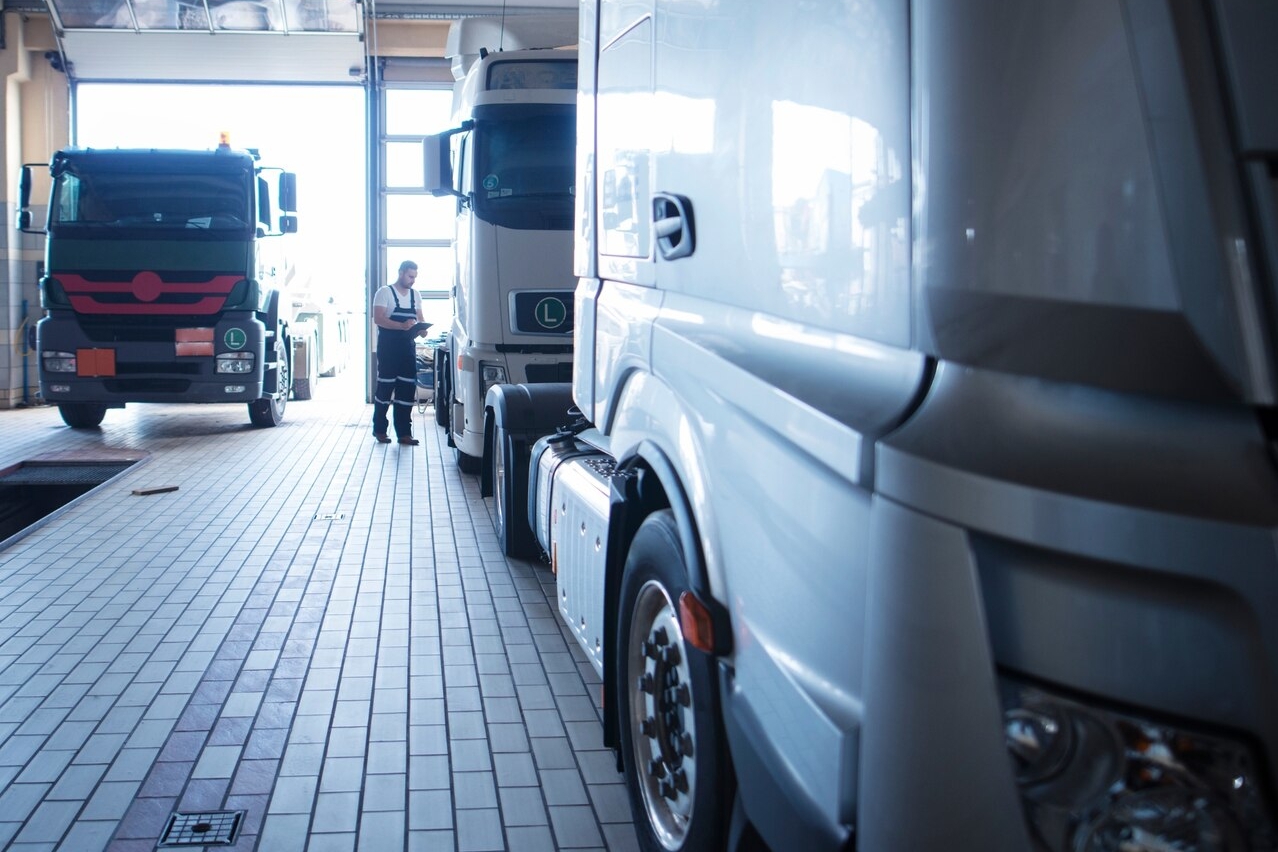
Servicing special-purpose vehicles requires technical facilities that go far beyond the standards of workshops servicing passenger cars. Specialized diagnostic tools, equipment for servicing hydraulic systems, advanced tools for mechanical repairs, and software dedicated to specific devices are of key importance. Another significant challenge is oil management – an oil change in an HDS crane can involve several dozen or even a hundred liters of fluid, which requires appropriate tanks, filtration systems, and hazardous waste disposal procedures.
In this area, Polish manufacturers of workshop equipment are playing an increasingly important role. They offer solid lifts and workshop pits, high-quality hand and measuring tools, fluid exchange equipment, welding machines, and hydraulic presses. Basic diagnostic equipment is widely available on the domestic market. At the same time, in the most advanced segments, such as specialized diagnostic software, comprehensive hydraulic test benches, or very high-capacity lifting equipment, the market still relies on international solutions. This interdependence shows that the development of special-purpose vehicle service is a systemic process requiring the cooperation of manufacturers, distributors, and workshops. – says Remigiusz Zabolski, an expert at HEWEA.
Development prospects
The shortage of specialized service centers for special-purpose vehicles is not a temporary phenomenon. As the number of technically advanced devices grows, it will deepen, simultaneously increasing the importance of professional service networks and specialized workshops. For entities ready to invest in competencies, infrastructure, and service quality, this is one of the most stable and profitable paths for development in the entire automotive and industrial services sector.
Source: HEWEA sp. z o.o