








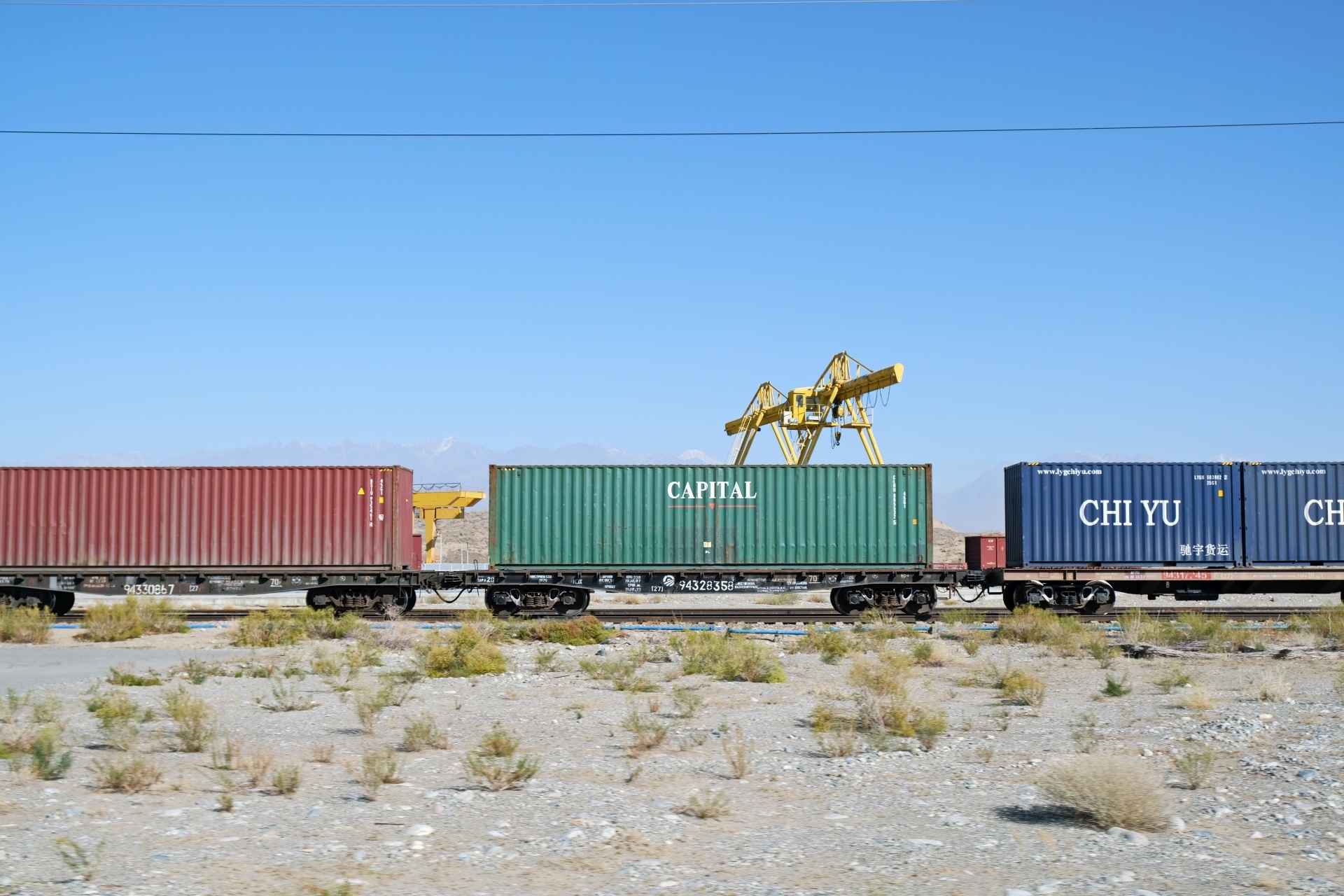
Central Asia is currently one of the most promising regions on the global business map – it is experiencing dynamic economic growth and attracting a growing number of foreign investors, including those from the European Union, China, and the United States. Interest spans many industries and reflects the strategic importance of the region. Central Asian countries are also actively developing transport and logistics infrastructure, which has become one of the pillars of local development. It is crucial for the flow of goods in internal markets and strengthens the region’s position in international trade.
At the center of this transformation is Kazakhstan – a regional leader that formerly served mainly as a transit corridor and is now transforming into a modern logistics hub and a developing market. Kazakhstan’s economy grew by 4.8% in 2024, and in the first quarter of 2025, it accelerated to 5.6% year-on-year – the fastest pace since 2013 (according to the Bureau of National Statistics of the Republic of Kazakhstan). The pace was driven by a 7.7% increase in commodity production – including manufacturing (+8.7%), mining (+6.1%), and construction (+16.9%) – as well as a 4.5% growth in the service sector, supported by strong activity in transport, trade, and warehousing.
Investment boom in infrastructure: roads, airports, and railways
Kazakhstan is experiencing an investment boom in terms of transport infrastructure. New roads are being built across the country. The aviation sector is also developing – for instance, a new airport is being built in Khorgos (near the border with China), and the largest modernization in the history of Almaty International Airport is underway. According to the development plan, this site is to be transformed into a major Eurasian aviation hub by 2050 – with expanded terminals, runways, cargo facilities, and logistics zones. A similar pace of development applies to railways – this sector is supported by extensive investments in new lines and transshipment terminals, which are part of Kazakhstan’s broader infrastructure strategy.
Why is the development of railway infrastructure so important for Kazakhstan?
The terminals in Almaty and Aktau were designed for the efficient transport of heavy loads – from industrial equipment to construction materials. This is of great importance in the context of the dynamic growth of construction in Kazakhstan and all of Central Asia. In 2024 alone, the total housing stock in Kazakhstan – the most developed market in the region – grew by 3.6%, reaching 434.3 million m², with simultaneous development of office and commercial space. Such demand generates massive and heavy loads, which are best handled by rail and intermodal transport – especially over long distances, where rail dominates due to its capacity and cost-effectiveness.
Rail also plays a key role in Kazakhstan’s foreign trade. In 2024, trade volumes with China reached a record level of 32 million tons, which means an increase of 13% year-on-year. Exports rose to 13.7 million tons – mainly due to iron ore and non-ferrous metals, ferrous and non-ferrous metals, and grain – and imports increased by 5%. Transit shipments grew by 19% to 15.3 million tons, and container transit to Europe grew by 43%.
One of the main catalysts for this growth was the opening of the Kazakhstan logistics terminal in Xi’an, China. Although it is located in the Chinese province of Shaanxi, it is a joint project of Kazakhstan and China – strategically located to facilitate the transport of goods within the Trans-Caspian International Transport Route. In 2024, over 300 container trains passed through the terminal and the port of Aktau – thirty times more than in 2023. At Rohlig SUUS Logistics, we observe this trend closely, supporting our clients in logistics that connect domestic demand (driven by construction) with growing Eurasian trade corridors.
Kazakhstan’s strategic location makes it a two-way corridor – not only for Chinese exports to Central Asia and Europe but also for cargo flowing in the opposite direction. European producers and distributors – including those from the construction, electronics, and consumer goods industries – are increasingly directing their offerings to Central Asian markets. For them, rail is not only a means of delivery to Kazakhstan (functioning as a regional distribution hub) but also a gateway to countries such as Uzbekistan, Turkmenistan, Kyrgyzstan, or Tajikistan.
It is also worth mentioning the importance of rail in the context of geopolitical disruptions. The Red Sea crisis at the end of 2023 forced many companies to reduce their use of maritime transport. As a result, a significant portion of volumes was redirected through Kazakhstan, and many entities permanently incorporated rail into their supply chains. Kazakhstan is also a key part of the so-called Middle Corridor – an intermodal trade route connecting China with Central and Southern Europe via rail, road, and sea. Although interest in this route is growing, it still carries many challenges – it requires multiple transshipments, changes in modes of transport, and struggles with underdeveloped infrastructure and weather conditions, such as strong winds and snowstorms in winter.
SUUS at the center of transformation
At Rohlig SUUS Logistics, we recognized the potential of Kazakhstan some time ago. Wanting to be One Step Ahead in this market, we started operations in the country in 2023 by opening a branch in Almaty. We offer a full range of services – from road and rail transport, through air and intermodal, to warehouse projects and distribution. We serve both the local market and neighboring countries. Located between China and Europe, in the heart of Central Asia, Kazakhstan is becoming a key transit corridor and regional distribution center – supporting both East-West trade and the development of local markets. We operate locally, but with a strategic perspective. We are closely observing how logistics is changing dynamically throughout the region and are actively participating in this transformation. From our perspective, the development of railway and intermodal infrastructure is crucial because it directly increases the efficiency and reliability of operations, enabling the handling of growing volumes and offering customers faster, more flexible solutions.
Source: Rohlig SUUS Logistics