








According to data from the end of October 2024, a total of 76,240 passenger and commercial all-electric vehicles (BEVs) were registered in Poland. Over the first ten months of this year, their number increased by 19,763 units (i.e., 5% more than in the same period of 2023), according to the Electromobility Meter launched by PZPM and PSNM.
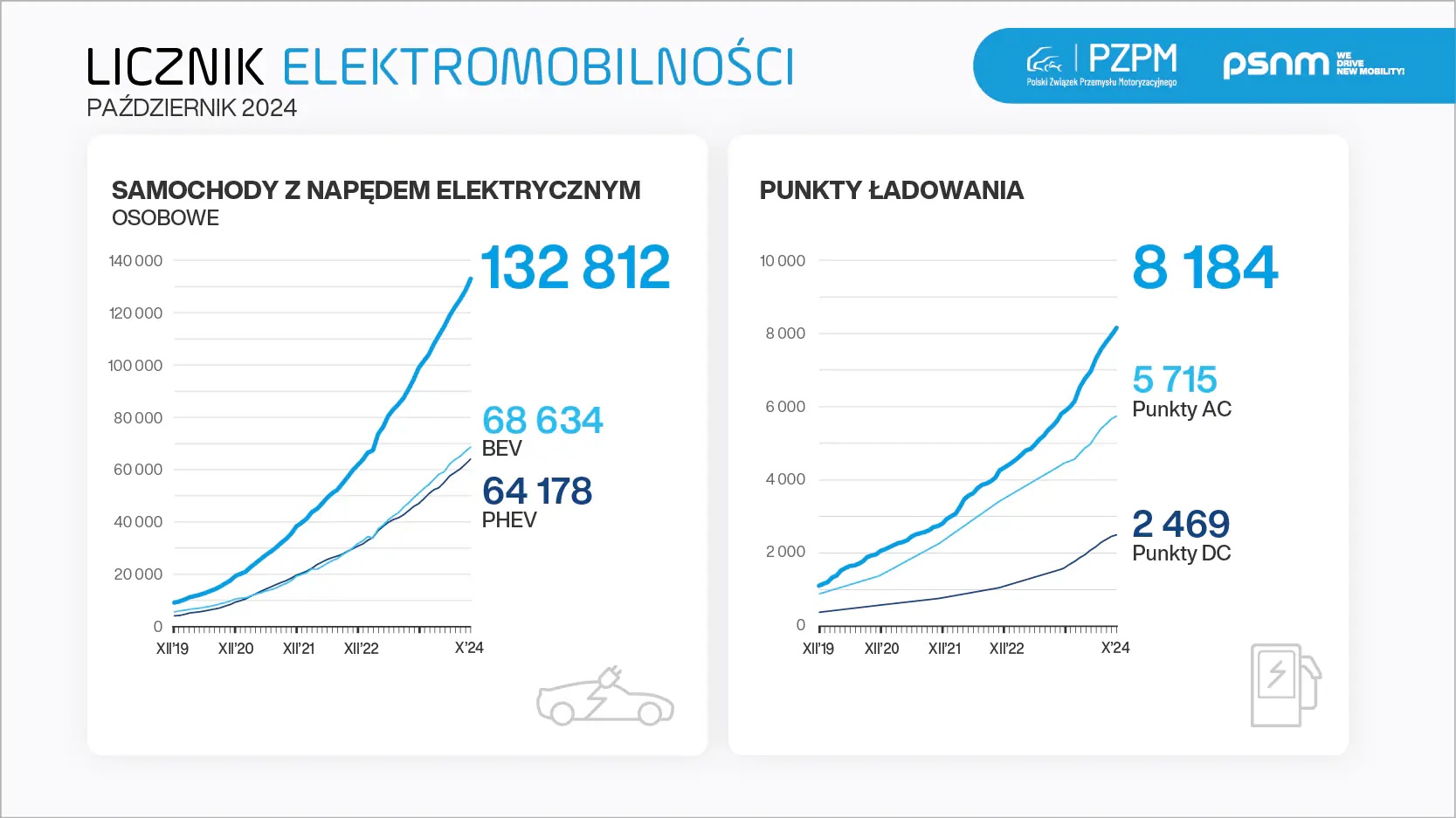
At the end of October 2024, there were 132,812 electric passenger cars on Polish roads. The fleet of fully electric passenger cars (BEVs) numbered 68,634 units, while the fleet of plug-in hybrids (PHEVs) totaled 64,178 units. The number of electric delivery and heavy-duty vehicles stood at 7,639 units. The fleet of electric mopeds and motorcycles is also steadily growing, consisting of 23,027 units at the end of October, as is the number of hybrid passenger and delivery vehicles, which has increased to 904,104 units. By the end of last month, the zero-emission bus fleet in Poland had grown to 1,428 units (of which 1,348 were fully electric vehicles and 80 were hydrogen-powered).
Parallel to the fleet of electric vehicles, charging infrastructure is also developing. At the end of October 2024, there were 8,184 publicly accessible electric vehicle charging points (4,528 stations) in Poland. 30% of these were fast DC charging points, and 70% were slow AC points with a power of 22 kW or less.
Draft amendment to the acts
– The government has developed a draft amendment to the Electromobility Act, recently submitted to the Sejm, in which, in addition to requirements such as the mandatory purchase of only zero-emission buses by local governments in cities with over 100,000 inhabitants or the necessity of establishing clean transport zones in cities most polluted by nitrogen oxides, it has been proposed, among other things, to abolish the obligation for companies to perform municipal tasks using a fleet with an appropriate share of electric vehicles. This is a very controversial decision. This obligation had been in place for about 6 years under circumstances of a lack of appropriate support programs and a very modest market offer. And now, when appropriate financing instruments are finally to be introduced and many electric vehicles ideal for municipal tasks are available on the market, the government is proposing to abolish the statutory requirements. PSNM hopes that the draft amendment will be changed in this regard. Together with leading heavy-duty vehicle manufacturers, we have sent an open letter on this matter to the central administration. Introducing the new regulations in their current form would not be fair to companies that had already decided to electrify their fleets earlier – says Jan Wiśniewski, Director of the PSNM Research and Analysis Center.
– One of the most significant pieces of news in recent days is the submission for consultation of a new subsidy program for the purchase of zero-emission vehicles using funds from the National Recovery Plan (KPO). While renegotiating the terms for using KPO funds, the Polish government abandoned the introduction of a passenger car ownership tax from 2026 and agreed with the European Commission that €375 million would be allocated to subsidize the purchase of new zero-emission passenger cars. Thus, support will cover purchases made by individuals, including those running sole proprietorships. This subsidy will apply to cash purchases, leasing, and long-term rental, and its value will range from PLN 18,750 to PLN 30,000. However, it will be possible to take advantage of additional funds for scrapping an old vehicle and if the annual income of the support recipient does not exceed PLN 120,000. In no case can the total subsidy exceed PLN 40,000. It is also worth adding that the maximum gross price of the financed vehicle has been limited to PLN 225,000. Given that nearly 90% of electric vehicles in Poland are purchased by companies, PZPM has repeatedly suggested that a portion of the funds should be allocated for company vehicle purchases and that the maximum price of the financed car should be increased. The total value of the program is over PLN 1.6 billion – says Jakub Faryś, President of PZPM.
Source: PSNM