








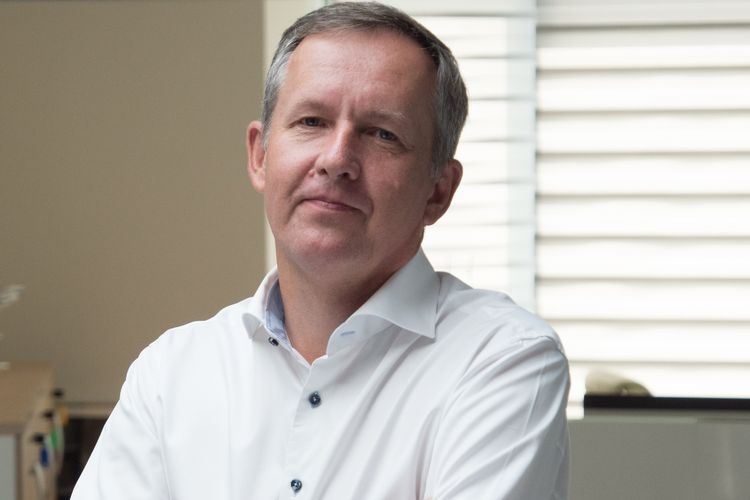
Regional airports are currently quite well distributed across the country and can serve local communities. In many places, investments in access infrastructure are necessary. We need to consider whether centralization is better or if the development of regions is more strategic. We are speaking with Grzegorz Polaniecki, CEO and founder of the Polish private airline Enter Air.
Janusz Mincewicz: In 2009, you co-founded Enter Air, which began flights a year later. Where did the idea for a passenger airline come from?
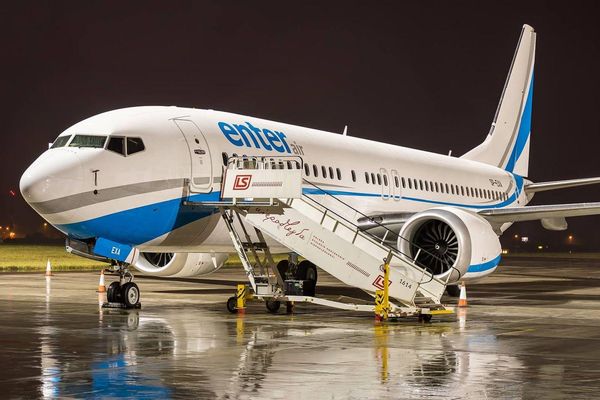
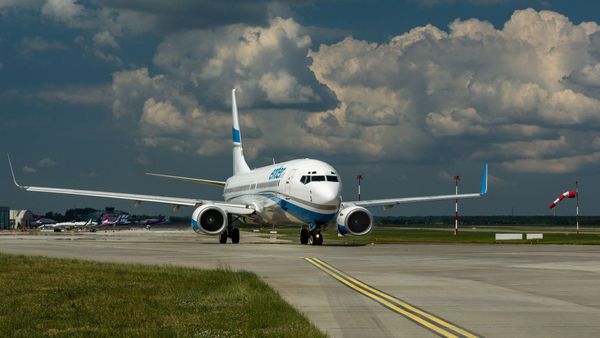
Grzegorz Polaniecki: In April, we celebrated the 15th anniversary of Enter Air’s founding. We wanted to create a friendly, Polish airline that serves tourist traffic and gives us the opportunity to implement a long-term business strategy. We started with three aircraft, but two years later we already had 11 machines. In 2015, we went public on the Warsaw Stock Exchange. We had the ambition to build a company that regularly shares profits with shareholders, and we succeeded. The industry in which we operate is exposed to many, often unpredictable, risks, but it was often these global crises that allowed us to develop and leverage competitive advantages. During the pandemic, we were one of the few airlines that, instead of reducing the fleet, bought more aircraft, and that is why, after the resumption of traffic, we were ready for takeoff much earlier than others. From the beginning of our operations, we wanted to be a European company, which is why we focused not only on Poland but also on penetrating Western European markets. Thanks to good Polish quality and price, the demand for our services has always been high. In 2024, our revenues reached almost PLN 2.9 billion, and the number of operations increased by over 10%. We have just received three new machines, which means that our fleet currently consists of 33 of our own aircraft plus four Chair Airlines aircraft and four Fly4 Airlines aircraft, an entity founded with the TUI group, whose business consists of leasing aircraft with crews to air carriers.
J.M.: How is the Polish passenger transport market developing?
G.P.: The market is developing excellently and still has great potential. In the last few years, the number of passengers has grown dynamically, and a key factor driving this trend is the increase in Poles’ incomes and the fact that the baby boom generation from the 80s is very active in the market, which now travels most often and is willing to go away even more than once a year. There are years when the market grows by double digits, and then a bit slower, but it is constantly moving forward, and we with it. We are not worried about competition because the Polish tourism market is large enough that everyone has their place in it. Enter Air, which is the leader of this market and the fourth largest airline in Poland in terms of passenger numbers, constantly cooperates with the largest tour operators in Poland and has the advantage that it can optimally choose flights for implementation, thanks to which it will create the most effective program, both in the summer and winter seasons.
J.M.: As you noted, for several years now, wealthier Poles have been flying for tourism all over the world. How does this fact affect the development of charter tourist transport?
G.P.: Undoubtedly, the increase in the wealth of society has a direct impact on demand in charters. The increasingly high prices of domestic holidays, which do not guarantee that you will be able to spend your vacation in comfortable living and weather conditions, are also important. From the demand reported by tour operators, we see that interest in trips is growing, especially in the summer season, but more and more people are also deciding to go to destinations that ensure warm weather in winter. We cooperate with the largest tour operators in Poland: TUI Poland, Coral Travel, Rainbow Tours, and Itaka. Our main contracts for the summer 2025 and winter 2025/26 seasons amount to a total of approximately PLN 2.2 billion. The key ports in Poland from which we fly are Warsaw, Krakow, Gdansk, Wroclaw, Katowice, and Poznan, but we are always ready to fly from wherever the tour operator wants. That is the advantage of our business model. We operate on B2B principles and sell the entire aircraft to the tour operator, so if they manage to fill it at another airport, we will fly from there too.
J.M.: Is the Polish passenger aviation market already competitive?
G.P.: Definitely yes. The Polish market is well-diversified and quite rich in various possibilities, on one hand supported by the state national carrier, on the other hand, very active low-cost airlines and charters sold in package offers by travel agencies. It is important that this competition motivates everyone to improve the quality of services, and unfortunately, it does not always look like that. The assumption of our business model is to provide a good quality service at a reasonable price.
 J.M.: Does Poland already have good airport infrastructure?
G.P.: The airport infrastructure itself is good; a bigger problem is the lack of properly trained people to work. But this is a problem that does not only apply to Poland, which is why customers often complain about delays. Let me give you an example – IATA identifies over 400 causes of delays, and only a dozen or so are dependent on airlines. Unfortunately, airports, ground handling, and airspace management are not interested in the fact that airlines pay compensation. Often, we suffer the most precisely because of low-quality service and various strange restrictions at the destinations we fly to. That is why we try to perform as many services as possible ourselves. For example, we opened our own technical maintenance. Initially line maintenance, and a year ago we also opened hangar maintenance in Hungary. We also rented a hangar in Katowice, where we will open our base for technical maintenance.
J.M.: Do we have a sufficient number of airports?
G.P.: Our network of airports is concentrated around a few large ports that handle most of the traffic. The basis for the development of traffic at an airport is a sufficiently large population in the region and the port’s policy, which does not reward one or two air operators but gives chances for competition to emerge. Today, most ports are dependent on whether they pay someone to fly or not. This is some kind of absurdity. That is not why an airport is built. An airport should treat everyone equally and support development through fair competition, not arrangements. In summary, the key three factors that should ensure at least a satisfactory level of operations for an airport are sufficient demand in the region, good communication, i.e., access roads or rail, and a fair offer from the airport itself.
J.M.: For several years now, Warsaw, Krakow, Gdansk, Wroclaw, and Katowice, and recently Poznan, have been leading among Polish airports and handling about 90% of passenger traffic. What should be done so that Lodz, Szczecin, Rzeszow, Radom, Olsztyn, and Zielona Gora join them?
G.P.: Polish regions are developing well, and local ports are becoming natural centers of tourist and business traffic. First of all, they must take care of attractiveness for carriers: low fees, efficient service, good access, and openness to competition, and stop promoting selected foreign carriers who dictate where and how often Poles should fly. It is demand that should create the flight network, not politics. Regional airports are currently quite well distributed across the country and can serve local communities. In many places, investments in access infrastructure are necessary. We need to consider whether centralization is better or if the development of regions is more strategic. The only failure is Radom, which, despite a new airport and relatively good communication, is not an attractive port. People prefer to fly from Warsaw, Katowice, Lodz, or even Lublin.
J.M.: Do we need a big airport – the Central Communication Port (CPK)?
G.P.: I am not a supporter of the policy of centralization. But a new airport near Warsaw will certainly be useful, provided that it is designed with Polish passengers in mind, and not just for foreign transit. Today, charter passengers, i.e., mainly Polish families with children, are checked in at Chopin Airport in a crowded old terminal, while the entire new terminal is empty. And they pay six times more for these conditions than foreign passengers. Someone probably overdid it with hospitality here. In practice, this means that Poles are subsidizing the service of passengers who are only transferring in Warsaw. This is not a healthy model. If a new airport is to change this, it is worth building it. If the Central Communication Port is to be financed from the money of Polish taxpayers, it should serve primarily Polish passengers – with fair, lower fees for using the infrastructure.
J.M.: Why do you pay such attention to this?
G.P.: Because let’s earn money from foreign guests, and not finance their comfortable travels from our fees and taxes. A new airport should be modern, well-organized, ecological, and cheap to operate – but it cannot become another project in which Poland hosts foreign passengers at its own expense, leaving regional ports to foreign low-cost carriers that use subsidies from local governments. Poland needs a well-thought-out strategy for the development of air transport, based on the real needs of all of Poland, with a chance for profits, not huge costs.
J.M.: What are the prospects for the Polish aviation market, charter tourism?
G.P.: The charter segment has been the most dynamically developing segment of the market in recent years. Enter Air is proud that, as a market leader, it is part of this success, despite the lack of any support. Poles are eager to travel, and rising incomes favor further growth in tourist and family traffic. I already mentioned the baby boom generation from the 80s. The prospects are very good, as long as there are no global disruptions, the market should continue to grow.