








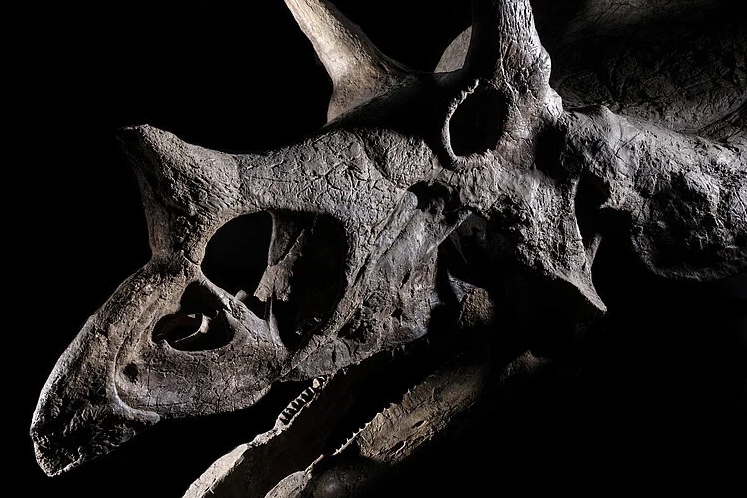
A 318 kg triceratops skull, restored by ZOIC in Trieste, Italy, delivered to a gallery in Dallas under the expert care of Rhenus Logistics.
The project combined ZOIC’s expertise in fossil restoration with Rhenus’s precise logistics to ensure safety and regulatory compliance. This operation highlights the role of modern logistics in preserving and sharing cultural and scientific heritage worldwide.
Rhenus Logistics successfully completed the international transport of a restored triceratops skull from Trieste, Italy, to a prestigious gallery in Dallas, Texas. This operation underscores the strategic role of logistics in preserving and sharing cultural and scientific heritage across the globe.
The shipment was commissioned by ZOIC, a company specializing in the restoration and reconstruction of fossils. The skull, originally sourced from the Hell Creek Formation in South Dakota, weighs 318 kg and measures 80 cm in height, 120 cm in width, and 185 cm in depth. Before being prepared for its transatlantic journey, it underwent comprehensive restoration at the ZOIC laboratories in Trieste.
Precision and responsibility at every step
Transporting a fossil over 65 million years old requires meticulous planning and compliance with international regulations. ZOIC designed special packaging that protected the specimen during transport, utilizing advanced shock-absorbing systems and specialized materials. Rhenus then coordinated the entire logistics chain, from pickup at the restoration site, through road transport to Milan-Malpensa Airport, air freight, and final delivery to Dallas.
In the case of cultural goods, logistics plays a strategic role. We are not just moving objects. We are protecting scientific and historical heritage, which requires specialized knowledge and responsibility.
– said Paola Calloni, Air Freight Product Country Manager, Rhenus Italy.
From excavation to reconstruction: the giant’s journey
The first step is always traceability. ZOIC carefully selects its suppliers, verifying documentation, origin, geological context, and all information necessary to ensure a transparent purchase in compliance with international regulations. Then begins the most delicate part: preparation. ZOIC experts, who have specialized in processing large vertebrates for decades, freed every fragment from the matrix, joined them, and reassembled the find to achieve a complete three-dimensional reconstruction capable of restoring the original majesty of this iconic Cretaceous dinosaur.
But the journey does not end at the workbench. After the 3D assembly is complete, one of ZOIC’s strengths, logistics comes into play. Rhenus, commissioned by ZOIC, handled the search and planned the international transport with the same attention to detail that characterizes the restoration.
A partnership based on experience
The collaboration between Rhenus and ZOIC reflects a shared commitment to excellence. By combining scientific knowledge with logistical precision, both companies provide museums, collectors, and scientific institutions with a comprehensive and transparent service that includes restoration, assembly, packaging, and shipping.
Bringing paleontology to the world means combining science and logistics. It is a joint effort that ensures stories from the past are still heard.
– said Giorgia Bacchia, Logistics and Compliance Manager, ZOIC.
This project demonstrates that modern logistics is not just a service, but a key enabler for the global dissemination of cultural and scientific heritage.
Source: Rhenus Group