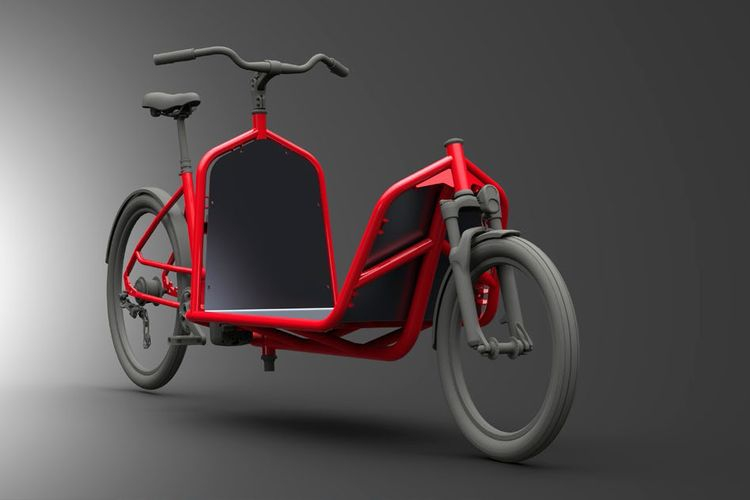
Several courier companies in Poland are already delivering parcels using e-cargo bikes. Will they help solve last-mile problems?
The so-called last mile is the most problematic, slowest, and most expensive stage of the entire delivery process. Shifting to electric vehicles significantly reduces the negative impact on the environment and urban air quality, but it does not solve this problem from a logistics perspective. E-cargo bikes can do exactly that. In the case of cities, an e-cargo bike can be a classic win-win for everyone. E-commerce companies and food delivery services continue their exceptional growth – and the somewhat inconspicuous cargo bike is a way to increase deliveries, improve their speed and reliability, while simultaneously removing combustion-engine delivery vans from the streets. Crucially, a recent study by the organization Possible showed that e-cargo bikes in city centers deliver up to 60% faster than the vans currently in use. Globally, the cargo bike market is growing very rapidly. This year’s forecasts predict sales of $900 million, 43% of which would come from cargo bikes sold to companies. In Germany, nearly 100,000 e-bikes are sold every year, and neighboring France reaches about 50,000 sales annually. DHL/Deutsche Post already manages a fleet of nearly 17,000 cargo bikes, with another 5,000 already on order.
Cargo bikes and the last-mile problem
Cargo bikes seem to have everything needed to solve the last-mile problem. These types of vehicles do not get stuck in traffic jams and can also travel on bike paths, through residential areas, and along embankments. Bikes can be parked directly at the delivery location, as the problem of finding a parking space practically disappears. They can carry goods weighing up to 250 kg, and this payload can be further increased by attaching trailers. In turn, the cost of riding an e-cargo bike for 100 kilometers is less than 1 PLN.
– E-cargo bikes are also an answer to the approaching future. There is more and more talk about closing city centers, individual streets, or zones, which will make delivery by cars and vans even more difficult. Regardless of whether they are electric or not. These are environmental goals embedded in the policies of an increasing number of countries and cities. Nevertheless, cargo bikes already offer so many advantages and benefits that they can be a tool for optimizing logistics for courier companies, food suppliers, but also smaller entrepreneurs, such as plumbers or electricians – says Paweł Raja, CEO and founder of Urvis Bike – a company that will introduce the first comprehensive e-cargo bike subscription model in Poland at the beginning of 2022. Cargo bikes, besides improving existing models, also have their own specific characteristics. They ensure easy pickup of parcels directly from offices and institutions, and then transport to parcel lockers or hubs. They are also ideal for so-called “vertical delivery markets“, when many packages go to a single building.
A tool for responsible business
Wider use of e-cargo bikes is in the interest not only of businesses based on urban logistics but also of entire societies. Last-mile deliveries account for up to 30% of global CO2 emissions – and this category of deliveries will continue to grow. The pandemic has strongly influenced the development of digital commerce and left its mark on UFT (urban transhipment facility) logistics. As a result, in the near future, one can expect about 0.1 urban deliveries per person per day and about 300-400 loads per 1000 inhabitants (CIVITAS data). Thus, the sum of needs, problems, and challenges that must be addressed is consistently growing. And this is not just about purely logistical and business goals, but also, for example, the quality of life in cities. A report by Possible – a climate charity and member of the Rapid Transition Alliance – also showed that e-cargo bikes reduce emissions by 90% compared to diesel vans and by about 30% compared to electric ones. In addition to air quality and the fight against smog, there is also the issue of noise and traffic congestion.
Top-down support
In many different countries, entrepreneurs can count on subsidies for e-cargo bikes of up to 50%. In Poland, support is already available in cities such as Bydgoszcz, Gdynia, Łódź, and Słupsk. In fact, the public sector has a much larger role to play here. A full shift to cargo bikes requires constant investment in infrastructure – from special, sufficiently wide bike paths, through shared logistics hubs, to regulations favoring bicycle logistics. Among the actions that can significantly contribute to the development of logistics based on e-cargo bikes are, among others, hubs in the delivery zone (last mile), where parcels are stored. Such micro-depots will compensate for the limited capacity of cargo bikes, and thus enable their fully economical operation. However, these are relatively small efforts, looking at the amount of business, environmental, and social benefits that result from the widest possible use of cargo bikes. The boom in e-cargo bikes was, in fact, supported by a strong set of public tools across Europe. In the UK, the Department for Transport (DfT) launched the eCargo Bike Grant Fund for companies and organizations in 2019 and has already awarded over £2 million in grants.
The sum of benefits
There are many financial benefits to implementing cargo bikes throughout the supply chain. From reducing overhead costs associated with fuel and vehicle maintenance, through parking fines that many companies struggle with, to speed and agility, i.e., delivery times. This applies not only to logistics companies and e-commerce giants but also to many other companies that must transport goods as part of their service provision. The potential of cargo bikes in countries with the most developed markets is being utilized by cleaning companies, renovation firms, and even gardeners.
 Founders of Urvis Bike: Paweł Raja – CEO (left) and Janusz Żebrowski (right). In the middle, Krzysztof Michałek, Development Manager.
The article comes from the magazine LOGISTYKA 5/2021.
The e-edition of the magazine is available in our offer!
Stay up to date, subscribe to the LOGISTYKA magazine!