








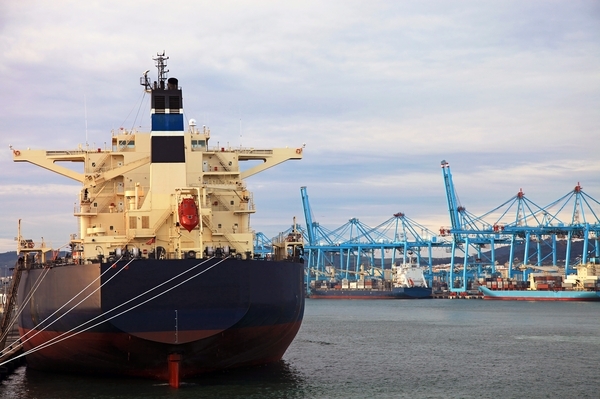
Maritime transport as a part of the economy has seemed to be underestimated for years, especially in the Polish context. It is also often mistakenly perceived as a narrow industry dealing exclusively with sea transport. Meanwhile, maritime transport encompasses the entire maritime shipping sector, shipowners and maritime operators providing transport services, seaports, and other economic activities carried out in this area.
In this article, the author would like to address a topic covering only a part of the maritime transport sector – maritime shipping. Simply defined, it is an economic activity consisting of providing transport services for cargo and passengers by sea. And so it has functioned in the world for centuries. However, as the process of economic globalization has progressed, maritime shipping has undergone significant intermodal integration and has been incorporated into global transport chains as one of the segments of the delivery process. It is gradually losing its independence, as it is incorporated into an integrated logistics process and is subject to its regimes, both technical-technological, organizational, and financial.
Therefore, it is important to point out those elements of maritime shipping operations that, on the one hand, allow for its participation in global supply chains, and on the other hand, influence this process themselves. On this basis, it will be possible to determine the importance of this branch of transport in international transport processes.
Scope of maritime shipping operations in global supply chains
The primary task in determining the importance of maritime shipping in global supply chains is to indicate the extent to which maritime shipowners can participate in international transport processes.
1. Segmented transport – this is the first and basic function that maritime shipping performs in relation to international trade. It precisely means the shipowner taking charge of the cargo at the port of loading, transport by sea to the port of unloading, where the shipowner’s liability for the cargo ends. The exact moment of transfer of liability between land carriers and the shipowner is determined by the parties to the contract, or the freight forwarders representing them, for example according to INCOTERMS rules. Importantly, in this function, the shipowner is hired by the general organizer of the entire delivery process to perform transport only on the sea segment, and the shipowner is responsible only to them for the proper performance of the service according to the concluded contract (charter or booking agreement) according to accepted rules (international conventions);
2. Bulk transport – this is an operational aspect of maritime shipping resulting from the rule of economies of scale occurring in maritime transport. It speaks of decreasing unit transport costs as the size of a single cargo batch increases. Maritime shipping records the highest level of economies of scale in this regard among all branches of transport. This is evidenced by frequently cited unit cost figures on sample routes (transport on the China – Western Europe route: 1 kg of coffee – 0.15 USD/kg, TV – 10.00 USD/unit, DVD 1.50 USD/unit; transport of hard coal on the South Africa – USA route 14.00 USD/t; transport of crude oil on the Middle East – USA route 0.005 USD/liter) or the amount of energy consumed to move 1 ton of cargo over a distance of 1 km in kWh (for an Ultra Large Container Vessel class ship it is 0.014, for a medium-class feeder container ship 0.018, for an electric train set 0.043, for a diesel-powered train set 0.067, for a large truck 0.18, and for a Boeing 747-400 aircraft it is as much as 2.00 kWh).
The article contains 29,100 characters.
Source: Logistyka Magazine 4/2012.