








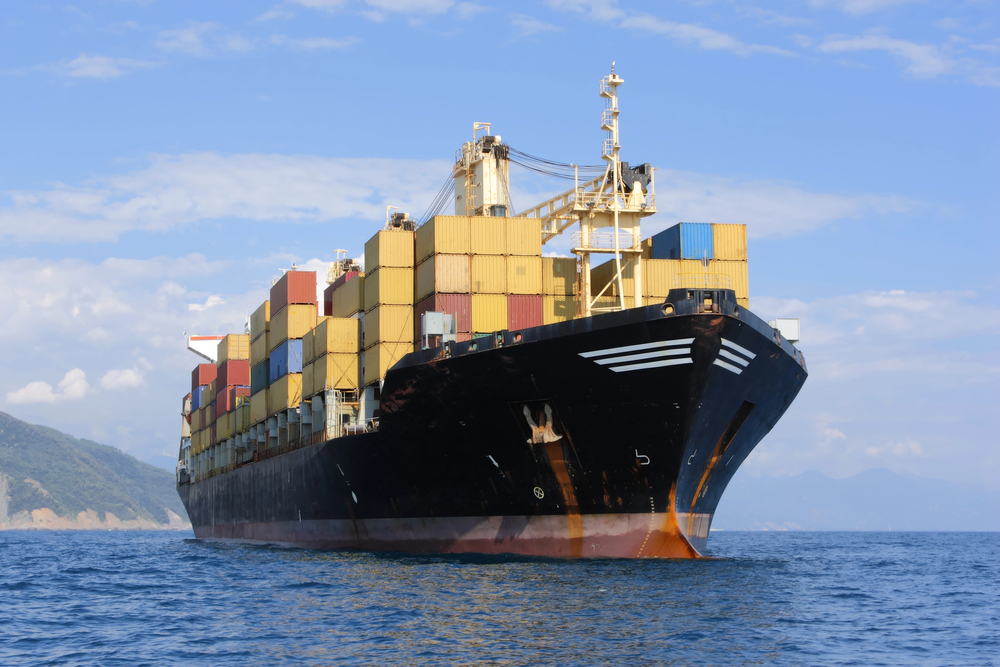
Dachser reports that the security situation for vessels in the Red Sea remains unchanged. Houthi rebels are expanding their area of operations in the Red Sea and the Gulf of Aden, forcing shipowners to continue adapting and modifying routes to ensure the safety of crews and vessels. This situation has led to major changes in vessel handling and extended transit times, primarily on the following routes: Europe – Asia / India – Pakistan – Bangladesh – Ceylon (IPBC), as well as Europe – Middle East.
The result is the rerouting of container ships around Africa, which leads to an increase in transit time of 14-18 days and higher demand for shipping capacity. Recent months have also brought a gradual increase in port congestion, mainly due to new vessel schedules arriving behind schedule and poor weather conditions. The port congestion, also observed during the pandemic, effectively leads to a reduction in available vessel cargo space, and thus to an increase in so-called blank sailings, i.e., cancelled voyages.
Following the Chinese New Year celebrated in February, many Indian services were redirected to westbound routes to compensate for the shortage of vessels caused by longer transport times via the Cape of Good Hope. This caused a shortage of space on vessels, more blank sailings, and backlogs in loading containers from China. Difficult weather conditions also contributed to delays related to port handling of vessels in Chinese ports. Arriving vessels recorded delays of at least 5-7 days. All this leads to further disruptions in shipping services; connections are either cancelled or ports are skipped due to longer lead times. Consequently, delays reach a week or more, for example on routes to Vietnam, Thailand, and India.
Transshipment ports in Busan, Shekou, Port Klang, Tanjung Pelepas, and Singapore remain highly congested with backlogs reaching up to 2-3 weeks. Colombo, a transshipment port located in Sri Lanka, intended to handle vessels sailing from the east and west to southern India, is also under strong pressure due to ongoing repairs and terminal closures. Meanwhile, a recent power outage led to disruptions in terminal operations in Ennore and Kattupalli in southern India.
High demand in the Asian export market resulted from post-pandemic inventory replenishment two years ago, which stimulated the flow of raw materials from China to Southeast Asia and India. Faced with increased demand, which affected port productivity, shipowners began to adopt short-term solutions, e.g., by reducing the number of port calls and applying the “cut-and-run” principle, i.e., departing from a port without picking up all planned cargo. However, this led to further delays and congestion.
To counteract these difficult market conditions, it is strongly recommended to allow for at least 3-4 weeks of additional transport time and to plan transport requirements carefully. Bookings should be made well in advance, preferably 3-4 weeks ahead.
Source: Dachser